Eeva Kilpi, “A Song about Love”

eeva-kilpiEeva Kilpi

Eeva Kilpi
A Song about Love

So, one day
we shall twist our bodies round each other
and snap shut the lock, never to be detached again,
thy cervical wear and tear intertwined with my gout,
my stomach ulcers cheek by jowl with thine heart ailments,
and my rheumatism snug against thy lumbago.
Thou and I ne’er shall part.

Thou, dear, shalt forget thine arrhythmia, shortness of breath,
and the necrosis
lodged already in thine heart,
and I shall forget my catarrh, restless legs,
and the incessant chafing on my left side,
come frost and misfortune and whate’er else.

My breasts are empty and flat.
Take them in thy hands, dear,
as one day when thou lookest they shall sag.
Wilt thou love me then,
hey diddle diddle all the day?

Lord, teach us to accept old people’s love,
young people’s love, middle-aged people’s love,
ugly people’s love, obese people’s love, poor people’s love,
poorly dressed people’s love,
and lonely people’s love.
Teach us to accept love.
We are so afraid of it.

Thou shalt take my breasts in thy hands,
my flat, stretched breasts,
and touch the wrinkled tips with thy lips.
The cataract in thine eye whilst thou wait for a hospital bed:
thou shalt fumble thy way to me blind,
grope me with thy mind’s hand.
Grope away:
beneath all these wrinkles it is me.
Life has finally forced us into this guise,
my Arctic bramble, my snow bunting, my swallow.

My lumps shall nestle in thy pits,
Thy crinkles in my grooves,
and alongside thy miseries I shall pray silently for thy death.
Bright are the day and the eve.

•••••••

Laulu rakkaudesta

Ja eräänä päivänä
me koukistumme toistemme ympärille
ja naksahdamme lukkoon emmekä irtoa enää,
sinun kulumavikasi minun kihtiini kietoutuneena,
minun mahahaavani sinun sydänvaivasi vieressä
ja reumatismini sinun noidannuoltasi vasten,
emme erkane konsana ei.

Ja rakas, sinä unohdat rytmihäiriösi, hengenahdistuksesi
ja kuolion
joka sydämessä jo on
ja minä unohdan katarrini, levottomat jalkani
ja sen alituisen kalvamisen vasemmalla puolella
ja tulkohon hallat ja harmit ja muut.

Minun rintani tyhjät ja litteät
ota käsiisi rakas
sillä eräänä päivänä kun katsot ne riippuvat pitkinä,
rakastatko minua silloin
tula tuulan tuli tuli tei?

Herra, opeta meitä hyväksymään vanhojen rakkaus,
nuorten rakkaus, keski-ikäisten ihmisten rakkaus,
rumien rakkaus, lihavien rakkaus, köyhien rakkaus,
huonosti puettujen rakkaus
ja yksinäisten rakkaus.
Opeta meitä hyväksymään rakkaus,
me niin pelkäämme sitä.

Ja sinä otat käsiisi minun rintani,
minun venyneet litteät rintani
ja kosketat huulillasi kurttuisia nipukoita
ja kaihi silmissäsi sinä sairaspaikkaa odotellessasi
hapuilet sokeana luokseni,
tunnustelet minua käsimielin.
Tunnustele vaan:
kaikkien näitten ryppyjen alla se olen minä,
tähän valepukuun elämä meidät viimein pakotti,
mesimarjani, pulmuni, pääskyni mun.

Ja minun kyhmyni painautuvat sinun kuoppiisi,
sinun ryppysi minun uurteisiini
ja kärsimystesi äärellä minä rukoilen hiljaa kuolemaasi.
On kirkkaana päivä ja ilta.

Originally published in Eeva Kilpi, Laulu rakkaudesta ja muita runoja (WSOY, 1972). Translated by Living in FIN. Photo of Eeva Kilpi courtesy of Janolehti

Eeva Kilpi, Six Poems

OLYMPUS DIGITAL CAMERA

—Minä elän nyt niin että kuoltuani
jumalakin itkee sitä
että loi ihmisen ainutkertaiseksi

“I am alive now that I am dead.”
Even God bewails the fact
He made man unique.


OLYMPUS DIGITAL CAMERA

Neitseestä syntynyt,
he sanoivat
ja ajatella, se meni läpi.

Ja nyt kun virhe on tehty
ja me elämme siinä yhä,
ei voi muuta kuin kuvitella
miten toisin olisi kaikki,
jos he olisivat nostaneet totuuden kunniaan,
sanoneet:
—Ole siunattu, avioton äiti.

Born of a virgin,
they said,
and to think it got through.

Now the error has been made
and we live with it still,
you cannot help but imagine
how different everything could have been,
if they had done credit to the truth
and said:
“Blessed art thou, o unwed mother.”


OLYMPUS DIGITAL CAMERA

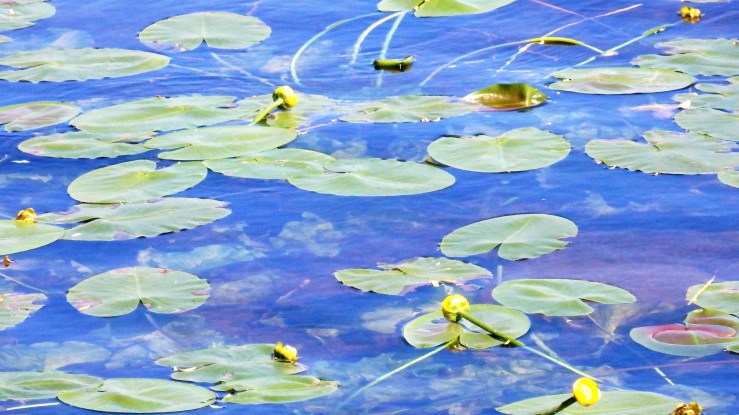
Tänä iltana minulle selvisi heijastuksen tarkoitus:
Mikä muu saisi kuun lumpeitten joukkoon?

The purpose of reflections was made clear to me this evening.
What else would make the moon go into a patch of water lilies?

∴∴∴∴∴∴∴∴∴∴

Minä olen vain episodi elämässäni
niin kuin kaikki muukin,
avioliitto, miehet, lapsetkin.
Minä haluaisin päästä ja takaisin
siihen ykseyteen
johon alunperin synnyin.

Jos tämän vain olisi tiennyt:
että kaikki on vaiheta, välikohtauksia,
että mikään ei jää lopulliseksi . . .
Niin mitä sitten?

I am only an episode in my life
like everything else:
marriage, the men, the children.
I would like to go back
to the oneness
into which I was originally born.

If only to find out this.
if everything is a phase, an incident,
if nothing remains final,
what, then, is the big deal?

IMAG4661

Huono tie ja pitkä heinä,
polulla rupikonnat, omat ruppanani,
vartioimassa pihaa.
Kivijalassa valppaina kyyt,
toinen musta, toinen vihertävä,
portailla avuliaat nokkoset.
Yössä lepakkojen armeija.
Ja kun kirjoitan, ylpeyteni,
kolme karhunputkea
turvaavat selustan ikkunan takana.

Lukevat salaa olkapään yli
mita kirjoitan heistä.

A poor road and long grass,
toads on the path, my own blood cakes,
watching over the yard.
The vipers in the plinth are vigilant.
One is black, the other greenish.
The nettles on the stairs are helpful.
There is an army of bats at night.
And when I write, my pride,
three angelicas
guard the rear from behind the window.

They secretly read over my shoulder
what I am writing about them.


P7300064.JPG

Japanilainen vieraani
käsitti vaivoin, että Suomessa ei ollut
neljäkymmentä miljoonaa asukasta.
Neljätoista miljoonaa hän olisi juuri
ja juuri jaksanut ottaa vastaan.
Mutta neljä ja puoli miljoonaa
oli hänelle liikaa.

Me vaikenimme kohteliaasti.

A Japanese guest of mine
realized painfully Finland did not have
forty million inhabitants.
He would have barely had the strength
to accept fourteen million.
But four and a half million
were too much for him.

We politely held our tongues.

—Eeva Kilpi, Terveisin (WSOY, 1976), pp. 92, 72, 28, 116, 19, 83. Translations and photos by Living in FIN

Eeva Kilpi, “Regards”

EevaKilpi_ElinaOrpana_(2)
Eeva Kilpi

Rakas Eeva, he kirjoittavat,
tee meille uusi laulu rakkaudesta
kun entinen on jo kulutettu loppuun.

Tämä on vanha laulu ja
pelkään pahoin
ikuinen:
Sinä olet minun sairauteni,
vammani ja vajavuuteni,
sokeuteni, kuurouteni ja sortunut ääni,
kramppini ja stigmani,
mato suolissani, neula veressäni,
haavani ja varjostumani.
Minä kaipaan sinussa elämääni:
tautia joka on kuolemaksi;
tuttua närästystä,
ikiomaa kutkaa,
vanhaa kolotusta,
joka on turvallisempi kuin uudet oudot vaivat;
kainalosauvojani ja kipsiäni,
näärännäppyäni ja japykimääni,
vinoa hammasta ja väärää purentaa
joka on minulle ainoa mahdollinen.
Olet kieliopillinen omistusliitteitä minussa.
Minun rakkauteni Korkea Veisu on paksu kuin lääkärikirja
ja yhtä täynnä anatomiaa ja kipua.

Mutta on toinenkin laulu: levollinen
joka vain soi ja soi
suostumatta paljastumaan sanoiksi.
Ehkä se ei antaudu koskaan.
Mutta se on ja.

Terveisin

•  •  •  •  •  •  •  •  •  •

Dear Eeva, they write,
make us a new song about love
as the previous song has worn out.*

This is an old song and,
I’m afraid, terribly
perennial.

You are my ailments,
my injuries, and my shortcomings,
my blindnesses, my deafnesses and broken voice,
my cramps and my stigmata,
the worm in my gut, the needle in my blood,
my wounds and my shadow.
I miss my life in you:
a disease that is fatal,
a familiar heartburn,
my very own itch,
an old ache
that is safer than odd new complaints,
my crutches and my cast,
my stye and my chapped skin,
crooked tooth and bad overbite.
You are my possessive suffixes.
My love the Song of Songs is as thick as a medical book
and as full of anatomy and pain.

But there is another song: restful,
it just plays and plays
without agreeing to reveal its words.
Maybe it will never give up.
But there you have it.

Regards

—Eeva Kilpi, Terveisin (WSOY, 1976), pp. 93–94. Translated by Living in FIN. Photo of Eeva Kilpi courtesy of Karjalan Liitto

* An allusion to “A Song about Love,” the title poem in Eeva Kilpi’s first collection, Laulu rakkaudesta ja muita runoja (WSOY, 1972) (A Song about Love and Other Poems). It was followed by Terveisin (Regards), in which the above poems serves as the title poem.

Eeva Kilpi, “Reflections”

OLYMPUS DIGITAL CAMERA

Mietteitä | Reflections

Hallitsija on suojeltavin.
Riistäjä haavoittuvin.
Saalis rakastettavin.

The ruler is the most protected.
The exploiter, the most vulnerable.
The prey, the most loved.

::::::::::::::::

Sosialistinen realismi.
Hyväsdämisen Gorki-ressukan
liberaali erehdys.

Socialist realism.
Gorky the kind-hearted wretch,
the liberal mistake.

::::::::::::::::

Humanismin heikkous on itse periaatteessa:
antaa myöten.
Juuri siksi sita kannattaa levittää.

Humanism’s weakness is in the principle itself:
giving in.
That is exactly why it is worth spreading.

::::::::::::::::

Demokratian perusoikeuksia on sananvalta.
Mutta siinäkin tavallisella kansalaisella on
useimmiten vain sana, ei valtaa.

The power to deliberate and decide is among democracy’s basic rights.
When it comes to it, though, the run-of-the-mill citizen has
only the say more often, not the power.

::::::::::::::::

Kaikesta mikä on hyvää voi luopua.
Pahasta luopuminen on vaikeampaa,
koska sen haluaisi muuttaa.

How nice if you can give up everything.
Giving up bad things is harder,
because you would like to change them.

::::::::::::::::

P.S. Arvostellessani politikkaa
en koskaan tarkoittanut,
että lahjakaitten pitäisi luopua siitä.

P.S. When criticizing politics
I have never implied
the gifted should give it up.

::::::::::::::::

Anna tuhannen kukan kukkia:
älä poimi niitä.

Let a thousand flowers bloom:
do not pick them.

::::::::::::::::

Kaikki on paljaana edessämme.
Meidän mieltämme vain kattaa selitysten kuori.

Everything is naked before us.
Our opinion only papers over the shell of explanation.

::::::::::::::::

Säännöt ovat yleisimpia poikkeuksia.

Rules are the most common exceptions.

::::::::::::::::

Institutionalisointi.
Sana on yhtä kauhea kuin asia.

Institutionalization.
The word is as awful as the thing.

::::::::::::::::

Ole oma instituutiosi.

Be your own institution.

::::::::::::::::

Jää punajuova:
Kauneuden voimakas kaipuu.
(Korjaus E. Leinon tekstiin)

A red streak of ice:
The powerful longing for beauty.
(A correction to Eino Leino’s 1908 “Elegy)

::::::::::::::::

On vain yksi periaate: epätäydellisyys.
Joka hyväksyy sen, jaksaa elää.

There is only one principle: imperfection.
Anyone who accepts it can bear to live.

::::::::::::::::

Kammoan täydellisyyttä.
Luojan kiitos se vaara ei minua uhkaa.

I dread perfection.
Thanks to the Creator that danger does not threaten me.

::::::::::::::::

Viimeinen josta haluan pitää kiinni:
Oikeus omiin virheisiin.

The last thing I hold on to:
The right to my own mistakes.

::::::::::::::::

Heikkous se todella voimaa kysyy.

Weakness really asks for power.

::::::::::::::::

Miehistä ihminen oppii.

A person learns from men.

::::::::::::::::

Köyhyyteen ei auta edes raha.

Even money is no help in poverty.

::::::::::::::::

Se jonk’ ei leipää kyynel kastellut,
se jok’ ei koskaan vaipuin sielun vaivaan,
oo itkein autossansa istunut,
ei tunne teitä hän, te vallat taivaan.
(Goethe – Koskenniemi – E. Kilpi)

Who ne’er watered bread with tears,
Who ne’er suffered from an ailing soul,
Sat weeping in his car,
He knows you not, ye powers of heaven.
(Goethe, “Song of the Harper,” adapted by Eeva Kilpi from Veikko Koskenniemi’s Finnish translation)

::::::::::::::::

En pysty ystävytteen:
se vaatii niin paljon.
Osaan rakastaa.
Siihen tarvitaan vain yksi.

I cannot manage friendship:
it requires so much.
I know how to love.
It requires only one.

::::::::::::::::

Lempeys on miltei poikkeuksetta älykkyyttä.
Älykkyys usein julmaa.

Tenderness is almost without exception intelligence.
Intelligence is often cruel.

::::::::::::::::

Minkä metsäsissin maailma minussa menettikään
riutumaan yhdistyksiin,
kokouksissa kalpenemaan.

What a Forest Guerilla* the world lost in me,
languishing in associations,
turning pale at meetings.

* The Forest Guerrillas (Finnish: metsäsissit) were a Finnic resistance movement formed by some of the inhabitants of the parishes of Repola and Porajärvi in addition to several White Guard volunteers after their territory was ceded to Bolshevist Russia in the Treaty of Tartu of 1920. The conflict is known as the East Karelian Uprising. The 2,000 metsäsissi forces managed to capture large parts of East Karelia during their rebellion against their Russian rulers in 1921, aiming to unite these areas with the newly formed Republic of Finland. Ultimately, however, in 1922 the rebel forces withdrew into Finland. Source: Wikipedia

::::::::::::::::

Kyllä ihiminen pystyy olemaan kova:
hylkämään, loukkaamaan, pettämään,
jättämään, olemaan välittämättä.
Mutta miksi hän yrittää kaikin tavoin
todistaa sitä itselleen?

Yes, humans can be tough:
forsaking, insulting, betraying,
neglecting, heedless.
But why do they try in every way
to prove it to themselves?

::::::::::::::::

Ei yksinäisyydesta pidä kärsiä.
Se on muutenkin kyllin raskas taakka
yhden hengen kannettavaksi.

You must not suffer from loneliness.
It is enough of a burden as it is
having to be one person.

::::::::::::::::

Olen menettänyt muistini:
en muista aikaa
jolloin en olisi ollut väsynyt.

I have lost my memory.
I cannot remember a time
when I was not tired.

::::::::::::::::

En muista asioita, vain ilmaisuja.
Minun mielikuvitukseni todellisuusko
se pyrkii näin voimakkaasti toteutumaan:
tappaa minusta kaiken näennäisen.
Mikä pettymys olla henkihieverissä.

I do not remember things, just expressions.
The reality of my imagination
strives so mightily to make it come true:
to kill everything apparent in me.
What a disappointment to be feeble spirited.

::::::::::::::::

On paljon inhimillistä
joka on minulle vierasta.

Much that is human
is alien to me.

::::::::::::::::

Että mitäkö odotan elämältä?
Elämyksiä:
iloa ja moraalisia ongelmia.

And what do I expect from life?
Experiences:
joy and moral dilemmas.

::::::::::::::::

Rakkaus: vallankumous ihmisessä.

Love: revolution in a person.

::::::::::::::::

Rakkaus on ihmisen elastisin ulottuvuus.
Se on kuin emätin.
Sopeutuu isoon ja pieneen.

Love is a person’s elastic dimension.
It is like the vagina.
It adapts itself to big and small.

::::::::::::::::

Luonto ei petä.

Nature does not disappoint.

—Eeva Kilpi, Terveisin (WSOY, 1976), pp. 99–106. Photo and translation by Living in FIN. Thanks to VVZ for identifying the creature in the photo as a hoverfly.

Eeva Kilpi, “Sweating as I Drink My Tea on a Hot Morning”

OLYMPUS DIGITAL CAMERA

Hikoillen juon teetäni hellepäivän aamuna
nauttien joka pisarasta.
Löyhähdän olemassaoloani tähän maisemaan.
Hyttyset ja paarmat rakastavat minua,
juovat mahansa killalleen,
hoippuroivat humalaisina verestäni.
Ja kun “Metsäkukkia” soi
tanssii sieluni harjulta harjulle,
pyörii kuusien päissä,
liitää pitkin lammen pintaa korennon selässä.
Mutta aina se hupsu palaa
tähän ruumiiseen.
Mikä kuolevaisuudessa viehättää?

::::::::::::::::

Sweating as I drink my tea on a hot morning,
savoring every drop.
My existence wafts into the landscape.
The mosquitoes and horseflies love me.
They drink their bellies to bursting.
Drunk on my blood, they stagger.
And when “Forest Flowers” plays,
my soul dances from one ridge to the next,
twirling on the tiptops of spruces,
soaring along a pond’s surface on a mayfly’s back.
But the silly one always returns
to this body.
What is mortality’s charm?

—Eeva Kilpi, Terveisin (WSOY, 1976), p. 18. Photo and translation by Living in FIN

::::::::::::::::

Olavi Virta’s 1952 recording of “Metsäkukkia” (“Forest Flowers”)


Eeva Kilpi, “Fart Hard in Your Own Hut”

OLYMPUS DIGITAL CAMERA

Pieraista kovaa omassa tuvassa.
Joskus sitä on valmis epäröimättä
uskomann kapitalismiin.

* * * * * *

Fart hard in your own hut.
Sometimes it is unhesitatingly ready
to believe in capitalism.

—Eeva Kilpi, Runoja 1972–1976 (WSOY, 1978), p. 40. The poem was chosen using the True Random Number Generator at random.org. Photo and translation by Living in FIN

* * * * * *

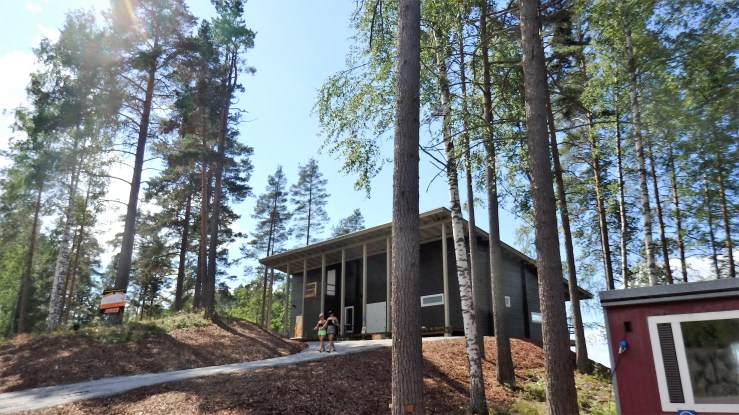
The photo, above, is of an empty “fish restaurant,” built near Ukonniemi Beach on Lake Saimaa in Imatra, South Karelia, by the city government and their favorite private contractors at great expense to the once-beautiful natural environment and local taxpayers.

Although no restaurateurs had agreed to lease or operate the future restaurant when the project was mooted and approved by city planners and city councilors, the constructionn of the “fish restaurant,” which involved felling hundreds of trees, building black-topped car roads where once there had only been soft footpaths, and dozens of other kinds of deviltry disguised as “landscaping” and “improvements,” went ahead anyway.

The initial phase, the destruction of the original, gorgeous landscape, ran into considerable cost overruns, and project managers found themselves asking the city for more money to keep up their wave of mutilation.

Several years later, no one has emerged operate or lease the restaurant, although the building is ostensibly ready to fry up fish fingers and put them all in a line.

The restaurant would be a great opportunity for any shyster who wants to go in and out of business in less than a year, because the wonderful Nuotta Restaurant and Smokehouse, located on the other side of Ukonniemi Beach, has been doing land-office business ever since it added a rooftop terrace last summer.

The food and atmosphere at the Nuotta are nonpareil, as all its regular and irregular customers know, and its view of Imatra Harbor and Laimassaari is stunning. On a warm, sunny day, I could sit there for hours, just sipping a glass of wine or a cup of coffee.

Even my dog thinks Nuotta is the cat’s meow. He once forced me to go there, after a long walk through the forest, so we could sit there for half an hour and just inhale the view. I had to order a cup of coffee and a doughnut to justify our odd-couple presence on the veranda. My dog was immeasurably pleased.

So why would such a tiny harbor need another fish restaurant? This isn’t “innovation,” as the current so-called bourgeois Finnish government would call it. This is sheer stupidity that was egged on local decision-makers by the construction lobby, who are always trying to drum up new projects for themselves, whatever cost to the built heritage, environment, and taxpayers, and whether their dubious improvements are really needed by flesh-and-blood, paying customers and townsfolk or not. LIF


Eeva Kilpi, “Now We Have an Immense Charge in Us”

OLYMPUS DIGITAL CAMERA

Meissä on nyt valtava lataus
iloa, rakkautta, hyvyyttä ja voimaa
jakaa muillekin.

Niin, hän sanoi, olet käännekohta minun elämässäni,
sinä aukaisit minun aistieni umpeutuneet väylät.
Ensi kerran ymmärrän äitiäni,
anopista puhumattakaan,
sukulaisia melkein rakastan,
ja mikä parasta, vaimo ei maistu enää puulta;
sitä juhlaa mikä meillä on ollut!

*  * * * * *

Now we have an immense charge in us
Of joy, love, kindness, and energy
To share with others.

So, he said, you are a turning point in my life.
You opened my senses’ closed channels.
I understand my mother for the first time,
To say nothing of my mother-in-law.
I almost love my relatives.
And, best of all, my wife no longer tastes like wood.
What a celebration we have had!

— Eeva Kilpi, Laulu rakkaudesta ja muita runoja (WSOY, 1972)

Photo and translation by Living in FIN

Eeva Kilpi, Six Poems

OLYMPUS DIGITAL CAMERA

1

Kun suru häipyy
tulevat muistot
ja jokainen niistä
koskee yksitellen.

* * * * *

When sorrow fades
the memories return
and each of them
hurts one by one.

2

Aika on leveä sänky.
Minä jo kauan
tyytynyt kapeaan.
Turhaan ei sanota:
levitän sinulle vuoteen.
Ahdas avaruus.

* * * * *

Time is a wide bed.
I have long
settled for a narrow one.
It’s not for nothing they say,
I’ll roll out the bed for you.
Space is cramped.

3

Sylissäsi
minä annan elämälle anteeksi
virheen toisensa jälkeen.

Kohta on kaikki lunastettu.

* * * * *

I forgive life
in your embrace
one mistake after another.

Soon it will all be redeemed.

4

Ettäkö vain kerran vuodessa
ja niin lyhyen aikaa?

Meidan rakastaessamme heinä kasvoi nilkoista
lanteita hipomaan,
koiranputki olkapäitten ympärille,
polku syveni pois.

* * * * *

Only once a year
and for such a short time?

As we made love, the grass grew ankle high,
grazing the hips,
the cow parsley encircled the shoulders,
the path deepened and vanished.

5

Jo kauan olen ollut varovainen,
kysynyt:
— Onko tämä Jumalan lähettämä mies?
Nyt kysyn lisäksi:
— Onko tämä ihminen jolle tahdon
avata yksinäisyyteni veräjän
astua korpeeni,
häiritä sen hitaasti kasvanut
luonnonmukainen epäjärjestys,
nähdä sen rauhoitetut kasvit,
valonranat linnut
jättää jälkensä sen soiselle polulle
makuuksensa sen ruohoon,
enkelinkuvansa sisimpäni hangelle.

* * * * *

I have been cautious for a long time,
asking,
“Has God sent me this man?”
Now I also ask,
“Is this the person whom I wish
to open the gates of my solitude,
to step in my backwoods,
disturbing its slowly cultivated
natural disorder,
seeing its protected plants,
its light-sensitive birds,
leaving his footprints on its marshy trail,
his resting place on its grass,
his snow angel on the snowdrift inside me?

6

Kun yksinäisyys on häiriötön
ei ole enää kärsimystä.

* * * * *

When loneliness is undisturbed
it is no longer suffering.

— Eeva Kilpi, Terveisin (WSOY, 1976), pp. 7, 9–13

Photo and translations by Living in FIN

Eeva Kilpi, “February”

eeva_kilpi_4
Eeva Kilpi

Helmikuu
On irrottava lapsistaan, sanoo isoäiti.
Se on vaikeampaa kuin vanhemmista irtoaminen,
koska vastuu siirtyy eteenpäin
ja kulkee mukana hautaan saakka.

On suojeltava lapsuutta lapsissaan,
heidän viattomuuttaan
joka vajoaa aikuisuuden kerrosten alle.

Siellä se kuitenkin yhä on,
syvällä, ahtaalla ja piilossa,
kunnes sen kohtaa taas
lapsenlapsissaan.
Silloin on suojeltava heitä,
sillä äkkiä hekin vain pyörivät maailmalla
ikäistensä kanssa

ja sinä ihmettelet
mihin aika meni,
miksi he muuttuivat
kun itse pysyit samana:

lapsena joka tarkkailee maapallon elämää
vanhuutensa periskoopilla.

Eikä kukaan tiedä
että tähystäjä on talvisodan aikainen pikkutyttö,
vanhentumaton,
jolle yhä tapahtuu mullistavia asioita,
jonka maailma yhä järkkyy.

– Minä virtailen, sanoi äiti.
– Minäkin virtaan, äiti,
ees ja taas.

February
You need to detach yourself from your children, says grandmother.
It is harder than separating from parents,
because the responsibility moves on
and goes with you to the grave.

You need to protect the childhood in your children
their innocence
which sinks under adulthood’s layers.

It is still there, however,
deep, cramped and hidden,
until you encounter it again
in your grandchildren.
Then the need to protect them,
since suddenly they too are spinning round like the globe
with peers

and you wonder
where the time went
why they changed
while you yourself stayed the same:

a child who monitors life on earth
through the periscope of old age.

No one knows
that the lookout is a little girl from the Winter War,
who never grows old,
to whom devastating things are still happening,
whose world is still shaking.

“I’m flowing,” said mother.
“I’m flowing, too, mother,
back and forth.”

—Eeva Kilpi, Kuolinsiivous (WSOY, 2012)

Translated by Living in FIN. Photo of Eeva Kilpi courtesy of Kotiliesi magazine

Eeva Kilpi, “Animalia”

Animalia

Jokainen eläin on subjekti.
Se on: oman elämänsä keskipiste,
itsensä puolustaja,
varuillaan joka suuntaan
niin kuin sinä ja minä.
Omanarvontuntoinen:
ei sallisi itseään loukattavan.

Kohteita on vain rakkaudella
ja julmuudella ja toiveilla,
muuten on kaikki vain omaa kokemusta
Kaikki on minä.

Minä riipun sinun olkapäilläsi tapettuna.
Minä pelkään kun lähestyt pihdit kädessä.
Minä istun ja odotan sinun häkissäsi.
Minä palelen. Minulla on ahdasta.
Minuun koskee.

Olet unohtanut jotain oleellista.
Olet unohtanut että
minä olen minä
Ei tämä ole stressiä.
Minä kärsin.

Every animal is a subject.
That is, the focal point of its own life,
Defender of itself,
Vigilant in all directions
Like you and me.
Self-respecting:
It would not let itself be injured.

Only love and cruelty
And desire have objects.
Otherwise, everything is only one’s own experience.
One’s experience is everything.
Everything is me.

I dangle from your shoulders, murdered.
I am afraid when you approach, pliers in hand.
I sit waiting in your cage.
I am freezing. I am cramped.
I hurt.

You have forgotten something essential
You have forgotten
I am me.
This is not stress.
I am suffering. Continue reading “Eeva Kilpi, “Animalia””