Vilja-Tuulia Huotarinen, “Everything Must Be Imagined”

kauppakatu disaster

Kaikki on kuviteltava, jos mielii pysyä hengissä.
Kun nurkan takaa huutaa pum, ei tiedä, keneen osuu.
Piha on ei kenenkään maat, ruumiit makaavat rauhassa,
hipihiljaa vieri veressä. Teen keinussa kieppejä kaksitoista
kertaa peräkkäin, en ole aivan terve. Puut ovat tänään vaiti,
vain Drakenit vihlovat ilmaa, kovaa ja korkealta laulan
radion päälle.

Olen vanha, ehkä kymmenen vuotta. Humallun tuskasta,
kepeistä suruista tulee krapula. Keittiöön laskeutuu kirpeä
napalmi ja uunissa tuoksuu vehnäs. Syön rusinat
yksitellen jokaisen pullan päältä.

* * * * *

Everything must be imagined if you want to stay alive.
When you shout “Bang!” from round the corner, you don’t know who you’ll hit.
The yard is no man’s land. The bodies lie in peace,
quite quietly, side by side, bloodied. I do twelve twirls in a row
on the swing. I’m not entirely well. Today the trees are still,
only the Drakens grate the air. I sing loud and high
over the radio.

I’m old, maybe ten. I’m drunk on suffering,
easy woes give me a hangover. Acrid napalm
settles on the kitchen, the oven smells of rolls. I eat the raisins
one by one from the top of each and every bun.

Source: Vilja-Tuulia Huotarinen, Sakset kädessä ei saa juosta (WSOY, 2004), p. 56. Photo and translation by Thomas H. Campbell

Johanna Venho, “The Whole Evening is Youful”

kekkola-rappunen-evening

Koko ilta sinun-täysi
(kun mökki hämärtyi ja ikkuna lahdelle
oli elävä taulu, kesäkuunyö),
oikaisen metsän läpi, sormien lomasta valuu
muistia, vanhaa laulua, kivimurskaa, en saa keuhkoihin
kylliksi ilmaa, siipisulkia, kaikki hipoo,
en saa kiinni

* * * * *

The whole evening is youful.
(The cottage blurred, the window overlooking the bay
was a tableau vivant, a June night.)
I take a shortcut through the woods: memories, an old song, rubble
slip through the holiday’s fingers. I cannot get enough
air, wing feathers in my lungs. Everything converges.
I won’t be trapped.

Source: Johanna Venho, Postia Saturnukseen (Porvoo–Helsinki–Juva: WSOY, 1998), p. 40. Photo and translation by Living in FIN

Jorma Etto, “Mothers”

fog

Äidit
Siellä ne, osastolla, synnyttäneet,
petinsä pohjalla pötköttävät,
tyytyväiset tytöt,
ruusun ja maidon makeassa hajussa,
mahdottoman mellevinä,
möyheinä möykkinä, hymyhyytelöinä.
Tupakkirullat tuu tuu tuotiin,
lirulirkutus lirisi,
tussutettiin, tassutettiin, tuputettiin,
lettas-sentään, tissin-tassin,
omenaista, olevaista,
pehmokaista pullukaista paijatella,
maamotella makeaista
ilo on, on onni,
nänni nauraa, koko äiti.

Mothers
They are there, in the ward, after birthing,
cuddled deep in their cots,
contented lassies,
smelling sweetly of rose and milk,
impossibly, incomparably cozy,
super succulent blobs, smiling jellies.
The cigars were ro-ro-rolled,
there was dribbling, cooing, and gurgling,
fiddling, tiptoeing, and foisting,
dear oh dears, pitter patters.
Joy it is, a happiness
mothering a sweet thing,
snuggling a soft chubby,
an appley entity.
The nipple giggles, the whole mother.

Source: Jorma Etto, Suomalainen ja muut valitut (Oulu: Pohjoinen, 1985), p. 52. Photo and translation by Thomas H. Campbell

Jorma Etto, “Life Is”

clouds over the vuoksi

elämä on
niin suurena niin tavoittamattomana
oli elämä edessäsi
ja sinä sanoit itsellesi
ennen kuin kaiken jätät
kaiken myös ymmärrät

nyt
kun käännyt katsomaan taaksesi
kun uskallat sen tehdä
näet elämän
yhtä suurena yhtä tavoittamattomana
ja poikasi näet
seisovan hautakivesi äärellä
pitäen kädestä jotakin konttorityttöä
(hautausmaan rauhassa heilläkin
on tilaisuus olla oma itsensä)
ja kuulet poikasi kuiskaavan
hänen suloiseen pikku korvaansa
salaisuuden jota sinä et ymmärtänyt
elämä on
(niin hän kuiskaa
ja hän tietää)
elämä on

life is
life confronted you
so great so unattainable
and you said to yourself
before you left it all
you would understand it all, too

now
when you’ve turned to look back
when you dare to do it
you see life
just as great just as unattainable
and you see your son
standing before your tombstone
holding the hand of some office girl
(in the cemetery’s calm they have
a chance to be themselves)
and you hear your son whispering
into her sweet little ear
the secret you didn’t understand
life is
(so he whispers
and he knows)
life is

Source: Jorma Etto, Suomalainen ja muut vaalitut (Oulu: Pohjoinen, 1985), p. 5. Photo and translation by Thomas H. Campbell

Vilja-Tuulia Huotarinen, “Contrary to Popular Belief”

nine.JPG

Toisin kuin luullaan, useat asiat tulevat valmiiksi,
sellaisiksi kuin niiden halutaan tulevan.
Vapaudesta puhutaan kuin valinnasta,
pidetään hengitys tasaisena että ilma kantaa
höyhentä.
Voi nostaa vihreän rinkan selkään,
vähemmän se painaa kuin omat hartiat.
Saa puhua viidellä kielellä siitä mistä puhetta riittää,
eikä muutosta ole havaittavissa kun siiryymme
paikasta toiseen; kiinnitämme huomioon
samaan maisemaan, siihen jonka omin silmin näemme.

Ajojää sulaa pyörien alla ja vuoret kolahtelevat toisiinsa,
jättiläisen kyynärpäät. Ajamme peräkkäin autoilla
kuuntelemaan valaan röyhtäilyjä. Kun tuuli yltyy,
alkaa tärisyttää, silmät ja tasapainoaisti antavat eri viestin.
Mutta ei hätää:
pahoinvointiin auttaa piste
jonka rantaviivalta löydämme, se johon taas on tuijotettava.

Olemme syyttömiä,
miljoonia vuosia vanhat ruhot painuvat pinnan alle.
Niin meidät harppunoidaan
kesken lauseen, kesken haukotuksen

eikä mikään voi torjua lohtua.

* * * * * * * * *

Contrary to popular belief, many things emerge intact,
just as one would want them to turn out.
Freedom is spoken of as a choice.
One breathes steadily so the air holds
a feather aloft.
You can lift the green rucksack on your back:
it weighs less than your own shoulders.
You may speak in five languages about something when a chat would do,
nor is change observable when we move
from place to place. We fix our gaze
on the same landscape, towards what see with our own eyes.

Drift ice melts under the wheels, and mountains bump into each other,
a giant’s elbows. We drive one after another in cars
to hearken to a whale’s belches. When the wind blows harder,
it begins to shake, and the eyes and sense of balance send a different message.
Not to worry:
nausea is alleviated by a point
we locate on the shoreline, a point toward which we must stare again.

We are blameless,
carcasses, millions of years old, sinking below the surface.
We are thus harpooned
in the middle of a sentence, in the middle of a yawn

nor can anything ward off consolation.

Source: Vilja-Tuulia Huotarinen, Sakset kädessä ei saa juosta (WSOY, 2004), p. 29. Translation and photo by Thomas H. Campbell

Jorma Etto, “The Boys”

purple swirl

Pojat

Naapuri löysi unohdetun helmen, sika sen söi,
jonkun sanottiin tavanneen aarteita arkun.
Me pojat kynsimme kepillä multaa,
siinä oli siemenen ja lannan haju.
Me pojat emme uskoneet taruihin
joita emme keksineet itse.

*****

The Boys

A neighbor found a forgotten pearl. A pig ate it.
They said someone had discovered a coffin’s treasures.
We boys plowed the dirt with a stick.
It smelled of seed and manure.
We boys did not believe in tales
We did not concoct ourselves.

Source: Jorma Etto, Ajastaikaa (Porvoo–Helsinki: WSOY, 1964), p. 37. Photo and translation by Living in FIN

Tuomas Timonen, “You Had Vanished Utterly”

kaupunkitalo pysäköinti

olit kokonaan kadonnut,
pelkkä rehevä, kukikas, kivinen valo

valkoisella liinalla
musta pallo, musta

viiva, musta torni
valkoisella liinalla

tuulee, myrsky
tekee tuloaan, sälekaihtimet

helkkävät, ikkunat
paukahtelevat ja

on kuin
ja niin on, syksyllä

vien sinut Sipooseen
keräämään mustikoita

*****

you had vanished utterly,
nothing but a flowery, lush, flinty light

in a white cloth
a black ball, a black

line, a black tower
in a white cloth

the wind blows, the storm
makes its way, the blinds

jangle, the windows
rattle, and

so on
and so, in the autumn,

I take you to Sipoo
to pick bilberries

Source: Tuomas Timonen, Asetelmia (Helsinki: Teos, 2013), p. 51. Translation and photo by Thomas H. Campbell

Pasha

In Finland, both Lutherans and Greek Catholics celebrate Easter on the same day, and this year that day was this past Sunday, April 1. But Russian Orthodox Easter will be celebrated this coming Sunday, April 8.

No Orthodox Easter meal, whether in Finland or Russia, would be complete without pasha (in Russian, пасха; the same word also denotes the holiday itself). To my mind, it is the most delicious sweet treat I have ever tasted, and it is all the better that purists, like my boon companion, make it only once a year for serving on Easter Day itself and finishing off in the days following Christianity’s most important feast day.

My sweetheart makes pasha the old-fashioned Russian way, which takes a few days. First, she makes Russian творог (quark, curd, cottage cheese, farmer cheese) from fresh milk before mixing the homemade curd with the other ingredients and pouring the thick liquidy mixture thus produced into traditional wooden molds, lined with gauze.

The molds are turned upside down and drained for 24 hours before being placed in the refrigerator to set up. On Easter Day, the molds and gauze lining their insides are carefully removed, revealing tiny pyramid-like mounds of pasha in all their delectable glory, impressed with the Cyrillic letters ХВ (standing for Христов воскрес! or “Christ has risen!”) on one side, and the Orthodox cross on the opposite side.

The recipe I have translated, below, is a quick, easy Finnish variation on its hardcore, time-consuming Russian cousin.

One year, my true love and I found ourselves celebrating Easter in Finland. We brought our wooden molds along with us, but we used a Finnish recipe much like this one, whose mainstay is the Finnish variety of quark/farmer cheese/curd/tvorog, known as rakha. Rakha can be bought readymade and packaged in any grocery store. As we discovered, it makes an excellent pasha, and is generally less watery than tvorog, homemade or bought at the market, meaning it drains and sets up more quickly, and is thus much less of a hassle to work with.

Make sure to watch the video, below the recipe, for a great tip on how to turn your pasha into a pyramid without using the Russian wooden molds.

Pasha

Ingredients

    • 100 g creamery butter
    • dl sugar
    • 2 packages (250 g each) quark
    • dl whipping cream (double cream)
    • egg
    • fresh-squeezed juice of half an orange
    • tsp vanilla sugar
    • 1/2 dl chopped almonds
    • 1/2 dl raisins
    • 1/2 dl succade (chopped bits of candied fruit)
Directions
  1. Whip the cream. Whip the butter and sugar until frothy. Add the quark, eggs, flavorings, and whipped cream. Pour the quark mixture into a gauze-lined pasha mold or colander to drain. You can also used a coffee filter lined with filter paper. Let the mixture drain in a cool place (i.e., a refrigerator) overnight.
  2. Flip the pasha over the next day onto a serving dish and garnish with slices of fresh fruit if desired. Serve as a dessert or at coffee time with other Easter goodies.

Source: K-ruoka.fi. Translated by Living in FIN

https://youtu.be/YFCdUNnbrRc


Aperol Spritz Cheesecake

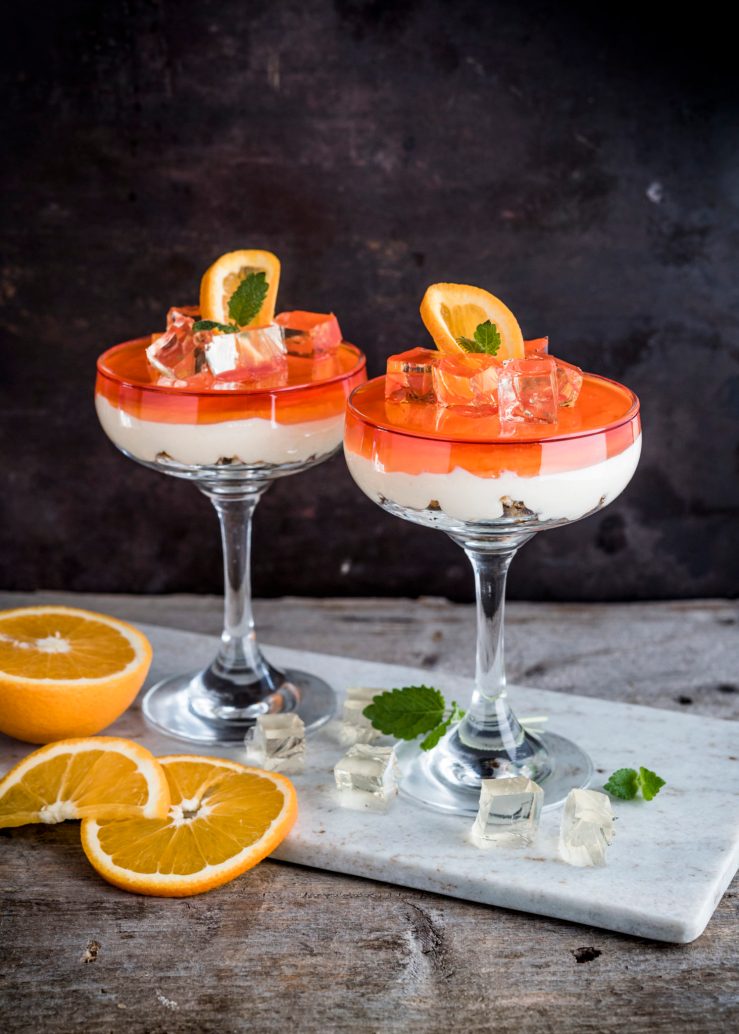
This dessert combines cheesecake and my favorite cocktail, Aperol Spritz. The cheesecake contains alcohol, so you should be careful to whom you serve it. Alternately, the ingredients containing alcohol can be boiled, whereupon the alcohol evaporates.

The cheesecake’s bottom crust consists of minced Jaffa Orange Biscuits, which are perfect for it. The combination of the biscuit’s pastry crust, orange marmelade, and chocolate form a solid, tasty base for the cheesecake. The cheesecake itself is fashioned from orange-flavored cream cheese and orange juice, so you are in for a rather orangey treat.

The top layer is a refreshing mixture of Aperol and mineral water. I think it produces a gorgeous color and constitues the core of the entire cheesecake tastewise. It is topped with “ice cubes” made from chilled Prosecco mixed with gelatin sheets: a pretty fun imitation that looks like real ice.

This cheesecake can be recommended to all lovers of Aperol Spritz and anyone else who wants to try something new. Aperol Spritz Cheesecake can also be made in a springform pan, in which case the recipe should be doubled. A pan twenty centimeters in diameter should probably do for this purpose.
aperol-0288-1

Aperol Spritz Cheesecake

Ingredients (two servings)

Crust
100 g Jaffa Orange Biscuits

Cream Cheese Filling
2 gelatin sheets
200 g orange-flavored cream cheese
1/2 dl orange juice

Aperol Jello
1 dl Aperol
1/2 dl mineral water
1 tbsp sugar
2 gelatin sheets

“Ice Cubes”
2 dl sparkling wine (Prosecco)
3 gelatin sheets

Prep time: 1 h 30 min

Cooking Directions

Chop the Jaffa Orange Biscuits into tiny bits with a knife and place at the bottom of the serving dishes. Press the crust down a bit into the dishes.

Place seven gelatin sheets in cold water and soak for at least five minutes.

Prepare the cream cheese filling by mixing the orange-flavored cream cheese and orange juice. Melt two gelatin sheets in the microwave for approximately ten seconds (remove the sheets from the water and place in a small bowl without squeezing out the excess water) and stir into the cream cheese mixture. Divide the mixture evenly among the serving dishes. Refrigerate until jelled.

Prepare the top layer by mixing the Aperol, mineral water, and sugar. Melt two gelatin sheets in the microwave for approximately ten seconds (remove the sheets from the water and place in a small bowl without squeezing out the excess water) and stir into the Aperol mixture. Pour the mixture on top of the cheesecake mixture. Refrigerate.

Prepare the “ice cubes” by melting three gelatin sheets in the microwave for approximately ten seconds. (Remove the sheets from the water and place in a small bowl without squeezing out the excess water.) Stir the melted gelatin sheets into the sparkling wine. Pour the mixture into a container, approximately fifteen centimeters square, in which clingwrap has been placed on the bottom. Refrigerate until set, approximately one hour.

Cut the sparkling wine jello into cubes and top the serving dishes with them. Garnish with a slice of orange at your discretion.

Source: Meillakotona.fi. Translated by Living in FIN

Sweet Potato Curry


9246

Sweet Potato Curry

Ingredients

4 servings

    • (600 g) sweet potato
    • (100 g) onion
    • cloves garlic
    • tbsp oil
    • 1 1/2 tsp cumin
    • tsp salt
    • 1/4 tsp black pepper
    • dl water
    • tin (approx. 230 g) chickpeas
    • 1 bag (approx. 65 g) baby leaf spinach
    • 2 tbsp tandoori curry paste
    • carton (2.5 dlcoconut cream
    • tsp lemon juice

Cooking Directions

Prep time: 30–60 minutes

  • Peel and cube the sweet potato. Chop the onion and garlic finely.
  • Sauté the sweet potato, onion, and garlic in oil in a saucepan for about five minutes. Season with the cumin, salt, and pepper. Add the water to the saucepan and simmer with the lid on another ten minutes.
  • Use a colander to rinse and drain the chickpeas. Add the chickpeas, spinch, and tandoori curry paste to the saucepan. Add the coconut cream and bring to a boil. Finally, season with the lemon juice. Check the taste. Serve the sweet potato curry with basmatic rice and naan bread.

Source: k-ruoka.fi. Translated by Living in FIN