Hannu Salakka, “In the Midst of Fear”

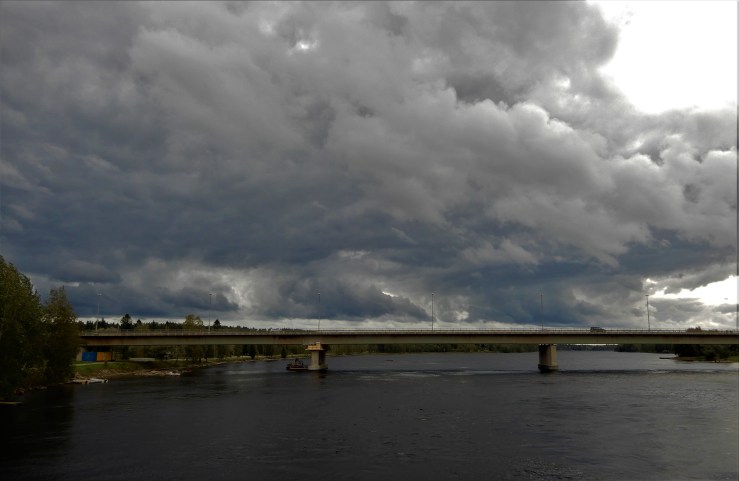
kuutostiensiltaFinnish Highway 6 bridge over the Vuoksi River in Imatra, South Karelia

Yön unet ovat sanomattoman hiljaisia,
maailma
josta ei muista muuta kuin
eläneensä.

Haaveilija nukahtaa aurinkoon
ja sulattaa siipensä,
vajoaa yöhön
ja sen metsään,
jossa minulla on rautaiset kynnet
ja terävät siivet
eikä yö ole hiljainen,
hammas puree hammasta vasten,
huohotus katkeaa,
kädet puristavat jokaisen tukahdetun äänen
kaikua joka parahtaa.

Ja joka aamu on herättävä keskelle kaikkea,
niin monen on käytävä peloissaan makuulle
ja moni herätetään kesken uniaan.

Joka aamu on herättävä keskelle
kaikkea pelkoaan,
laskettava käsi veljellisesti sen olkapäälle
ja sitten,
tunteettomasti ja uupumatta,
pakotettava se takaisin
päivänvaloon.

Night dreams are unspeakably quiet,
a world
of which nothing is remembered than
it lived its own life.

The dreamer falls asleep in the sun
and melts its wings,
subsiding into the night
and the forest
where I have iron claws
and sharpened wings,
and the night is not quiet.
Tooth grinds against tooth,
the panting breaks off,
hands stifle the echo of every pent-up voice
crying out.

Each morning waking up in the midst of everything.
So many must go to sleep in fear,
and many are woken in the middle of their dreams.

Having each morning to wake up in the midst
of all the fear,
Laying a brotherly hand on its shoulder
and then,
callously and tirelessly,
forcing it back
into the light of day.

Source: Hannu Salakka, Kuin unessa viipyen (Otava, 1990), p. 281. Translation and photo by Living in FIN

Hannu Salakka, “It Cools Slowly”

kaupungintalo.jpgImatra City Hall, Summer 2018

Viilenee hitaasti,
miedot tuoksut kohoavat aaltoina.
Valvoa myöhään, herätä varhain,
olla jouten koko pitkän päivän.
Mutta jokin huolestuttaa.
Ehkä kadonnut taito päästä irti asioista,
jotka eivät tapahdu täällä.

It cools slowly,
the mild smells rising in waves.
Staying up late, waking up early,
being idle all the livelong day.
But there is something troubling.
Perhaps the lost skill of breaking free of things
that did not happen here.

Source: Hannu Salakka, Kuin unessa viipyen (Otava, 1990), p. 156. Photo and translation by Living in FIN

Hannu Salakka, “Citizen”

DSCN3689.jpg

Kansalainen

Minun maani
johon olen kahlehdittu.
Minulla on maani kieli ja kansalaisuus
ja uskontunnustus.

Voin kävellä ja elää ja kulkea
ja muuttaa paikasta toiseen.

Maani on ottanut omakseen kasvoni,
nimeni,
tapani puhua ja tehdä
ja kirjoittanut sen kaiken muistiin.

Sillä on virkapuku ja vähän tukkaa,
se pyytää puheilleen
ja karjuu vasten kasvoja
mutta jätän ymmärtämättä,
ajattelen vain mitä se tulee maksamaan.

Jos sillä olisi sääri,
potkaisin sitä säären.
Jos se olisi näkyvästi julma
en anoisi mitään
vaan jäisin seisaalleni.

Mutta se ei ole kukaan.

Ei ketään kahleen toisessa päässä,
kahle ei vain anna periksi.

Olen tällä tiellä, elän ja kävelen.

Citizen

Country of mine
to which I am shackled.
Country whose tongue and nationality
and creed are mine.

I can walk and live and travel
and move from place to place.

My country has coopted my face,
my name,
my manner of speaking and doing things
and written it all down.

It has a uniform and sparse hair.
It asks to say its piece
and bellows in people’s faces.
But I left the fool,
thinking only what I would have to pay.

If it had a shin,
I would kick its shin.
If it were conspicuously cruel,
I would not plead for anything,
but I would remain standing.

It is nobody, though.

There is no one on the other end of the shackles.
The shackles just don’t buckle.

I am on this road, living and walking.

Source: Hannu Salakka, Kuin unessa viipyen (Otava, 1990), pp. 284–285. Translation and photo by Thomas H. Campbell

Hannu Salakka, “Since When Have I Always Lied?”

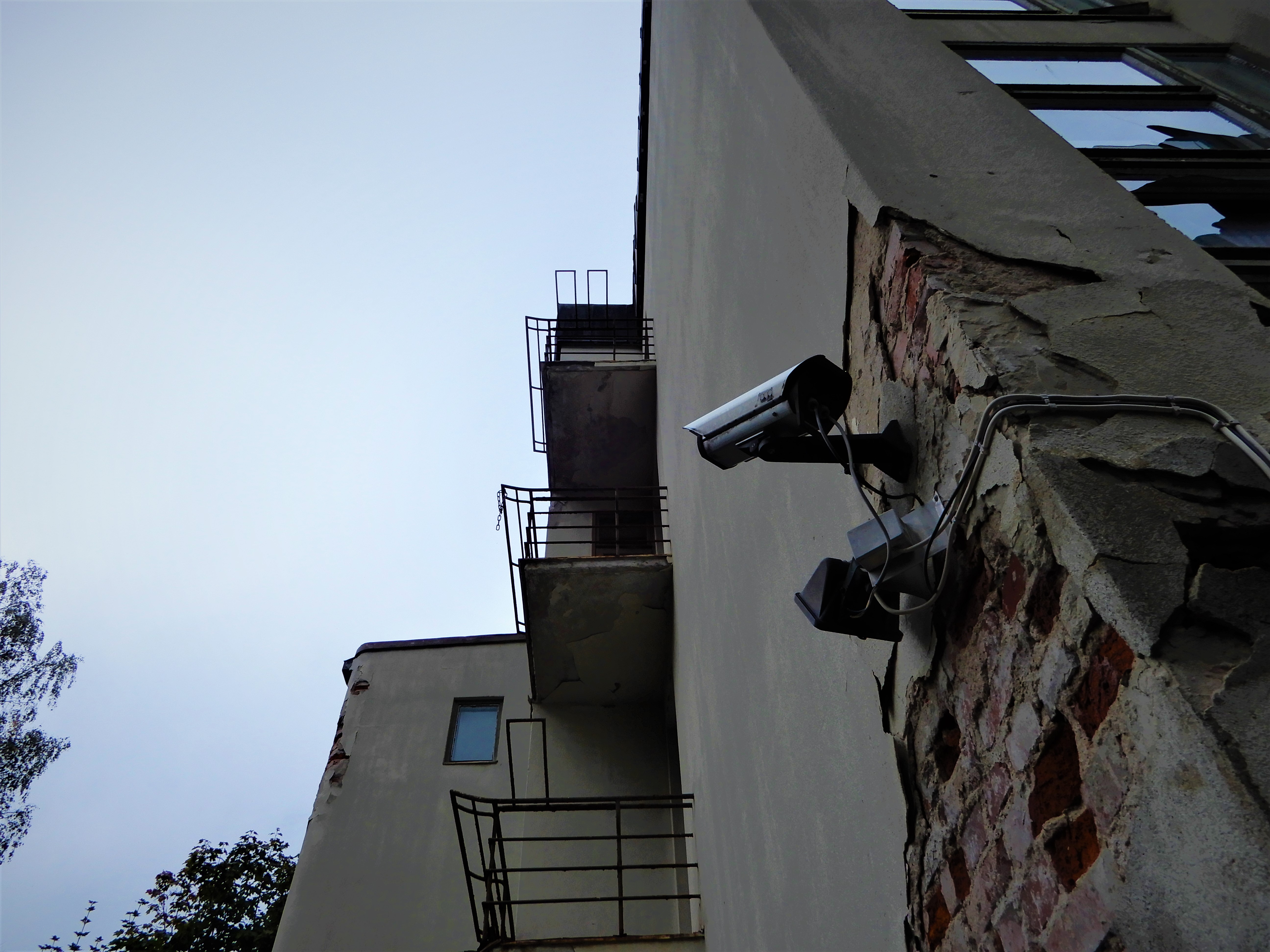
A view of the abandoned Tiuru Hospital, Tiuruniemi, South Karelia, 5 September 2018. Photo by Living in FIN

Mietin, mistä alkaen olen aina valehdellut,
keksinyt, sepittänyt, muistanut tahallani väärin,
muuttanut merkityksiä?
Sitten siitä tuli toinen luonto,
työ,
enkä enää välittänyt tietää
mikä minuun oli mennyt.

Väsyn ihmisiin helposti
enkä välitä heistä enää,
mutta heti kun olen yksin alan kaivata
jotakin toista,
seurassa nauran, juhlin, juttelen, keksin tarinoita,
mutta heti kun tuli hetkikin hiljaista
annan sijan
sisälläni asuvalle
täsmälleen itseni kokoiselle erakolle
joka on vaiti
toreilla, ruuhkabusseissa, pääkaupunkien kaduilla;
vain jossain kaukaisessa erämaan kolkassa
saattaa törmätä kummajaiseen
joka heti alkaa jutella jokaiselle kuin vanhalle tuttavalle.

En ole nähnyt paikkaa
jossa en olisi halunnut käydä, mutta vain käydä,
jotkut muistelevat mennyttä,
suunnittelevat tulevaisuuttaan,
minä elän tätä päivää,
en mieti iltaan saakka,
se kuitenkin tulee, väsyn,
menen toiseen huoneeseen, alan nukkua,
tai kävelen kadulla,
jos minut nähdään,
käännyn jostain kulmasta ja katoan,
ei kukaan saa minua elämästäni kiinni.

I was wondering: since when have I always lied,
concocted, made up, deliberately recalled things wrongly,
changed the sense of things?
It later became second nature,
work.
I no longer cared to know
what had gotten into me.

I tire of people easily.
I don’t care about them anymore.
But as soon as I’m alone, I miss
someone else,
laughing, partying, chatting, making up stories in company.
But as soon as it has become quiet for a second,
I give way
to the loner living inside me,
exactly my same size,
who is silent
at markets, on crowded buses, in city streets.
Only in a distant corner of the wilderness
might you run into an oddball
who immediately chats to everyone like an old buddy.

I haven’t seen a place
where I wouldn’t want to go, but only go.
Some remember the past,
plan their future.
I live this day,
I don’t think until evening.
Nevertheless, it comes. I am tired,
I go to another room and sleep.
Or I walk down the street.
If I am seen,
I turn a corner and disappear.
No one catches me out in my life.

Source: Hannu Salakka, Kuin unessa viipyen (Otava, 1990), pp. 536–537. Translated by Thomas H. Campbell

Hannu Salakka, “Father’s Faded Shirtback”

The demolition of Mansikkala School, Imatra, South Karelia, 16 June 2018. Photo by Living in FIN

Isän kauhtunut paidanselkä
pullistelee tuulessa.
En edes yritä kipittää hänen edelleen.
Sitten hän pysähtyy, kääntyy ja katsoo minuun
ja sanoo:
tulee vain tänne,
ei täällä ole mitään pelkäämistaä.
Ja minä hullu uskon häntä.
Ja niin joudun kauas tulevaisuuteen.

Father’s faded shirtback
swells in the wind.
I don’t even try to scurry in front of him.
Then he stops, turns, looks at me, and says,
“It’s only coming.
There’s nothing to fear.”
I am crazy enough to believe him.
And so I would wind up far in the future.

Source: Hannu Salakka, Kuin unessa viipyen (Otava, 1990), p. 587. Translated by Thomas H. Campbell

Vilja-Tuulia Huotarinen, “Bandages”

dscn1579

Laastareita on mukana,
kaiken voi korjata, paikata, peitota.
Tehdä eheäksi. Vartalo on neulanpistoja täynnä,
koruommel kun suojaväri,
kokoon harsitut saumat terälehtien hiussuonet.
Kaiken varalta en halua parantua.
Sormenpäähän nousee tumma nuppu,
tuskin aavistuksen kokoinen

alan puhaltaa

ja kukka aukeaa, valtoimenaan.
Ratamonlehdet joutavat mennä
ja jokainen kaunis sana maatuu,
kaatuu astiakaapin lautasrivistö.
Langanpäät sulavat suolaan.
Tähän tulee sydämenlyönti,
valonkatkaisijan kipakka isku.

* * * * *

Bandages we have.
Everything can be mended, patched, defeated.
Made whole. The body is chockablock with stitches,
embroidery as protective coloring,
seams caulked together, capillaries of petals.
To be on the safe side, I don’t want to get better.
A dark bud thrusts into the fingertip,
the size barely suggested

inflating the areola

and the flower opens, riotously.
The plantain leaves have to go,
every lovely word decomposes,
and the plates stacked in the cupboard collapse.
The thread ends dissolve in the salt.
The heartbeat comes to this,
The light switch’s sudden attack.

Source: Vilja-Tuulia Huotarinen, Sakset kädessä ei saa juosta (WSOY, 2004), p. 33. Photo and translation by Thomas H. Campbell

Vilja-Tuulia Huotarinen, “Everything Must Be Imagined”

kauppakatu disaster

Kaikki on kuviteltava, jos mielii pysyä hengissä.
Kun nurkan takaa huutaa pum, ei tiedä, keneen osuu.
Piha on ei kenenkään maat, ruumiit makaavat rauhassa,
hipihiljaa vieri veressä. Teen keinussa kieppejä kaksitoista
kertaa peräkkäin, en ole aivan terve. Puut ovat tänään vaiti,
vain Drakenit vihlovat ilmaa, kovaa ja korkealta laulan
radion päälle.

Olen vanha, ehkä kymmenen vuotta. Humallun tuskasta,
kepeistä suruista tulee krapula. Keittiöön laskeutuu kirpeä
napalmi ja uunissa tuoksuu vehnäs. Syön rusinat
yksitellen jokaisen pullan päältä.

* * * * *

Everything must be imagined if you want to stay alive.
When you shout “Bang!” from round the corner, you don’t know who you’ll hit.
The yard is no man’s land. The bodies lie in peace,
quite quietly, side by side, bloodied. I do twelve twirls in a row
on the swing. I’m not entirely well. Today the trees are still,
only the Drakens grate the air. I sing loud and high
over the radio.

I’m old, maybe ten. I’m drunk on suffering,
easy woes give me a hangover. Acrid napalm
settles on the kitchen, the oven smells of rolls. I eat the raisins
one by one from the top of each and every bun.

Source: Vilja-Tuulia Huotarinen, Sakset kädessä ei saa juosta (WSOY, 2004), p. 56. Photo and translation by Thomas H. Campbell

Johanna Venho, “The Whole Evening is Youful”

kekkola-rappunen-evening

Koko ilta sinun-täysi
(kun mökki hämärtyi ja ikkuna lahdelle
oli elävä taulu, kesäkuunyö),
oikaisen metsän läpi, sormien lomasta valuu
muistia, vanhaa laulua, kivimurskaa, en saa keuhkoihin
kylliksi ilmaa, siipisulkia, kaikki hipoo,
en saa kiinni

* * * * *

The whole evening is youful.
(The cottage blurred, the window overlooking the bay
was a tableau vivant, a June night.)
I take a shortcut through the woods: memories, an old song, rubble
slip through the holiday’s fingers. I cannot get enough
air, wing feathers in my lungs. Everything converges.
I won’t be trapped.

Source: Johanna Venho, Postia Saturnukseen (Porvoo–Helsinki–Juva: WSOY, 1998), p. 40. Photo and translation by Living in FIN

Jorma Etto, “Mothers”

fog

Äidit
Siellä ne, osastolla, synnyttäneet,
petinsä pohjalla pötköttävät,
tyytyväiset tytöt,
ruusun ja maidon makeassa hajussa,
mahdottoman mellevinä,
möyheinä möykkinä, hymyhyytelöinä.
Tupakkirullat tuu tuu tuotiin,
lirulirkutus lirisi,
tussutettiin, tassutettiin, tuputettiin,
lettas-sentään, tissin-tassin,
omenaista, olevaista,
pehmokaista pullukaista paijatella,
maamotella makeaista
ilo on, on onni,
nänni nauraa, koko äiti.

Mothers
They are there, in the ward, after birthing,
cuddled deep in their cots,
contented lassies,
smelling sweetly of rose and milk,
impossibly, incomparably cozy,
super succulent blobs, smiling jellies.
The cigars were ro-ro-rolled,
there was dribbling, cooing, and gurgling,
fiddling, tiptoeing, and foisting,
dear oh dears, pitter patters.
Joy it is, a happiness
mothering a sweet thing,
snuggling a soft chubby,
an appley entity.
The nipple giggles, the whole mother.

Source: Jorma Etto, Suomalainen ja muut valitut (Oulu: Pohjoinen, 1985), p. 52. Photo and translation by Thomas H. Campbell

Jorma Etto, “Life Is”

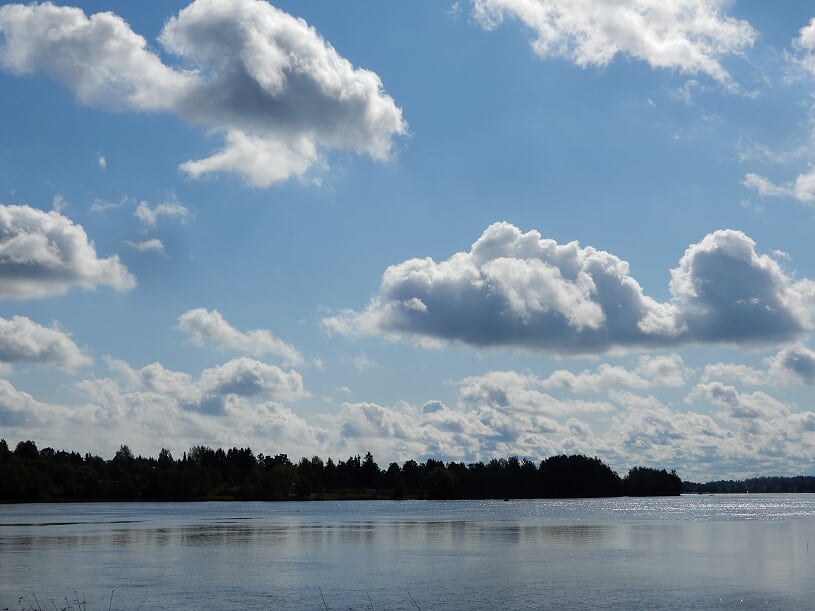
clouds over the vuoksi

elämä on
niin suurena niin tavoittamattomana
oli elämä edessäsi
ja sinä sanoit itsellesi
ennen kuin kaiken jätät
kaiken myös ymmärrät

nyt
kun käännyt katsomaan taaksesi
kun uskallat sen tehdä
näet elämän
yhtä suurena yhtä tavoittamattomana
ja poikasi näet
seisovan hautakivesi äärellä
pitäen kädestä jotakin konttorityttöä
(hautausmaan rauhassa heilläkin
on tilaisuus olla oma itsensä)
ja kuulet poikasi kuiskaavan
hänen suloiseen pikku korvaansa
salaisuuden jota sinä et ymmärtänyt
elämä on
(niin hän kuiskaa
ja hän tietää)
elämä on

life is
life confronted you
so great so unattainable
and you said to yourself
before you left it all
you would understand it all, too

now
when you’ve turned to look back
when you dare to do it
you see life
just as great just as unattainable
and you see your son
standing before your tombstone
holding the hand of some office girl
(in the cemetery’s calm they have
a chance to be themselves)
and you hear your son whispering
into her sweet little ear
the secret you didn’t understand
life is
(so he whispers
and he knows)
life is

Source: Jorma Etto, Suomalainen ja muut vaalitut (Oulu: Pohjoinen, 1985), p. 5. Photo and translation by Thomas H. Campbell