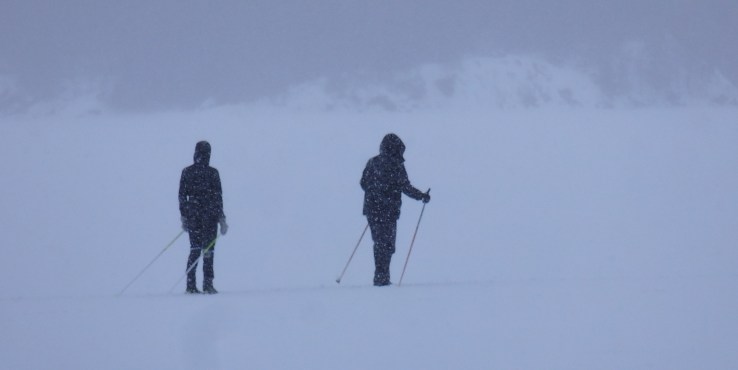
Kari Levola, “At the End of a Long Road Is a Kiosk Sign”

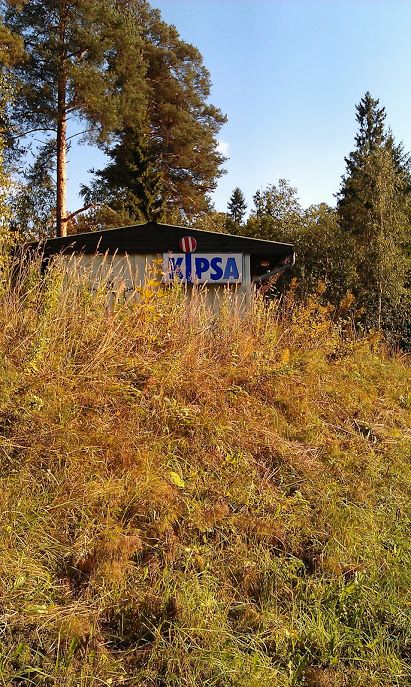
IMAG3490


Pitkän tien päässä on kioskin kyltti
pimeässä sitä ei näe
eikä kioskia enää ole
mutta sen voi kuvitella ja muistaa

Tuon kuvan minä näin ennen nukahtamista
ja kirjoitan nyt ylös
talvisena aamuna
niin kuin siinä olisi jotakin tärkeää
ehkä olikin, kun yön hämärissä mietin
ja vielä muistan
ehkä se on pimeä tie, ehkä se on kyltti
tai vain se että muistaa

* * * * *

At the end of a long road is a kiosk sign
you cannot see it in the darkness
and the kiosk is no more
but it can be imagined and remembered

I saw this picture before falling asleep
and now I am writing it down
on a winter’s morning
as if it were something important
maybe it was that I thought about it in night’s darkness
and still remember it
maybe it’s the dark road, maybe it’s the sign
or only that it is remembered

— Kari LevolaKaikki kartat ajan tasalla (Helsinki: Tammi, 2006)

Photo and translation by Living in FIN

Kari Levola, “I Once Beckoned Words Home”

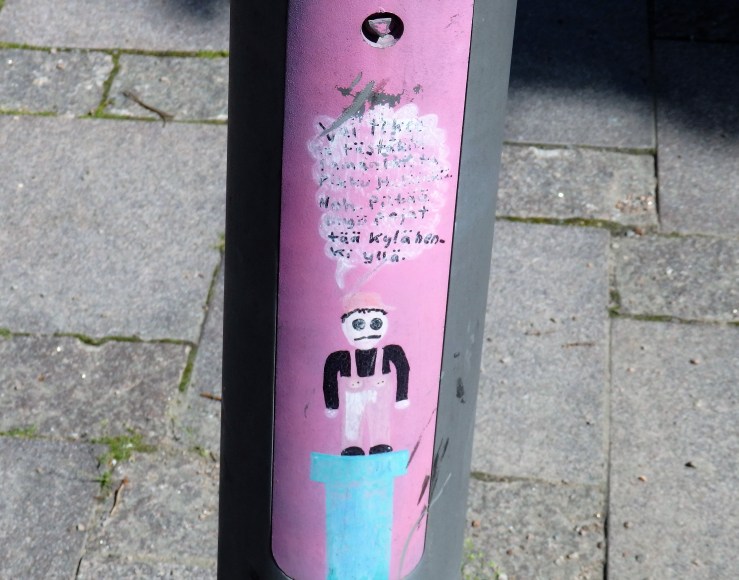
OLYMPUS DIGITAL CAMERA

Kerran kutsuin
sanoja kotiini, vaahtera
täytti ikkunan
ja alhaalla pihalla
kaksi ihmistä
katsoi ylös
toistensa hiuksiin.
Niin on kevät kuin polkupyörä
humina korvissa
vesi jonka tuuli pusertaa silmistä
ojat jotka vieläkin kutsuvat
koulusta palaavia lapsia.
Kerran kutsuin sanoja kotiini
ja tänne ne jäivät
ja niitä on talo täynnä kuin sukkia
likaisia ja puhtaita, lämpimiä.
Kun kaihtimien välistä
kurkistan taivaalle
näen lentokoneen höyryä.

* * * * *

I once beckoned
words home. A maple
filled up the window,
and down in the yard
two people
looked up
at each other’s hair.
So spring is like a bicycle,
a whoosh in the ears,
what the wind makes the eyes water,
the ditches that still beckon
children returning from school.
I once beckoned words home
and they stayed.
They are like a house full of socks,
dirty and clean and warm.
When I peek into the sky
through the blinds
I see an airplane’s contrail.

Kari Levola, Kaikki kartat ajan tasalla (Helsinki: Tammi, 2006)

Photo and translation by Living in FIN

Jorma Etto, “A Finn”

Suomalainen
Suomalainen on sellainen joka vastaa kun ei kysytä,
kysyy kun ei vastata, ei vastaa kun kysytään,
sellainen joka eksyy tieltä, huutaa rannalla
ja vastarannalla huutaa toinen samanlainen:
metsä raikuu, kaikuu, hongat humajavat.
Tuolta tulee suomalainen ja ähkyy, on tässä ja ähkyy,
Tuonne menee ja ähkyy, on kuin löylyssä ja ähkyy
Kun toinen heittää kiukalle vettä.
Sellaisella suomalaisella on aina kaveri,
Koskaan se ei ole yksin ja se kaveri on suomalainen.
Eikä suomalaista erota suomalaisesta mikään,
ei mikään paitsi kuolema ja poliisi

—Jorma Etto, Ajastaikaa (WSOY, 1964)

A Finn
A Finn is the kind of person who answers when she isn’t asked,
asks when he isn’t answered, and doesn’t answer when asked.
The kind of person who loses her way, hollers on the shore,
and another like him hollers from the opposite shore.
The forest resounds, echoes, the big pines drone.
The Finn comes from over there, groaning, and here she is, groaning.
He goes over there, groaning, and groans as if she is in the sauna
When another person tosses water on the stove.
A Finn like this always has a pal.
She is never alone, and that pal is a Finn.
Nothing separates Finn from Finn,
Nothing except death and the police.

* * * * * *

Jorma Etto’s poem “A Finn” rose to national prominence when President Urhu Kekkonen quoted it during a New Year’s speech in the 1970s. When asked by journalist Maarit Tyrrkö what a Finn was, during a tape-recorded interview in 1976, Kekkonen also quoted the poem, albeit omitting lines six through eight accidentally or intentionally.

I have taken perhaps unwanted license with the sex of the collective singular Finn sketched in the poem, because the Finnish language has complete gender neutrality and, thus, utter ambiguity, when it comes to grammar, if not always (or, hardly ever) in real life. If you would like a more conventional albeit decidedly masculine rendering of Etto’s classic poem, see Keith Bosley’s excellent translation.

Photo and translation by Living in FIN. Video courtesy of Apu magazine.

Jorma Etto, “The Dogs”

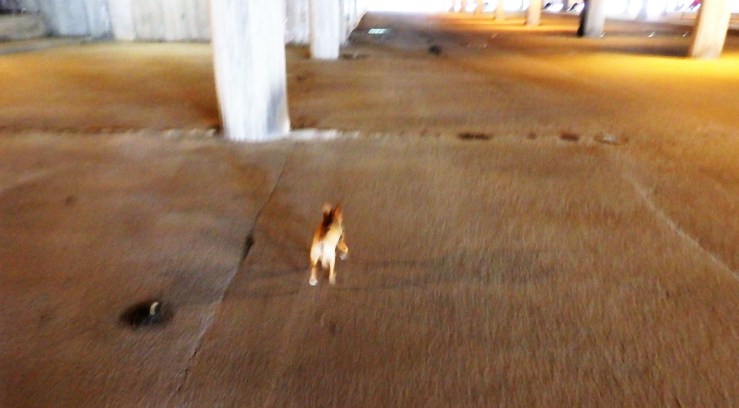
OLYMPUS DIGITAL CAMERA

Koirat
Nuuskimme jälkiä, haistoimme jätteitä,
nuolimme kivien raot,
vainusimme varjot jotka kerran olivat.
Viimein löysimme unohtuneen
mirhamintuoksuisen liinan
kaukaa Jordanin takaa.

* * * * *

The Dogs
We sniffed tracks, we smelled trash,
we licked cracks in rocks,
we scented the shadows that once had been.
Finally, we found a forgotten
cloth that smelled of myrrh
far beyond the Jordan.

Jorma Etto, Ajastaikaa (WSOY, 1964)

Translation and snapshot by Living in FIN

Vilja-Tuulia Huotarinen, “If You Let the Cows Out on Monday”

cows near kuninkaantie in sipoo-wiki commons

Jos lehmät päästää ulos maanantaina
ne menevät metsään, painuvat pitkälle
pyrkivät putouksiin, kallionkoloon ja alas jyrkänteeltä.
Kuolleet palaavat pihatietä pitkin:
Rebekka, Isolde, Rosamunda.
Allison, Eulalia, Eufrosyne.
Ne eivät tule kummituksina vain vanhoina ystävinä.
Ketä ne, siivettömät, täällä suojelevat?
Laihaa likkaa, laihaa likkaa.

* * * * *

If you let the cows out on Monday
they head for the woods, they go far
they run for the falls, the hole in the rock and off the cliff.
The dead return along the road to the yard:
Rebecca, Isolde, Rosamunde,
Allison, Eulalia, Euphrosyne.
They come not as ghosts, but as old friends.
Who are they protecting here, the wingless ones?
The skinny girl, the skinny girl.

— Vilja-Tullia Huotarinen, Iloinen Lehmän Runot (WSOY, 2009)

Translated by Living in FIN. Photo courtesy of Wiki Commons

* * * * *


Hannu Salakka, “The Snowfall Slowly Sifts the Air Pollution”

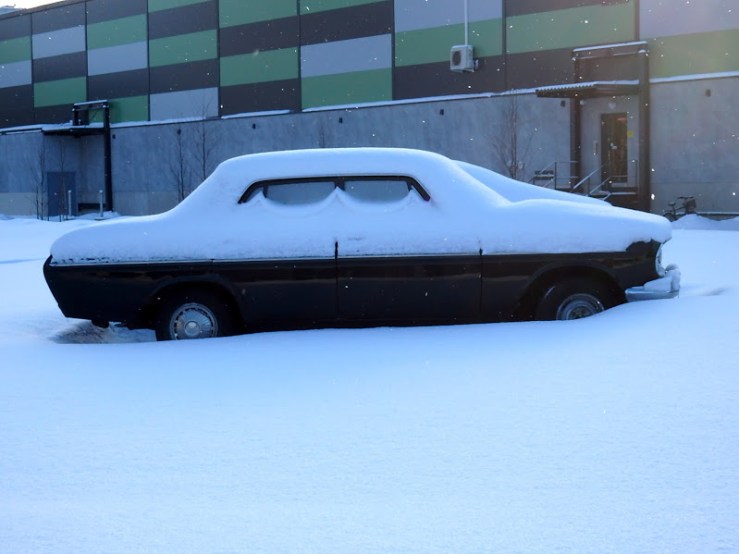
P2250022

Lumisade seuloo hitaasti ilman epäpuhtaudet.
Seinät ovat kylmät,
tekee mieli nostaa jalat tuolille.
Vatsassasi
ihon alla on arpia
niinkuin jonkin tuntemattoman eläimen kynsiminä.
Lapsi juoksi jo lattiala
ja puhuu itselleen omalla kielellään,
se on jo lähdössä,
me jäämässä tähän.

**********

The snowfall slowly sifts the air pollution.
The walls are cold,
Making you feel like propping your feet on the armchair.
Under the skin
In your stomach are scars
Like an unknown animal’s claws.
The child dashes round the floor,
Speaking to itself in its own tongue.
It’s on its way,
We’re staying here.

Hannu Salakka, Ennen kapaisin tähän (Otava, 1983)

Translation and photograph by Living in FIN

Jouni Inkala, “This Is the World”

OLYMPUS DIGITAL CAMERA

Tässä on maailman, tässä sen reuna.
Pilvien nyrkit, kallonvalkoinen valo.

Sen nauru. Painovoimattomien lokkien nokista
niiden kirkaistessa,
kivien pinnoilta, missä aika raastaa näkyvää hiljaisuutta.

Tässä kuiskauksessa jos se on ainoaa vapautta.

******

This is the world, this is its edge.
Clouds likes fists, light white as a skull.

Its laugh. From the beaks of weightless gulls
When they shriek.
From the surfaces of rocks, where time grates a conspicuous silence.

In this whisper if it is the only freedom.

—Jouni Inkala, Tässä sen reuna (WSOY, 1992)

Translation and photograph by Living in FIN

Eeva Kilpi, “February”

eeva_kilpi_4
Eeva Kilpi

Helmikuu
On irrottava lapsistaan, sanoo isoäiti.
Se on vaikeampaa kuin vanhemmista irtoaminen,
koska vastuu siirtyy eteenpäin
ja kulkee mukana hautaan saakka.

On suojeltava lapsuutta lapsissaan,
heidän viattomuuttaan
joka vajoaa aikuisuuden kerrosten alle.

Siellä se kuitenkin yhä on,
syvällä, ahtaalla ja piilossa,
kunnes sen kohtaa taas
lapsenlapsissaan.
Silloin on suojeltava heitä,
sillä äkkiä hekin vain pyörivät maailmalla
ikäistensä kanssa

ja sinä ihmettelet
mihin aika meni,
miksi he muuttuivat
kun itse pysyit samana:

lapsena joka tarkkailee maapallon elämää
vanhuutensa periskoopilla.

Eikä kukaan tiedä
että tähystäjä on talvisodan aikainen pikkutyttö,
vanhentumaton,
jolle yhä tapahtuu mullistavia asioita,
jonka maailma yhä järkkyy.

– Minä virtailen, sanoi äiti.
– Minäkin virtaan, äiti,
ees ja taas.

February
You need to detach yourself from your children, says grandmother.
It is harder than separating from parents,
because the responsibility moves on
and goes with you to the grave.

You need to protect the childhood in your children
their innocence
which sinks under adulthood’s layers.

It is still there, however,
deep, cramped and hidden,
until you encounter it again
in your grandchildren.
Then the need to protect them,
since suddenly they too are spinning round like the globe
with peers

and you wonder
where the time went
why they changed
while you yourself stayed the same:

a child who monitors life on earth
through the periscope of old age.

No one knows
that the lookout is a little girl from the Winter War,
who never grows old,
to whom devastating things are still happening,
whose world is still shaking.

“I’m flowing,” said mother.
“I’m flowing, too, mother,
back and forth.”

—Eeva Kilpi, Kuolinsiivous (WSOY, 2012)

Translated by Living in FIN. Photo of Eeva Kilpi courtesy of Kotiliesi magazine

Eeva Kilpi, “Animalia”

Animalia

Jokainen eläin on subjekti.
Se on: oman elämänsä keskipiste,
itsensä puolustaja,
varuillaan joka suuntaan
niin kuin sinä ja minä.
Omanarvontuntoinen:
ei sallisi itseään loukattavan.

Kohteita on vain rakkaudella
ja julmuudella ja toiveilla,
muuten on kaikki vain omaa kokemusta
Kaikki on minä.

Minä riipun sinun olkapäilläsi tapettuna.
Minä pelkään kun lähestyt pihdit kädessä.
Minä istun ja odotan sinun häkissäsi.
Minä palelen. Minulla on ahdasta.
Minuun koskee.

Olet unohtanut jotain oleellista.
Olet unohtanut että
minä olen minä
Ei tämä ole stressiä.
Minä kärsin.

Every animal is a subject.
That is, the focal point of its own life,
Defender of itself,
Vigilant in all directions
Like you and me.
Self-respecting:
It would not let itself be injured.

Only love and cruelty
And desire have objects.
Otherwise, everything is only one’s own experience.
One’s experience is everything.
Everything is me.

I dangle from your shoulders, murdered.
I am afraid when you approach, pliers in hand.
I sit waiting in your cage.
I am freezing. I am cramped.
I hurt.

You have forgotten something essential
You have forgotten
I am me.
This is not stress.
I am suffering. Continue reading “Eeva Kilpi, “Animalia””