Pentti Saarikoski, Two Poems

img81952-previewImage
Pentti Saarikoski

En valinnut asiaa,
asia
valitsi minut.
En etsinyt taistelua, taistelu
tuli kohdalleni,
ja nyt olen mukana.

I did not choose the cause,
the cause
chose me.
I was not looking for a fight, the fight
came to me,
and now I am part of it.

___________________________________________________

Vakavasti kehotan harkitsemaan, onko järkevää, ja mikä on sitä,
vakavasti kehotan kuuntelemaan
ääniä: maailmaa.
Taistelen, en etsinyt taistelua,
mukana ollen
vakavasti kehotan harkitseman
äänet, maailman:
se mitä kuunnellessanne kuulette,
se mitä tarkkaan katsoessanne näette,
se on Teoria, Aate ja
Suojelusenkeli
ainoa jolla on kantavat siivet.

I seriously urge you to consider whether it is reasonable and what it is,
I seriously urge you to listen
to voices: to the world.
I am fighting, I was not looking for a fight,
as part of it
I seriously urge you to consider
the voices, the world’s voices:
what you hear when listening,
what exactly you see when looking.
It is Theory, Ideology, and
the Guardian Angel,
the only one bearing wings.

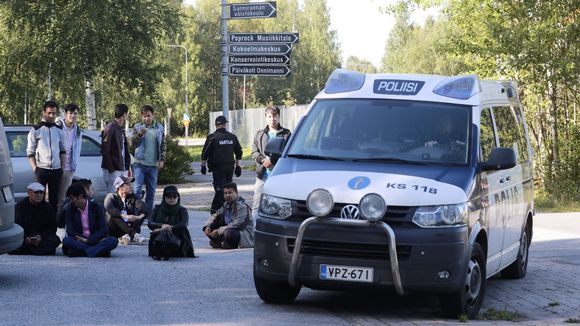
—Pentti Saarikoski, Runot (Otava, 2004), p. 204; originally published in Ääneen (Piccolo, 1966). Photo courtesy of Yle. Translated by Living in FIN.

Hannu Salakka, “It Cools Slowly”

imatra-destroyed sculpture

Viilenee hitaasti,
miedot tuoksut kohoavat aaltoina.
Valvoa myöhään, herätä varhain,
olla jouten koko pitkän päivän.
Mutta jokin huolestuttaa.
Ehkä kadonnut taito päästä irti asioista,
jotka eivät tapahdu täällä.

* * * * * * * * * *

It cools slowly,
the mild smells rising like waves.
Staying up late, waking up early,
being idle the livelong day.
But something is unsettling.
Perhaps the lost art of getting loose of things
that did not happen here.

—Hannu Salakka, Kesä kesältä syvemmin (Otava, 1977), p. 36. Translation and photo by Living in FIN.

A few years ago, citing “numerous” complaints from the “general public,” the Imatra municipal parks and maintenance department summarily loaded the lovely brutalist modernist sculpture in the middle of the picture, above, onto a flatbed truck, took it to the local rolled steel plant, and melted it down in the plant’s blast furnace.

It was left to the Imatra municipal culture department, which had not been warned by the parks and maintenace department it was planning to commit this act of iconoclasm, to telephone the sculptor, who is quite famous in Finland and alive and well in Helsinki, to explain what had been done to his artwork by the yahoos in Karelia. It was reported that he took the strange news quite well, all things considered. LIF

Hannu Salakka, “There Has Been Nothing Special”

OLYMPUS DIGITAL CAMERA

Ei ole mitään erikoista.
Talosta ei kuollut ketään,
pois matkustaneista ei ole kuulunut.
Aivan tavallinen syksy.

Nämä silmät vain
niin monta kymmentä kuvaa syksyistä nähneet
eivät luota ainoaan käsilläolevaan.

Selailevat ennakkotapausten arkistoja.

* * * * * * * * * *

There has been nothing special.
No one from the house died,
nothing has been heard of those who journeyed away.
Quite a normal autumn.

These eyes alone,
which have seen so many dozen pictures of autumns,
do not trust the only thing ready to hand.

They browse the archives for precedents.

—Hannu Salakka, Niin joudun kauas tulevaisuuteen (Otava, 1989), p. 120. Translation and photo by Living in FIN


Eeva Kilpi, “Reflections”

OLYMPUS DIGITAL CAMERA

Mietteitä | Reflections

Hallitsija on suojeltavin.
Riistäjä haavoittuvin.
Saalis rakastettavin.

The ruler is the most protected.
The exploiter, the most vulnerable.
The prey, the most loved.

::::::::::::::::

Sosialistinen realismi.
Hyväsdämisen Gorki-ressukan
liberaali erehdys.

Socialist realism.
Gorky the kind-hearted wretch,
the liberal mistake.

::::::::::::::::

Humanismin heikkous on itse periaatteessa:
antaa myöten.
Juuri siksi sita kannattaa levittää.

Humanism’s weakness is in the principle itself:
giving in.
That is exactly why it is worth spreading.

::::::::::::::::

Demokratian perusoikeuksia on sananvalta.
Mutta siinäkin tavallisella kansalaisella on
useimmiten vain sana, ei valtaa.

The power to deliberate and decide is among democracy’s basic rights.
When it comes to it, though, the run-of-the-mill citizen has
only the say more often, not the power.

::::::::::::::::

Kaikesta mikä on hyvää voi luopua.
Pahasta luopuminen on vaikeampaa,
koska sen haluaisi muuttaa.

How nice if you can give up everything.
Giving up bad things is harder,
because you would like to change them.

::::::::::::::::

P.S. Arvostellessani politikkaa
en koskaan tarkoittanut,
että lahjakaitten pitäisi luopua siitä.

P.S. When criticizing politics
I have never implied
the gifted should give it up.

::::::::::::::::

Anna tuhannen kukan kukkia:
älä poimi niitä.

Let a thousand flowers bloom:
do not pick them.

::::::::::::::::

Kaikki on paljaana edessämme.
Meidän mieltämme vain kattaa selitysten kuori.

Everything is naked before us.
Our opinion only papers over the shell of explanation.

::::::::::::::::

Säännöt ovat yleisimpia poikkeuksia.

Rules are the most common exceptions.

::::::::::::::::

Institutionalisointi.
Sana on yhtä kauhea kuin asia.

Institutionalization.
The word is as awful as the thing.

::::::::::::::::

Ole oma instituutiosi.

Be your own institution.

::::::::::::::::

Jää punajuova:
Kauneuden voimakas kaipuu.
(Korjaus E. Leinon tekstiin)

A red streak of ice:
The powerful longing for beauty.
(A correction to Eino Leino’s 1908 “Elegy)

::::::::::::::::

On vain yksi periaate: epätäydellisyys.
Joka hyväksyy sen, jaksaa elää.

There is only one principle: imperfection.
Anyone who accepts it can bear to live.

::::::::::::::::

Kammoan täydellisyyttä.
Luojan kiitos se vaara ei minua uhkaa.

I dread perfection.
Thanks to the Creator that danger does not threaten me.

::::::::::::::::

Viimeinen josta haluan pitää kiinni:
Oikeus omiin virheisiin.

The last thing I hold on to:
The right to my own mistakes.

::::::::::::::::

Heikkous se todella voimaa kysyy.

Weakness really asks for power.

::::::::::::::::

Miehistä ihminen oppii.

A person learns from men.

::::::::::::::::

Köyhyyteen ei auta edes raha.

Even money is no help in poverty.

::::::::::::::::

Se jonk’ ei leipää kyynel kastellut,
se jok’ ei koskaan vaipuin sielun vaivaan,
oo itkein autossansa istunut,
ei tunne teitä hän, te vallat taivaan.
(Goethe – Koskenniemi – E. Kilpi)

Who ne’er watered bread with tears,
Who ne’er suffered from an ailing soul,
Sat weeping in his car,
He knows you not, ye powers of heaven.
(Goethe, “Song of the Harper,” adapted by Eeva Kilpi from Veikko Koskenniemi’s Finnish translation)

::::::::::::::::

En pysty ystävytteen:
se vaatii niin paljon.
Osaan rakastaa.
Siihen tarvitaan vain yksi.

I cannot manage friendship:
it requires so much.
I know how to love.
It requires only one.

::::::::::::::::

Lempeys on miltei poikkeuksetta älykkyyttä.
Älykkyys usein julmaa.

Tenderness is almost without exception intelligence.
Intelligence is often cruel.

::::::::::::::::

Minkä metsäsissin maailma minussa menettikään
riutumaan yhdistyksiin,
kokouksissa kalpenemaan.

What a Forest Guerilla* the world lost in me,
languishing in associations,
turning pale at meetings.

* The Forest Guerrillas (Finnish: metsäsissit) were a Finnic resistance movement formed by some of the inhabitants of the parishes of Repola and Porajärvi in addition to several White Guard volunteers after their territory was ceded to Bolshevist Russia in the Treaty of Tartu of 1920. The conflict is known as the East Karelian Uprising. The 2,000 metsäsissi forces managed to capture large parts of East Karelia during their rebellion against their Russian rulers in 1921, aiming to unite these areas with the newly formed Republic of Finland. Ultimately, however, in 1922 the rebel forces withdrew into Finland. Source: Wikipedia

::::::::::::::::

Kyllä ihiminen pystyy olemaan kova:
hylkämään, loukkaamaan, pettämään,
jättämään, olemaan välittämättä.
Mutta miksi hän yrittää kaikin tavoin
todistaa sitä itselleen?

Yes, humans can be tough:
forsaking, insulting, betraying,
neglecting, heedless.
But why do they try in every way
to prove it to themselves?

::::::::::::::::

Ei yksinäisyydesta pidä kärsiä.
Se on muutenkin kyllin raskas taakka
yhden hengen kannettavaksi.

You must not suffer from loneliness.
It is enough of a burden as it is
having to be one person.

::::::::::::::::

Olen menettänyt muistini:
en muista aikaa
jolloin en olisi ollut väsynyt.

I have lost my memory.
I cannot remember a time
when I was not tired.

::::::::::::::::

En muista asioita, vain ilmaisuja.
Minun mielikuvitukseni todellisuusko
se pyrkii näin voimakkaasti toteutumaan:
tappaa minusta kaiken näennäisen.
Mikä pettymys olla henkihieverissä.

I do not remember things, just expressions.
The reality of my imagination
strives so mightily to make it come true:
to kill everything apparent in me.
What a disappointment to be feeble spirited.

::::::::::::::::

On paljon inhimillistä
joka on minulle vierasta.

Much that is human
is alien to me.

::::::::::::::::

Että mitäkö odotan elämältä?
Elämyksiä:
iloa ja moraalisia ongelmia.

And what do I expect from life?
Experiences:
joy and moral dilemmas.

::::::::::::::::

Rakkaus: vallankumous ihmisessä.

Love: revolution in a person.

::::::::::::::::

Rakkaus on ihmisen elastisin ulottuvuus.
Se on kuin emätin.
Sopeutuu isoon ja pieneen.

Love is a person’s elastic dimension.
It is like the vagina.
It adapts itself to big and small.

::::::::::::::::

Luonto ei petä.

Nature does not disappoint.

—Eeva Kilpi, Terveisin (WSOY, 1976), pp. 99–106. Photo and translation by Living in FIN. Thanks to VVZ for identifying the creature in the photo as a hoverfly.

Hannu Salakka, “Reflections”

OLYMPUS DIGITAL CAMERA

Mietteitä | Reflections

Se mitä tarjotaan ei ole sitä, mikä on tarpeen, vaan yleisen edun vuoksi; niinkuin mies, joka saa muuttaa pois, vuokrata huoneen ja tehdä työtä voidakseen asua sen huoneen.

What is supplied is not what is needed but in the public interest, like a man who can move away, rent a room, and work to live in his room.

Vaihtoehdoilla on pakon luonne, en suostu kuuntelemaan, opettelemaan, puhun omin sanoin, omin silmin totean.

Alternatives are compulsory by nature. I’d rather not listen and learn, but speak my own words and note things with my own eyes.

Käytännöllistäkö järjestelyä se, että ihminen sinällään ei enää riitä, että tarvitaan jokin tunnustus?

Is it a practical arrangement that the individual as such is no longer enough to need any recognition?

Kun kuuntelee ihmisiä yhdessä ja erikseen, ei ole enää puhe samasta asiasta.

When you listen to people together and separately, they are no longer talkinga about the same thing.

En halunnut puhua heille enkä osannut välttyä; nyt he haluavat kuulla ääneni osoitaakseen olevansa välittämättä siitä, tietääkseen miten asiat hoidetaan vaikenemalla.

I didn’t want to talk to them nor could I avoid it. Now they want to hear my voice to show they are ignoring it, to know how things are done by keeping one’s mouth shut.

Vanhaa taloa purettiin. Jätin patsaat katselematta sillä niiden olemassaolon ainoa tarkoitus on, että ne pysyisivät aina näkyvillä.

The old house was demolished. I left the statues without looking, because the only point of their existence was they would always be visible.

Äänien sekasorto; kaikki haluaisivat sanoa, kukaan ei kuuntelisi, vain joku suostuisi puhumaan itsekseen.

A babel of voices: everyone would like to speak, no one would listen, only some would be willing to speak to themselves.

Kun ihmisestä tulee tunnus, tietoja lomakkeella, häntä itseään ei enää kutsuta kuultavaksi asiasta.

When inviduals become IDs, data on a questionnaire, they will no longer be asked to hear their dossiers.

Näillä totuuksilla, ulottuvuuksilla ei ole tarpeeksi etäisyyttä, syvyyttä, vain se minkä ovat ennalta alitajunnassa tulevat askeleet.

These truths and dimensions lack distance and depth. They are only preliminary future steps in the subconscious.

Maisema ei ole alakuloinen vaan mieli, jonka silmät sitä katselevat. Sanotaan ajan olevan sellainen, että palaajan mieli halaa siihen maahan, josta hän on lähtenyt.

A landscape is not melancholic, but rather the mind whose eyes regard it. They say time is such that the returnee’s mind embraces the land he has left.

Kuoriutua kerros kerrokselta, kunnes jää vain yksi ainoa lause: mikään ei ole merkitykseltään vähäinen vaan mitätön.

Hatch one layer from the next until only a single sentence remains. Nothing has little meaning but nothingness.

Miten erilaiset ilmeet, kun hymyilee tai on vaiti.

How different your expression is when you smile or keep quiet.

Niin monilla sanoilla on kuolleen arvo, musta arvokas kyyti.

So many words have dead value, a black valuable lift.

Päämääriä ei ole muita kuin se mitä meille näistä päivistä jää.

Goals are nothing other than what remains of our days.

Usein asioissa on hyvää juuri se että ne kuin huomaamatta jäävät kesken.

Sometimes, it is good when things are left imperceptibly unfinished.

Vain pienet hetkelliset ajatukset ovat todellisia, kuolemattomillla ei ole käytännön merkitystä.

Only tiny fleeting thoughts are tangible. Immortal thoughts have no practical meaning.

En näe tätä kaikkea, tai jos näеnkin, jokin minussa ei sitä nimeä.

I can’t see all of it, and when I can see it, I don’t have a name for whatever it is.

En puhu enää maani kieltä enkä toisilla kielilla; ajattelen itsekseni.

I will no longer speak my country’s language or another language. I will think myself.

Milloin puhun, en puhu omia puheitani, niin syvälle en itseäni tiedä.

When I do speak, I won’t speak about my own words. I don’t know myself so deeply.

Kädestä käteen kiersivat itselle kirjoitetut viestit tapaamatta vastaanottajaa.

They circulated messages by hand to themselves without meeting the recipient.

Ottaisi osaa keskusteluun; odotettaisiin sanovan asioita, joita muut puhuvat.

If you took part in a discussion, you would be expected to say the things the others are talking about.

Kun ongelmat käännetään ratkaisuiksi, ostetaan kaikki mitä myydään.

When problems are translated, everything is up for sale.

Vakiintunut ja tavanomainen tuovat aina väistämättä mieleen henkisen köyhyyden; elämä on siellä missä tunteet aina ylittävät järjestykseen.

The standard and commonplace inevitably bring spiritual poverty to the soul. Life is where the emotions transgress order.

Auringon paistaessa ajattelen; miten se myisi kuvana, menestyisi, kuin tämä aika mittaan arvon sille mistä pystyy luopumaan.

As the sun shines, I think how would it sell as a picture, would it be successful, as this time is measured by the value of what it can abandon.

—Hannu Salakka, Myötäisien tuulien risteykssesä (Otava, 1978), pp. 39-44. Photo and translation by Living in FIN

Eeva Kilpi, “Sweating as I Drink My Tea on a Hot Morning”

OLYMPUS DIGITAL CAMERA

Hikoillen juon teetäni hellepäivän aamuna
nauttien joka pisarasta.
Löyhähdän olemassaoloani tähän maisemaan.
Hyttyset ja paarmat rakastavat minua,
juovat mahansa killalleen,
hoippuroivat humalaisina verestäni.
Ja kun “Metsäkukkia” soi
tanssii sieluni harjulta harjulle,
pyörii kuusien päissä,
liitää pitkin lammen pintaa korennon selässä.
Mutta aina se hupsu palaa
tähän ruumiiseen.
Mikä kuolevaisuudessa viehättää?

::::::::::::::::

Sweating as I drink my tea on a hot morning,
savoring every drop.
My existence wafts into the landscape.
The mosquitoes and horseflies love me.
They drink their bellies to bursting.
Drunk on my blood, they stagger.
And when “Forest Flowers” plays,
my soul dances from one ridge to the next,
twirling on the tiptops of spruces,
soaring along a pond’s surface on a mayfly’s back.
But the silly one always returns
to this body.
What is mortality’s charm?

—Eeva Kilpi, Terveisin (WSOY, 1976), p. 18. Photo and translation by Living in FIN

::::::::::::::::

Olavi Virta’s 1952 recording of “Metsäkukkia” (“Forest Flowers”)


Eeva Kilpi, “Fart Hard in Your Own Hut”

OLYMPUS DIGITAL CAMERA

Pieraista kovaa omassa tuvassa.
Joskus sitä on valmis epäröimättä
uskomann kapitalismiin.

* * * * * *

Fart hard in your own hut.
Sometimes it is unhesitatingly ready
to believe in capitalism.

—Eeva Kilpi, Runoja 1972–1976 (WSOY, 1978), p. 40. The poem was chosen using the True Random Number Generator at random.org. Photo and translation by Living in FIN

* * * * * *

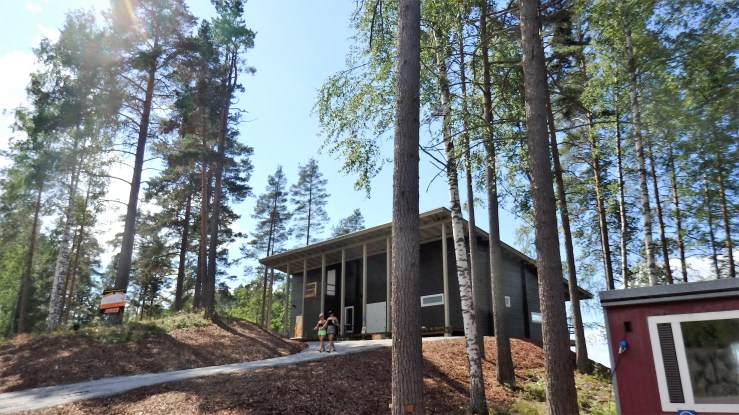
The photo, above, is of an empty “fish restaurant,” built near Ukonniemi Beach on Lake Saimaa in Imatra, South Karelia, by the city government and their favorite private contractors at great expense to the once-beautiful natural environment and local taxpayers.

Although no restaurateurs had agreed to lease or operate the future restaurant when the project was mooted and approved by city planners and city councilors, the constructionn of the “fish restaurant,” which involved felling hundreds of trees, building black-topped car roads where once there had only been soft footpaths, and dozens of other kinds of deviltry disguised as “landscaping” and “improvements,” went ahead anyway.

The initial phase, the destruction of the original, gorgeous landscape, ran into considerable cost overruns, and project managers found themselves asking the city for more money to keep up their wave of mutilation.

Several years later, no one has emerged operate or lease the restaurant, although the building is ostensibly ready to fry up fish fingers and put them all in a line.

The restaurant would be a great opportunity for any shyster who wants to go in and out of business in less than a year, because the wonderful Nuotta Restaurant and Smokehouse, located on the other side of Ukonniemi Beach, has been doing land-office business ever since it added a rooftop terrace last summer.

The food and atmosphere at the Nuotta are nonpareil, as all its regular and irregular customers know, and its view of Imatra Harbor and Laimassaari is stunning. On a warm, sunny day, I could sit there for hours, just sipping a glass of wine or a cup of coffee.

Even my dog thinks Nuotta is the cat’s meow. He once forced me to go there, after a long walk through the forest, so we could sit there for half an hour and just inhale the view. I had to order a cup of coffee and a doughnut to justify our odd-couple presence on the veranda. My dog was immeasurably pleased.

So why would such a tiny harbor need another fish restaurant? This isn’t “innovation,” as the current so-called bourgeois Finnish government would call it. This is sheer stupidity that was egged on local decision-makers by the construction lobby, who are always trying to drum up new projects for themselves, whatever cost to the built heritage, environment, and taxpayers, and whether their dubious improvements are really needed by flesh-and-blood, paying customers and townsfolk or not. LIF


Vilja-Tuulia Huotarinen, “We Open the Gift Package”

P8090014.JPG

Avataan lahjapaketti, ahmitaan suklarasia.
Nuolaisen ennen kuin tipahdan.
Kieli on kylmä lusikka kieltä vasten,
taipuu kun taivutan,
matolla minttuliköörin soma lemu
ja finni nenänpäässä,
yksi kukkavihkosta ilmestynyt nätti orvokki.

Nipistän ihon pintaa ja siihen herahtaa mustelma.
Mikään täällä tuskin on unta,
Jon Bon Jovi vilkuttaa seinällä silmää
kun puen farkut,
pyyhin viimeiset kärpäset suupielistä.
On liian myöhäistä
nukahtaa nyt,
ripustan rintaliivit kattolamppuun.
Ja lamppu sammuu.

Ekakerta on merkittävä, muista ei niin väliä.

Katson käsivarttani kuin kannibaali satukirjan sivua,
otsa nojaa vasten eebenpuuta,
lumi putoo punaiseen katuun.
Vaikka miten päin kääntäisin päätä, suipistaisin suuta,
lyhtypylväät seisovat suorassa rivissä, niin suorassa
että pää tulee kipeäksi.

:::::::::::::::::::::::::::::::::::::::::::::::::::::::::::::::::

We open the gift package, wolf down the boxes of chocolate.
I lick before I drop.
The tongue is a cold spoon against the tongue,
it bends when I bend.
The sweet stench of mint schnapps on the carpet
and a pimple on the nose’s tip,
one cute pansy popped from the flowery notebooks.

I pinch the skin’s surface and a bruise wells up.
Hardly anything here is a dream,
Jon Bon Jovi winks on the wall
when I put on jeans,
I wipe the last flies from the corner of the mouth.
It’s too late
to fall asleep now,
I hang the bra on the ceiling lamp.
And the lamp goes off.

The first time is important, don’t mind so much about the others.

I look at my arm like a cannibal looking at a page in a storybook.
The forehead leans against an ebony tree,
snow falls on the red street.
Whatever way I turn the head, I purse the mouth.
The lamp posts stand in a straight row, so straight
I’m going to get a headache.

— Vilja-Tuulia Huotarinen, Sakset kädessä ei saa juosta (WSOY, 2004), p. 17

Photo and translation by Living in FIN

Vilja-Tuulia Huotarinen, “The Quiet and the Blessed”


OLYMPUS DIGITAL CAMERA

Hiljaisia ja autuaita ei valita pesäpallojoukkueseen,
me lähdemme uimaan pitkää matkaa.
Päivät solahtavat kyynarpäistä, iho tummuu
ja menee kurttuun. Meidan vaihtoehtomme
ovat vähäiset: tarttua puukkoon tai pudota.

Me olemme vedenneitoja jotka heittävät terän aaltoihin,
emme uhraa ketään, emme peri edes omaa sydäntämme.
Syvyyden päihtymys ei meihin ulotu eikä kiiman kaipuu.
Mutta tiedämme, miten liu’utaan kasvot pohjaan päin.
Miten niellään suolaista vettä ilman oksennusrefleksiä.

Laulamme yhteen ääneen yhtä ääntä, aina ihanaa,
päät nousevat laineiden keskeltä, keltaiset pyöreät pallot,
joita rannalla etsitään. Pinnalla kaikki on hyvin.

:::::::::::::::::::::::::::::::::::::::::::::::::::::::::::::::::

The quiet and the blessed are not chosen for the baseball team:
We head out on a long, long swim.
The days slip off the elbows, the skin darkens
and wrinkles. Our choices
are few: catch the knife or fall.

We are water nymphs who toss the blade into the waves.
We sacrifice no one, we do not even inherit our own hearts.
Nitrogen narcosis does not get to us nor do we miss being in heat.
But we know how to glide face down in water.
How to swallow saltwater without gagging.

We sing in unison at the same volume, always marvelously.
Heads rise amid the waves, the round yellow balls
sought on shore. Everything on the surface is fine.

— Vilja-Tuulia Huotarinen, Sakset kädessä ei saa juosta (WSOY, 2004), p. 12

Photo of a swimmer in the Puulavesi and translation by Living in FIN