Eeva Kilpi, “I Finally Plucked Up My Courage”

Finland’s 100th Independence Day is almost over, but I wanted to say happy birthday to my favorite country by exercising a little of the independence it has afforded me by giving me a whole new language, a language I never imagined I’d be learning until nine years ago, and the miracle of meeting wise, tender, witty souls in the medium of that language.

I’m especially grateful to Finland and Finnish for acquainting me with the great Finnish writer Eeva Kilpi, whose novels, short stories, memoirs, essays, and poems should be translated into more languages. They are mostly as dissimilar as two writers could be, but occasionally she reminds me of the great Czeslaw Milosz. But mostly she reminds me of herself, which is always the real sign of a great writer.

This is just the next poem from her first collection, A Song about Love and Other Poems, published in 1972 (after she was already famous for her prose works), which I’m now translating all the way through.

It’s not patriotic at all, and has nothing to do with Independence Day, but it does have something to do with independence. LIF

haarapaaskyt

Nyt minä lopulta rohkaisin mieleni,
soitin hänelle lennättimestä ja sanoin:
Tämä on Eeva Mikkelistä päivää.
Mitä sinulle kuuluu?
Minä lähden tältä kesältä torstaina.
Houkuttaisiko sinua sitä ennen
tulla vielä kerran käymään täällä?

Minulla on kiireitä, hän sanoi, ikävä kyllä,
eikö sinulle sopisi joskus myöhemmin syksyllä?

Riippuu pääskysistä, minä vastasin,
jos ne ehtivät lähteä ennen minua,
suljen ikkunan enkä enää tule.

Vai niin, hän sanoi. Mitenkähän se oikein on,
minulla hälyttää nyt valitettavasti toinen puhelin.
Mutta kun tulet kaupunkiin niin otetaan yhteyttä.

Suon kohdalla muistin miten se oli:
Laurilta laumaan, Pertulta pois.

Ja minä olin meinannut jo Maunona.

•••••••

I finally plucked up my courage.
I called him from the telegraph and said,
This is Eeva, calling from Mikkeli, hello.
How are you?
I’m wrapping up the summer on Thursday.
Could you be tempted before then
to come here again for a visit?

Sadly, he said, I’m busy.
Would it work for you sometime later in the fall?

It depends on the swallows, I replied.
If they manage to leave before me,
I’ll close the window and not come back.

Is that so? he said. Whatever the matter is,
unfortunately, my other phone is buzzing now.
But when you come to the city, we’ll get in touch.

Under my breath I remembered how the saying went.
“The birds flock on Lauri’s, and fly away on Perttu’s.”

And I was going to be a Mauno.*

* In the Finnish Lutheran calendar, Lauri’s nameday is August 10, while Perttu’s nameday is August 24. Mauno’s nameday is August 19. The equivalents of these men’s first names in English are Lawrence, Bartholemew, and Magnus.

Originally published in Eeva Kilpi, Laulu rakkaudesta ja muita runoja (WSOY, 1972). Translated by Living in FIN. Photo courtesy of Irman Kuvia

Eeva Kilpi, “A Strange Tongue”

SONY DSC

Tällä hetkellä jaksan lukea
vain kirjailijaelämäkertoja:
miten vaikeaa heillä on ollut;
ja sitä kirjaa josta pidit.

Joka ilta katson yhtä kiveä tien päässä,
mutta se pysyy kivenä.
Ja yksi horsma mäellä
osoittautuu aina vain horsmaksi.

Mutta aamuisin jokin kummallinen kieli
avartaa mieleni hetkeksi
ikään kuin se olisi olemassa
ja me osaisimme sitä.

••••••••

At the moment I can stand to read
only biographies of writers
(how hard they have had it)
and the book you liked.

Every evening I look at the same rock at the road’s end,
but it goes on being a rock,
and the one fireweed on the hilltop
always turns out to be a mere fireweed.

But in the mornings a strange tongue
expands my mind for a while,
as if it really existed
and we could speak it.

Originally published in Eeva Kilpi, Laulu rakkaudesta ja muita runoja (WSOY, 1972). Translated by Living in FIN. Photo courtesy of Wikimedia Commons

Tomi Kontio, “Even If You Left”

Tomi Kontio

Vaikka lähtisit, et sinä katoa,
ei aurinko ole pöydälle unohtunutta mandariinia kauempana,
eikä se kynä, joka on nimeesi takertunut
liikahda jalustaltaan.
Minä olen muuttunut lapseksi taas,
olen pudottanut sokeuteni kuin liinan ikkunasta
ja nähnyt, että se ei putoa,
että maailmankaikkeus ei laajene,
että tähtien välillä ei ole etäisyyttä,
että elävät eivät ole sen lähempänä kuin kuolleetkaan,
että maapallo ei ole pyöreä
ja että kaikki on
yhdessä pisteessä: siinä missä hiili muuttuu
timantiksi, kärsimys sanaksi.

Even if you left, you would not disappear,
nor would the sun be farther away than the mandarin, forgotten on the table,
nor would the pen, clinging to your name,
budge from its stand.
I have become a child again.
I have shed my blindness like a linen, pulled from a window,
and seen it does not fall,
the universe does not expand,
there is no distance between the stars,
the living are no nearer than the dead,
the earth is not round,
and everything occupies
a single point where carbon turns into
diamonds, suffering into words.

—Tomi Kontio, Taivaan Latvassa (Tammi, 1998)

Source: Electric Verses. Translated by Living in FIN. Photo courtesy of Kolonkolonkolo

••••••

https://youtu.be/WjJ1hiIswQU

“Interview with Tomi Kontio,” published on YouTube, 8 April 2013. Interviewer: Oula Lehto. Camera: Thomas Hagström

Eeva Kilpi, “A Song about Love”

eeva-kilpiEeva Kilpi

Eeva Kilpi
A Song about Love

So, one day
we shall twist our bodies round each other
and snap shut the lock, never to be detached again,
thy cervical wear and tear intertwined with my gout,
my stomach ulcers cheek by jowl with thine heart ailments,
and my rheumatism snug against thy lumbago.
Thou and I ne’er shall part.

Thou, dear, shalt forget thine arrhythmia, shortness of breath,
and the necrosis
lodged already in thine heart,
and I shall forget my catarrh, restless legs,
and the incessant chafing on my left side,
come frost and misfortune and whate’er else.

My breasts are empty and flat.
Take them in thy hands, dear,
as one day when thou lookest they shall sag.
Wilt thou love me then,
hey diddle diddle all the day?

Lord, teach us to accept old people’s love,
young people’s love, middle-aged people’s love,
ugly people’s love, obese people’s love, poor people’s love,
poorly dressed people’s love,
and lonely people’s love.
Teach us to accept love.
We are so afraid of it.

Thou shalt take my breasts in thy hands,
my flat, stretched breasts,
and touch the wrinkled tips with thy lips.
The cataract in thine eye whilst thou wait for a hospital bed:
thou shalt fumble thy way to me blind,
grope me with thy mind’s hand.
Grope away:
beneath all these wrinkles it is me.
Life has finally forced us into this guise,
my Arctic bramble, my snow bunting, my swallow.

My lumps shall nestle in thy pits,
Thy crinkles in my grooves,
and alongside thy miseries I shall pray silently for thy death.
Bright are the day and the eve.

•••••••

Laulu rakkaudesta

Ja eräänä päivänä
me koukistumme toistemme ympärille
ja naksahdamme lukkoon emmekä irtoa enää,
sinun kulumavikasi minun kihtiini kietoutuneena,
minun mahahaavani sinun sydänvaivasi vieressä
ja reumatismini sinun noidannuoltasi vasten,
emme erkane konsana ei.

Ja rakas, sinä unohdat rytmihäiriösi, hengenahdistuksesi
ja kuolion
joka sydämessä jo on
ja minä unohdan katarrini, levottomat jalkani
ja sen alituisen kalvamisen vasemmalla puolella
ja tulkohon hallat ja harmit ja muut.

Minun rintani tyhjät ja litteät
ota käsiisi rakas
sillä eräänä päivänä kun katsot ne riippuvat pitkinä,
rakastatko minua silloin
tula tuulan tuli tuli tei?

Herra, opeta meitä hyväksymään vanhojen rakkaus,
nuorten rakkaus, keski-ikäisten ihmisten rakkaus,
rumien rakkaus, lihavien rakkaus, köyhien rakkaus,
huonosti puettujen rakkaus
ja yksinäisten rakkaus.
Opeta meitä hyväksymään rakkaus,
me niin pelkäämme sitä.

Ja sinä otat käsiisi minun rintani,
minun venyneet litteät rintani
ja kosketat huulillasi kurttuisia nipukoita
ja kaihi silmissäsi sinä sairaspaikkaa odotellessasi
hapuilet sokeana luokseni,
tunnustelet minua käsimielin.
Tunnustele vaan:
kaikkien näitten ryppyjen alla se olen minä,
tähän valepukuun elämä meidät viimein pakotti,
mesimarjani, pulmuni, pääskyni mun.

Ja minun kyhmyni painautuvat sinun kuoppiisi,
sinun ryppysi minun uurteisiini
ja kärsimystesi äärellä minä rukoilen hiljaa kuolemaasi.
On kirkkaana päivä ja ilta.

Originally published in Eeva Kilpi, Laulu rakkaudesta ja muita runoja (WSOY, 1972). Translated by Living in FIN. Photo of Eeva Kilpi courtesy of Janolehti

Hannu Salakka, “Night Is Just a Shadow”

OLYMPUS DIGITAL CAMERA

Yö on vain varjo,
unet ovat toisesta maailmasta
joka meillä vain yksin on.
Näyt syntyvät
painuakseen jälleen unohduksiin niinkuin ne,
jotka elivät täällä ennen.

Night is just a shadow.
Dreams are from the other world,
which, alone, is ours alone.
Visions are born
to descend again into oblivion like the ones
who lived here before.

—Hannu Salakka, Kesä kesältä syvemmin (Otava, 1977), p. 9. Translation and photo by Living in FIN


Hannu Salakka, Three Poems

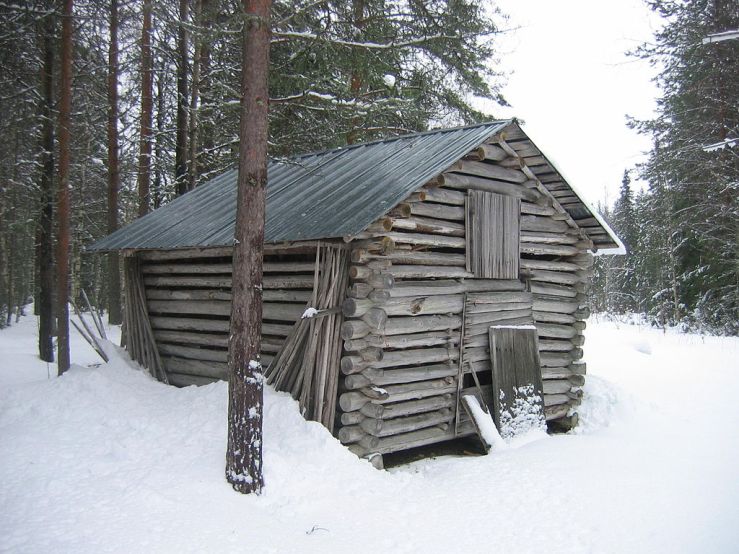
1024px-Finnish_barn

1.

Sateen jälkeen kävelen kalliola
jolta hevonen putosi ja kuoli.
Katson alas.
Mutta ei,
putous ei ole kyllin suuri,
tuskin edes tömähtäisin.
Ja täällä on jo tapahtunut jotakin suurta.

After the rainshower, I walk to the cliff
where the horse fell and died.
I look down.
But no,
the fall is not long enough.
I would barely make a thud.
Yet something great has already happened here.

2.

Maailmalla

Katuja kulkien
voi katsella pensasaitoja,
talojen seinämiä,
autolla voi ajaa halki maaseudun,
kuulla ehkä hevosen hirnuvan,
nähdä tytön istuvan pienen joen rannalla,
mutta kuolema ei enää aja vaunilla öisin
musta viitta hulmuten:
jo aamuisin se tummassa puvussaan
istuu autoon
ja päivän kiitää tiellä,
juna pääsee rataa pitkin
asemalta asemalle
ja voi matkustaa kuin pakeneva,
mutta mistä enää löytä vieraat kasvot,
jotka eivät ole kaupan,
ystävällisen kansan,
joka kutsuu elämään hetkeksi heidän keskelleen
sovussa sen tapojen kanssa.

Out in the World

Walking through the streets
you can see hedgerows,
walls of houses.
By car you can drive across the countryside,
maybe hear a horse neighing,
see a girl sitting on the bank of a tiny river,
but death no longer rides in a wagon by night,
black cape fluttering.
In the mornings, dressed in a black suit, it
gets into a car
and speeds the day down the road.
A train travels along a track
from station to station.
You can travel like an escapee,
but where do you find strange faces anymore
that are not for sale,
a friendly people
who would invite you to live among them for a moment
in keeping with their customs?

3.

Tiimalasi

Talvet ovat äänettömiä,
suunnattomia,
ja kaikki yhdessä.
Kuka piirtäisi hangen täyteen kirjaimia
joista ei muodostuisi kaipuuta
ja puhuisi ilman täyteen sanoja
joissa ei olisi mitään surullista.

Olen nähnyt ihmisten tulevan,
tehtaan imaisevan heidät sisäänsä
ja sylkäisevan puolijuoksua ulos,
ja ihmisten katoavan.

Olen herännyt kellon ääneen
ja nukahtanut sen jäädessä vartioimaan unta,
nähnyt kevään jokaisen alastoman aamun,
yhden kerrallaan.
Päivästä päivään olen nähnyt
saman auringon nousevan
saman ladon ohi saman joen ylle
ja laskevan saman synkän metsän taa.

Niin monet ovat kuolleet.
Niin monet ovat synytmättä
ja tulevat kuolemaan.
Kuka muistaisi kaikki kuolleet
ja jättäisi heistä kertomatta.

Kaikki tuulet tulevat kaukaa mereltä
ja menevät sinne takaisin.
Minä vain pimeästä toiseen.
Kuin yli joen.

Hourglass

The winters are silent,
immense,
and all together.
Who would draw letters full of snowdrifts
for which no one would long,
and speak words full of air
about which there is nothing sad.

I have seen people come,
seen the plant suck them in,
seen them spit halfway out,
and seen people disappear.

I have been awakened by the sound of the clock,
and fallen asleep while keeping watch over its sleep.
I have seen every naked spring morning,
one at a time.
Day after day, I have seen
the same sun rising over the same river near the same barn
and setting behind the same sullen forest.

So many have died.
So many have not been born
and are coming to die.
Who would remember all the dead
and leave them unnamed?

All the winds come from far off the sea
and go back there.
I just go from one time of darkness to another.
Like across the river.

—Hannu Salakka, Kuin unessa viipyen (Otava, 1990), pp. 577, 81, 304. Translated by Living in FIN. Photo courtesy of Wiktionary

Eeva Kilpi, Six Poems

OLYMPUS DIGITAL CAMERA

—Minä elän nyt niin että kuoltuani
jumalakin itkee sitä
että loi ihmisen ainutkertaiseksi

“I am alive now that I am dead.”
Even God bewails the fact
He made man unique.


OLYMPUS DIGITAL CAMERA

Neitseestä syntynyt,
he sanoivat
ja ajatella, se meni läpi.

Ja nyt kun virhe on tehty
ja me elämme siinä yhä,
ei voi muuta kuin kuvitella
miten toisin olisi kaikki,
jos he olisivat nostaneet totuuden kunniaan,
sanoneet:
—Ole siunattu, avioton äiti.

Born of a virgin,
they said,
and to think it got through.

Now the error has been made
and we live with it still,
you cannot help but imagine
how different everything could have been,
if they had done credit to the truth
and said:
“Blessed art thou, o unwed mother.”
 

OLYMPUS DIGITAL CAMERA

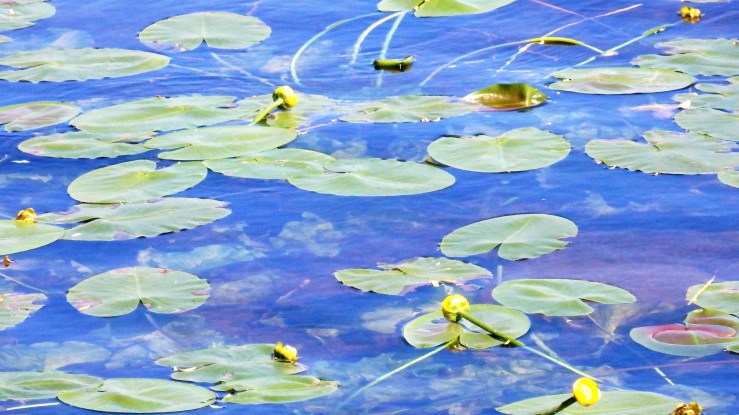
Tänä iltana minulle selvisi heijastuksen tarkoitus:
Mikä muu saisi kuun lumpeitten joukkoon?

The purpose of reflections was made clear to me this evening.
What else would make the moon go into a patch of water lilies?

∴∴∴∴∴∴∴∴∴∴

Minä olen vain episodi elämässäni
niin kuin kaikki muukin,
avioliitto, miehet, lapsetkin.
Minä haluaisin päästä ja takaisin
siihen ykseyteen
johon alunperin synnyin.

Jos tämän vain olisi tiennyt:
että kaikki on vaiheta, välikohtauksia,
että mikään ei jää lopulliseksi . . .
Niin mitä sitten?

I am only an episode in my life
like everything else:
marriage, the men, the children.
I would like to go back
to the oneness
into which I was originally born.

If only to find out this.
if everything is a phase, an incident,
if nothing remains final,
what, then, is the big deal?

IMAG4661

Huono tie ja pitkä heinä,
polulla rupikonnat, omat ruppanani,
vartioimassa pihaa.
Kivijalassa valppaina kyyt,
toinen musta, toinen vihertävä,
portailla avuliaat nokkoset.
Yössä lepakkojen armeija.
Ja kun kirjoitan, ylpeyteni,
kolme karhunputkea
turvaavat selustan ikkunan takana.

Lukevat salaa olkapään yli
mita kirjoitan heistä.

A poor road and long grass,
toads on the path, my own blood cakes,
watching over the yard.
The vipers in the plinth are vigilant.
One is black, the other greenish.
The nettles on the stairs are helpful.
There is an army of bats at night.
And when I write, my pride,
three angelicas
guard the rear from behind the window.

They secretly read over my shoulder
what I am writing about them.
 

P7300064.JPG

Japanilainen vieraani
käsitti vaivoin, että Suomessa ei ollut
neljäkymmentä miljoonaa asukasta.
Neljätoista miljoonaa hän olisi juuri
ja juuri jaksanut ottaa vastaan.
Mutta neljä ja puoli miljoonaa
oli hänelle liikaa.

Me vaikenimme kohteliaasti.

A Japanese guest of mine
realized painfully Finland did not have
forty million inhabitants.
He would have barely had the strength
to accept fourteen million.
But four and a half million
were too much for him.

We politely held our tongues.

—Eeva Kilpi, Terveisin (WSOY, 1976), pp. 92, 72, 28, 116, 19, 83. Translations and photos by Living in FIN

Hannu Salakka, “Any Hilltop of Yours”

andreyeva-ukkokoli.jpg
On mikä tahansa mäenharjanne tai kukkula,
vuori tai niin pieni kumpare
että mahtuu kokonaan kämmenen alle,
niin heti haluan kiivetä sille katselemaan
ja painaa mieleen kaiken
minkä matkalla olen nähnyt.
•••••••••
Any hilltop of yours or hillock whatsoever,
a mountain or a knoll so small
it fits completely under the palm,
so I immediately want to climb it and have a look,
and commit to memory everything
I have seen en route.
 
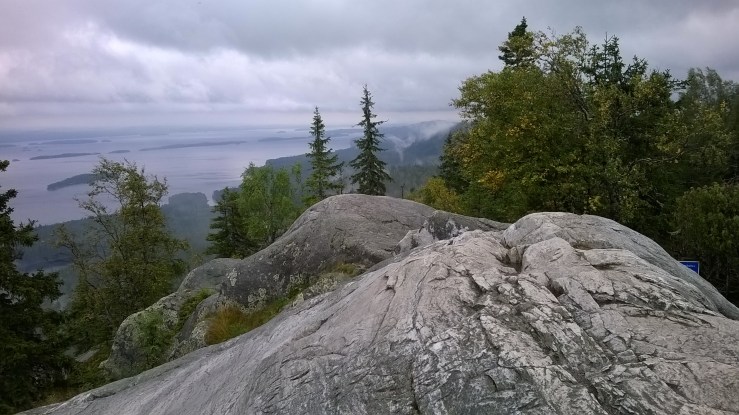
—Hannu Salakka, Ennen kapaisin tähän (Otava, 1983), p. 21. Translated by Living in FIN. View of Ukko-Koli (Koli National Park, North Karelia) courtesy of Yekaterina Andreyeva and reprinted with her permission.

Eeva Kilpi, “Regards”

EevaKilpi_ElinaOrpana_(2)
Eeva Kilpi

Rakas Eeva, he kirjoittavat,
tee meille uusi laulu rakkaudesta
kun entinen on jo kulutettu loppuun.

Tämä on vanha laulu ja
pelkään pahoin
ikuinen:
Sinä olet minun sairauteni,
vammani ja vajavuuteni,
sokeuteni, kuurouteni ja sortunut ääni,
kramppini ja stigmani,
mato suolissani, neula veressäni,
haavani ja varjostumani.
Minä kaipaan sinussa elämääni:
tautia joka on kuolemaksi;
tuttua närästystä,
ikiomaa kutkaa,
vanhaa kolotusta,
joka on turvallisempi kuin uudet oudot vaivat;
kainalosauvojani ja kipsiäni,
näärännäppyäni ja japykimääni,
vinoa hammasta ja väärää purentaa
joka on minulle ainoa mahdollinen.
Olet kieliopillinen omistusliitteitä minussa.
Minun rakkauteni Korkea Veisu on paksu kuin lääkärikirja
ja yhtä täynnä anatomiaa ja kipua.

Mutta on toinenkin laulu: levollinen
joka vain soi ja soi
suostumatta paljastumaan sanoiksi.
Ehkä se ei antaudu koskaan.
Mutta se on ja.

Terveisin

•  •  •  •  •  •  •  •  •  •

Dear Eeva, they write,
make us a new song about love
as the previous song has worn out.*

This is an old song and,
I’m afraid, terribly
perennial.

You are my ailments,
my injuries, and my shortcomings,
my blindnesses, my deafnesses and broken voice,
my cramps and my stigmata,
the worm in my gut, the needle in my blood,
my wounds and my shadow.
I miss my life in you:
a disease that is fatal,
a familiar heartburn,
my very own itch,
an old ache
that is safer than odd new complaints,
my crutches and my cast,
my stye and my chapped skin,
crooked tooth and bad overbite.
You are my possessive suffixes.
My love the Song of Songs is as thick as a medical book
and as full of anatomy and pain.

But there is another song: restful,
it just plays and plays
without agreeing to reveal its words.
Maybe it will never give up.
But there you have it.

Regards

—Eeva Kilpi, Terveisin (WSOY, 1976), pp. 93–94. Translated by Living in FIN. Photo of Eeva Kilpi courtesy of Karjalan Liitto

* An allusion to “A Song about Love,” the title poem in Eeva Kilpi’s first collection, Laulu rakkaudesta ja muita runoja (WSOY, 1972) (A Song about Love and Other Poems). It was followed by Terveisin (Regards), in which the above poems serves as the title poem.

Hannu Salakka, “My Life Is Called Dismal”

OLYMPUS DIGITAL CAMERA

Elämääni sanotaan ankeaksi,
itseäni alakuloiseksi,
vaikka olen vain ajatuksissani.
Mielissäni.
Mielin kielin.
Jos näyttäisin miltä minusta tuntuu todella
heidän keskellään olla,
ei olisi sellaista sanaa.

……………………………

My life is called dismal,
I am said to be gloomy,
although I am only lost in my thoughts.
In my moods.
Mindful.
If I looked how I really feel,
being amidst them,
there would be no word for it.

—Hannu Salakka, Niin joudun kauas tulevaisuuteen (Otava, 1989), p. 82. Photo and translation by Living in FIN