Eeva Kilpi, “Common Plantain Cures”

Piharatamo_1000x1000px

Rautalehti varpaitten välissä
parantaa jalkasienen,
jalkapohjasta se poistaa känsän,
nokkosenpolttamaan se erittää vasta-ainetta.
Sitä voi syödä.

Kuinka meillä on varaa
unohtaa tällainen tieto,
josta kaiken lisäksi
ainakin puolet on totta.

Common plantain cures
athlete’s foot between the toes,
removes calluses from soles,
secretes an antidote to nettle burns.
It is edible.

How can we afford
to forget such knowledge?
Everything else aside,
at least half of it is true.

Source: Eeva Kilpi, Terveisin (WSOY, 1976), p. 25. Translated by Thomas Campbell. Photo courtesy of Frantsila.com

Eeva Kilpi, “The Broker Wades in the Hay”

P6240087 (2)

Välittäjä kahlaa heinässä
kiertää taloa mustat lasit silmillä
maha pullottaen,
levittää käsiään: “Tästä menee raja.”
“Tuo metsä tuolla.” “Tämä ranta tässä.”
Ostajat nyökkäilevät. Nostavat korkealle jalkojaan.

Näin istuu pöllö puun kolossa,
odottaa vavisten
että luonnonystävät lähtisivät.

The broker wades in the hay,
rounds the house, black glasses over his eyes,
belly bulging,
and spreads his hands. “That’s the boundary.”
“That forest there.” “This beach here.”
The buyers nod. They lift their feet high.

An owl sits in the hollow of a tree,
trembling as it waits
for the nature lovers to leave.

Source: Eeva Kilpi, Terveisin (WSOY, 1976), p. 22. Photo and translation by Living in FIN

Eeva Kilpi, “The Forest Is Joy”

IMG_3072

Metsä on iloa.
Siksi jätän teille kallioita, poikani,
ja metsää niiden ympärillä.
Kallioilta näkee Karjalaan
ja sinne, kuusenlatvojen taakse
voi kuvitella äidin lapsuuden
ja mummin ja vaarin lapsuuden
sinne voi kuvitella
myös teidän lastenlastenne lapsuuden,
se on luvallista
se on sallittua
se on mahdollista
“ei silmä ossaa ota”
ja vaikka ottaisikin
se olisi oikein.
Siellä ovät teidän vaarinne metsät
äitinne rannat
ja rantapolut
laitumet joilla hän paimensi lehmiä,
lähde jonne nappuri upotti mehupullot
ja ne säilyivät siellä yli talvisodan,
yli välirauhan ja uuden sodan.
Ja kun hän kolme vuotta myöhemmin
kesällä neljäkymmentäkaksi
palasi ja upotti kätensä lähteeseen
ne tervehtivät häntä ehjinä, sileinä, raikkaina
kuin kärsivällisesti odottaneet
piilotetut lapset.
Ja mehu oli hyvää.

The forest is joy.
I shall thus leave you the rocks and crags, my boys,
and the forest in their midst.
Karelia can be seen from the cliffs
and there, beyond the tops of the firs,
you can picture Mother’s childhood
and Grandma and Grandpa’s childhood.
You can picture
your grandchildren’s childhood as well.
It is legal,
it is permissible,
it is possible.
“It’s not the eye that takes part.”
Even if it did take,
it would be right.
Your grandpa’s forests are there,
your mother’s beaches,
the shoreline paths
where she herded cows to pasture,
and the spring where the neighbor submerged juice bottles.
They were preserved there over the Winter War,
over the truce and the new war.
When, three years later,
in the summer of forty-three,
he returned and plunged his hand into the spring,
they greeted him intact, smooth, and fresh,
like hidden children who had been waiting patiently.
The juice was good.

Source: Eeva Kilpi, Perhonen ylittää tien (WSOY, 2000), p. 451. Photo and translation by Living in FIN

Arto Lappi: Three Tanka and Two Haiku

peacock butterfly (neitoperhonen)

Tiedän tulleeni
kotiin – näen sammakon
portinpielessä:
se vain pullistelee kun
pidän veräjää auki.

I know when I come
home I’ll catch sight of a frog
on the gate’s jamb stone.
Its bubble bulges only
when I hold open the gate.

Linnun vappaus:
nälän lennättämänä
leijana kantaa
poikasilleen matoja,
kirvoja, kärpäsiä.

A bird’s freedom is
delivering to its chicks
worms, aphids, and bugs.
Flown through the air like a kite,
it is driven by hunger.

Kesäinen päivä:
neitoperhonen istahti
rinnuksilleni,
levitteli siipiään
ja paistatteli päivää.

A summery day.
A peacock butterfly sits
on my chest for a moment.
It unfurls and spreads its wings,
bathing in the daytime sun.

Levähdyspaikan
toivossa perhoset
ylittävät meren.

In hopes of finding
a place to rest, butterflies
are crossing the sea.

Vaikka kivi on
pohjassa, me seuraamme
yhä renkaita.

Even though the stone
is resting on the bottom,
we still track the rings.

Source: Arto Lappi, Kukko puusa (Turku: Sammakko, 2002), pp. 14–17, 45. Thanks to Mischa Gabowitsch for inducing me to look at page forty-five. Translated by Living in FIN. Photo of peacock butterfly courtesy of LuontoPortti

Arto Lappi: Five Tanka

DSCN2816

Varpunen kävi
koputtamassa lasiin
ja minun oli
juostava ulos heittämään
muutama kuperkeikka.

A sparrow strutted
while tap-tapping on a glass,
and I was supposed
to run out, launching myself
into several somersaults.

Talitiainen
aloitta kosintansa
ja sirkuttaa kuin
järkensä menettänyt:
Sammakko loikkaa lampeen.

A great tit commences
its mating and marriage dance.
It chirps and twitters
as if it has lost its wits.
A frog leaps into a pond.

Isketään hanskat
kottikärryjen sarviin,
kottarainen on
ehtinyt jo rakentaa
betoninmyllyyn pesän.

Work gloves are slapped down
on a wheelbarrow’s antlers.
A starling has found
the time to build a nest in
the concrete cement mixer.

Kuka jännittää
jousen, josta pääskyset
noin mutkaisesti
singahtelevat aina
kuitenkin maaliin osuen.

Who bends back the bow,
sending the swallows hurtling
in such crooks and curves,
nonetheless always hitting
the target straight on the mark?

Turha miettiä,
matka on jo alkanut:
parasta pitää
hatusta kiini, kyllä
tuuli aukaisee takin.

It’s pointless to think:
the trip’s already begun.
It’s best to hang on
to your hat, since all the same
the wind will open your coat.

Source: Arto Lappi, Kukko puusa (Turku: Sammakko, 2002), pp. 9–11, 13, 29

Translation and photograph by Living in FIN

Vilja-Tuulia Huotarinen, “School Encourages the Imagination”

DSCN2149

Koulu tukee mielikuvitusta,
meidät kävelytetään museoon.
Maalauksissa naiset kampaavat alasti ja selkä kyyryssä
keltaisessa huoneessa. Teema on toistuva.
Pellot lämpiävät lanteilla, auringonkukat
kiertyvät henkensä kaupalla kohti sineä, himon silmää.
Taivaalla kultaiset, raskaat kehykset.

Simpukkasuu kääntyy ja kuiskii pienin hengenvedoin:
Kuolenko mä kun mä en saa unta?
Jossain käynnistetään sirkkeli
ja ajattelen terää joka viiltää nopeasti ja syvään.
Joku sanoo hys ja simpukkasuu lopettaa:
Ei mulla muuta moi.

Menemme museon myymälään ja alan etsiaä julistetta seinälle.
Simpukkasuun sormet ovat hikiset sipulinvarret
ja hänen kaulansa ulottuu joka hetki ylemmäs,
puut, metsät enää vain kukkakeppejä, niin korkealle hän venyy.
Ajattelen terää joka viiltäisi niin nopeasti ja syvään,
että kaikki muu tuntuisi sillä hetkellä yhdentekevältä.
Enkä minä julistetta täältä löydä, myöhemmin vasta,
vuosien päästä kun se on valmis.

•••••

School encourages the imagination.
They walk us over to the museum.
In paintings, naked women comb their hair, backs hunched,
in a yellow room. The subject is recurrent.
Hips warm the fields, the sunflowers
turn their breath in spades towards the blue, the eye of lust.
The heavens are chockablock with heavy golden frames.

The clamshell turns and whispers, slightly gasping,
“Do I die when I cannot sleep?”
Sometimes a circular saw kicks in,
and I think of a blade that slashes quickly and deeply.
Someone says “Hush!” and the clamshell wraps it up,
“I haven’t got anything else. Cheers.”

We go to the museum store, and I look for a wall poster.
The clamshell’s fingers are sweaty onion stalks,
and her neck extends higher each instant.
The trees and forests are mere beanstalks, she stretches so high.
I think of a blade that slashes so quickly and deeply
everyone else would feel indifferent at that moment.
Nor do I find a poster there. Only later,
after years when it was ready.

—Vilja-Tuulia Huotarinen, Sakset kädessä ei saa juosta (WSOY, 2004), p. 45. Translation and photo by Living in FIN. Dedicated, belatedly, to Alexander Skidan on his birthday.

Vilja-Tuulia Huotarinen, “In Finnish Class”

DSCN2106 (2)

Äidinkielen tunnilla luetaan AI, YÖ, UI.
Ei siitä viisaaksi tule, mutta valitettavasti ei hulluksikaan.
Luistinradan takana on tilaa tapella.
Niitä kiusataan, jotka uskovat liikaa
sekä Mari-Orvokkia.

Näkinkenkärintainen tyttö kutsuu jäälle paritanssiin.
Tirsk tirsk sahaamme samaan suuntaan piirin poikki.
Äidinkielen tunnilla käännetään sivu.
OI EI, AL-LI, EI VOI.

Koulun jälkeen kävelemme pakkasessa kanalaan,
kuljetamme kananmunan huopien välissä patjan alle
ja sidomme viiden villahuivin sisään.
Jonain päivänä tapahtuu: kuori kopsahtaa rikki
ja linnunpoika rääkäisee ensimmäisen kerran.

§§§§§

In Finnish class, we read ouch, night, swim.
It won’t make you smart, but unfortunately it won’t make you crazy.
There’s a place for fighting behind the skating rink.
They bully Mari-Orvokki
and the ones who believe too much.

A seashell-chested girl invites me on the ice for a pairs dance.
Giggle, giggle, we saw across the circle in the same direction.
We translate a page in Finnish class.
Oh no, oldsquaw, cannot.

After school, we walk to the henhouse in the cold.
We carry an egg between blankets and put it under a mattress
wrapping it in five wool scarves.
Someday it will happen: the shell smashed to smithereens,
the chick will let loose its first squawk.

—Vilja-Tuulia Huotarinen, Sakset kädessä ei saa juosta (WSOY, 2004), p. 41. Translation and photo by Living in FIN

Vilja-Tuulia Huotarinen, “The Picture Is Taken”

DSCN2047

Valokuva otetaan valkeassa hameessa,
risti selkäpuolella ja polvi ruvella.
Kun tähtäin tarkentuu, kamera tärähtää;
that is me. Sunnuntaina vietetään juhlat
hauskanpidon ehtojen mukaisesti:
jalkoja ei saa laahata eikä juosta,
ei koska sakset kädessä
tai silmät puhkee.
Kävelen vieraiden joukossa viikatusti
ja käyttäydyn kuin hullut käyttäytyvät,
yritän olla normaali.
Seuravaana päivänä on jo syksy.
Lumisade laskeutuu korvilleni,
vaimentavat kuulokkeet, en saa jäseniä
laukeamaan vaikka niin tulisi lämmin,
istun valokuvassa hymyilevänä
ja ruusukimppu solisluutani vasten
ei kestä yhtäkään katsetta,
on niin hauraaksi jäätynyt, niin tyylikäs.

¶¶¶¶¶¶¶¶

The picture is taken in a white skirt,
cross on the back and scab on the knee.
When the viewfinder is focused, the camera jolts:
that is me. The Sunday celebration is observed
in terms of having fun:
do not drag your feet or run,
never walk with scissors
or you will poke someone’s eyes out.
I walk among the guests creased
and behave like crazy people behave.
I try to be normal.
The next day is already autumn.
Snowfall alights on my ears,
muffled headphones. Even if it were to warm up,
I could not get my limbs to relax.
I sit smiling in the picture,
and the bouquet of roses against my clavicle
cannot withstand a single gaze,
it is so delicately frozen, so stylish.

—Vilja-Tuulia Huotarinen, Sakset kädessä ei saa juosta (WSOY, 2004), p. 16. Translation and photo by Living in FIN. 

P.S. For my sister, belatedly, on her birthday. LIF

Eeva Kilpi, “A Song of the Love of Trees and Animals”

P7220076

Eeva Kilpi
Laulu rakkaudesta puihin ja eläimiin

Nyt minä laulan rakkaudesta
puihin ja kukkiin ja eläimiin.
Pysähdy, katso, ne vaarassa ovat,
suojele niitä, oi suojele niitä.

Tervehdi kukkaa, kumarra sille,
polvistu lehdokin edessä.
Anna sen kasvaa, älä taita ja tallaa,
se kuihtuu sinun vaasisi vedessä.

Anna sen kasvaa, anna sen olla,
se on olento siinä kuin sinäkin.
Joka ruoho tuntee, joka eläin pelkää,
se on kohtalotoveri ihmisen.

Minä laulan sinulle rakkaudesta
puihin ja metsiin ja harjuihin.
Pysähdy, katso, ne silmissä siintää.
Oi, että siintäisi vastakin.

Ei ole ihminen tuhonnut vielä
kaikkea metsää, onneksi ei.
Pahaa on tehty, paljon on mennyt,
niin monta korpea ahneus vei.

Vaan yhä minä laulan voimasta jonka
vain metsä voi antaa sydämeen,
voimasta joka saloilta huokuu
avuksi tuskaan ja sairauteen.

Oi veljeni kuusi, siskoni koivu,
mäntyni, haapani, leppäni oi,
vaahtera, paju, paatsama, tuomi,
pihlajat, katajat kansani,

joukkoonne minut ottakaa mukaan,
syliinne minut sulkekaa,
suruni teidän suruunne liitän,
hätäni teidän kanssanne jaan.

Yhä kukkii niitty, lentää höyty,
puhkeaa silmu ja lehti ja nuppu,
yhä venyy norkko ja punertaa käpy,
tuoksuu neulanen, pihka ja suo.

Olen mutaa ja suota, olen sieni ja sammal,
olen mättäällä karpalo, lakka ja kyy.
Samaa kipua kannan, samoin säikyn ja pelkään,
minä pyydän vain olla, en osta, en myy.

Minä laulan vielä rakkaudesta
lintuihin, mäyriin ja ilveksiin.
Ne vaarassa ovat, kuolema vaanii,
suojele niitä, oi suojele niin.

Eläimen silmistä jumala katsoo
sinua silmiin, tunnetko sen?
Älä käänny pois, älä pakene, torju,
kohtaa totuus surullinen.

Kohtaa eläimen jumalan-katse,
sinulta apua pyytää se nyt.
Rauhaa ja oikeutta se vaatii,
Jumala sortoon on kyllästynyt.

Jätä lehdot ja kummut jumalan käydä,
rannat jumalan soudella,
jumalan lentää ja jumalan kukkia,
jumalan uida ja pöristä.

Vapauteen vangittu elämä kaikki,
ihminen, kahleet kaikilta pois!
Ei ole luonto vain ihmistä varten,
luonto on luojasi, muista se.

Oi veljeni puu, oi siskoni heinä,
oi sukuni suuri: eläimet.
Samaa kudetta ollaan, samaa verta ja tuhkaa,
samaa ahdistusta ja unelmaa.

P7220009

Eeva Kilpi
A Song of the Love of Trees and Animals

Now I shall sing of the love
of trees and flowers and animals.
Stop and look: they are in danger.
Protect them, o protect them.

Greet the flower, bow to it.
Kneel before the grove.
Let it grow: don’t trample and break it.
It will wither in your vase’s water.

Let it grow, let it be.
It is a being in the same way you are.
Every blade of grass feels, every animal knows fear.
It shares man’s plight.

I shall sing to you of the love
of trees and woods and ridges.
Stop and look: they loom before your eyes.
Oh, would that they would go on looming.

Man has not yet destroyed
all the woods, fortunately.
Bad things have been done, much has been lost.
Avarice has consumed so much wildnerness.

But still I shall sing of the power
only the forest can grant the heart,
the power emanating from the wilds,
helping us bear anguish and illness.

O brother pine, sister birch,
my pine, my aspen, my alder,
maple, willow, buckthorn, hackberry,
rowan, the junipers of my people,

take me into your throng,
enclose me in your embrace.
I shall join my sorrow with your sorrow,
I shall share my distress with you.

The meadow still blossoms, the fuzz flies.
Bud and leaf still burst open.
The catkin still stretches, and the cone reddens.
Needle, resin, and swamp are redolent still.

I am mud and swamp. I am mushroom and moss.
I am cranberry, cloudberry, and viper in a hassock.
I endure the same pain. I spook and scare the same way.
I just ask to be. I neither buy nor sell.

I shall also sing of the love
of birds, badgers, and lynx.
They are in danger: death stalks them.
Protect them, o protect them.

God looks through animal’s eye
into your eyes. Do you feel it?
Don’t turn away, don’t run away—fight back.
Face the sad truth.

Face animal’s God-gaze.
It asks you now for help.
It demands peace and justice.
God is weary of the oppression.

Let God’s groves and hillocks grow.
Let God’s beaches go for a row.
Let God fly and let God flower.
Let God swim and buzz.

Free all captive life,
man, remove the chains from everything!
There is no nature for man alone.
Remember nature is your creator.

O brother tree, o sister grass.
O my great family of animals.
We are made of the same weft, the same blood and ash,
the same anguish, the same dreams.
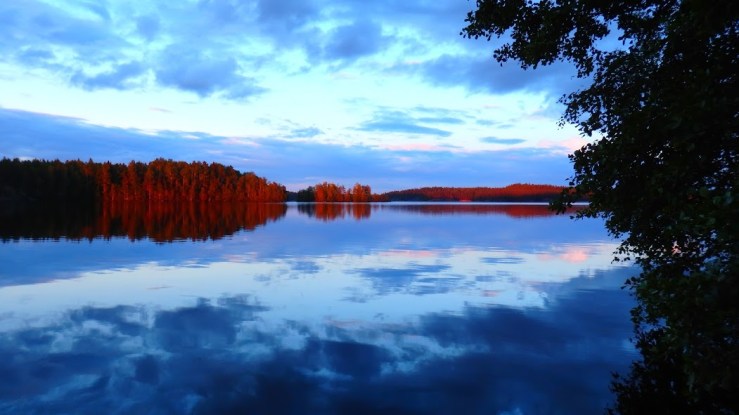
P7200622

Originally published in Eeva Kilpi, Animalia (WSOY, 1987). Translation and photos by Living in FIN

Eeva Kilpi, “Tansies”

Pietaryrtti_IMG_4701

Viimeinen päivä.
Ja säätiedotuskin niin kaunis:
Lämmin lounaan ja lännen välinen ilmavirtaus
vallitsee Suomessa.

Lähtiessäni totean:
pietaryrttejä piha täynnä.
Koko kesän olen lukenut:
tulee, ei tule, rakastaa, ei.

Pietaryrtti_IMG_9912

The last day.
The weather forecast is so beautiful.
A warm southwesterly westerly wind
prevails over Finland.

As I leave I note
the yard is full of tansies.
I counted them the whole summer long.
Loves me, loves me not. He’ll come, he won’t.

Originally published in Eeva Kilpi, Laulu rakkaudesta ja muita runoja (WSOY, 1972). Translated by Living in FIN. Photos courtesy of Luonnossa