Eeva Kilpi, “Fart Hard in Your Own Hut”

OLYMPUS DIGITAL CAMERA

Pieraista kovaa omassa tuvassa.
Joskus sitä on valmis epäröimättä
uskomann kapitalismiin.

* * * * * *

Fart hard in your own hut.
Sometimes it is unhesitatingly ready
to believe in capitalism.

—Eeva Kilpi, Runoja 1972–1976 (WSOY, 1978), p. 40. The poem was chosen using the True Random Number Generator at random.org. Photo and translation by Living in FIN

* * * * * *

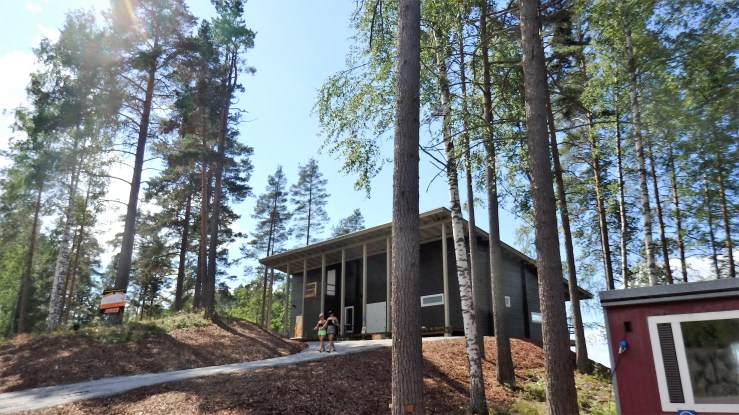
The photo, above, is of an empty “fish restaurant,” built near Ukonniemi Beach on Lake Saimaa in Imatra, South Karelia, by the city government and their favorite private contractors at great expense to the once-beautiful natural environment and local taxpayers.

Although no restaurateurs had agreed to lease or operate the future restaurant when the project was mooted and approved by city planners and city councilors, the constructionn of the “fish restaurant,” which involved felling hundreds of trees, building black-topped car roads where once there had only been soft footpaths, and dozens of other kinds of deviltry disguised as “landscaping” and “improvements,” went ahead anyway.

The initial phase, the destruction of the original, gorgeous landscape, ran into considerable cost overruns, and project managers found themselves asking the city for more money to keep up their wave of mutilation.

Several years later, no one has emerged operate or lease the restaurant, although the building is ostensibly ready to fry up fish fingers and put them all in a line.

The restaurant would be a great opportunity for any shyster who wants to go in and out of business in less than a year, because the wonderful Nuotta Restaurant and Smokehouse, located on the other side of Ukonniemi Beach, has been doing land-office business ever since it added a rooftop terrace last summer.

The food and atmosphere at the Nuotta are nonpareil, as all its regular and irregular customers know, and its view of Imatra Harbor and Laimassaari is stunning. On a warm, sunny day, I could sit there for hours, just sipping a glass of wine or a cup of coffee.

Even my dog thinks Nuotta is the cat’s meow. He once forced me to go there, after a long walk through the forest, so we could sit there for half an hour and just inhale the view. I had to order a cup of coffee and a doughnut to justify our odd-couple presence on the veranda. My dog was immeasurably pleased.

So why would such a tiny harbor need another fish restaurant? This isn’t “innovation,” as the current so-called bourgeois Finnish government would call it. This is sheer stupidity that was egged on local decision-makers by the construction lobby, who are always trying to drum up new projects for themselves, whatever cost to the built heritage, environment, and taxpayers, and whether their dubious improvements are really needed by flesh-and-blood, paying customers and townsfolk or not. LIF


Vilja-Tuulia Huotarinen, “We Open the Gift Package”

P8090014.JPG

Avataan lahjapaketti, ahmitaan suklarasia.
Nuolaisen ennen kuin tipahdan.
Kieli on kylmä lusikka kieltä vasten,
taipuu kun taivutan,
matolla minttuliköörin soma lemu
ja finni nenänpäässä,
yksi kukkavihkosta ilmestynyt nätti orvokki.

Nipistän ihon pintaa ja siihen herahtaa mustelma.
Mikään täällä tuskin on unta,
Jon Bon Jovi vilkuttaa seinällä silmää
kun puen farkut,
pyyhin viimeiset kärpäset suupielistä.
On liian myöhäistä
nukahtaa nyt,
ripustan rintaliivit kattolamppuun.
Ja lamppu sammuu.

Ekakerta on merkittävä, muista ei niin väliä.

Katson käsivarttani kuin kannibaali satukirjan sivua,
otsa nojaa vasten eebenpuuta,
lumi putoo punaiseen katuun.
Vaikka miten päin kääntäisin päätä, suipistaisin suuta,
lyhtypylväät seisovat suorassa rivissä, niin suorassa
että pää tulee kipeäksi.

:::::::::::::::::::::::::::::::::::::::::::::::::::::::::::::::::

We open the gift package, wolf down the boxes of chocolate.
I lick before I drop.
The tongue is a cold spoon against the tongue,
it bends when I bend.
The sweet stench of mint schnapps on the carpet
and a pimple on the nose’s tip,
one cute pansy popped from the flowery notebooks.

I pinch the skin’s surface and a bruise wells up.
Hardly anything here is a dream,
Jon Bon Jovi winks on the wall
when I put on jeans,
I wipe the last flies from the corner of the mouth.
It’s too late
to fall asleep now,
I hang the bra on the ceiling lamp.
And the lamp goes off.

The first time is important, don’t mind so much about the others.

I look at my arm like a cannibal looking at a page in a storybook.
The forehead leans against an ebony tree,
snow falls on the red street.
Whatever way I turn the head, I purse the mouth.
The lamp posts stand in a straight row, so straight
I’m going to get a headache.

— Vilja-Tuulia Huotarinen, Sakset kädessä ei saa juosta (WSOY, 2004), p. 17

Photo and translation by Living in FIN

Vilja-Tuulia Huotarinen, “The Quiet and the Blessed”


OLYMPUS DIGITAL CAMERA

Hiljaisia ja autuaita ei valita pesäpallojoukkueseen,
me lähdemme uimaan pitkää matkaa.
Päivät solahtavat kyynarpäistä, iho tummuu
ja menee kurttuun. Meidan vaihtoehtomme
ovat vähäiset: tarttua puukkoon tai pudota.

Me olemme vedenneitoja jotka heittävät terän aaltoihin,
emme uhraa ketään, emme peri edes omaa sydäntämme.
Syvyyden päihtymys ei meihin ulotu eikä kiiman kaipuu.
Mutta tiedämme, miten liu’utaan kasvot pohjaan päin.
Miten niellään suolaista vettä ilman oksennusrefleksiä.

Laulamme yhteen ääneen yhtä ääntä, aina ihanaa,
päät nousevat laineiden keskeltä, keltaiset pyöreät pallot,
joita rannalla etsitään. Pinnalla kaikki on hyvin.

:::::::::::::::::::::::::::::::::::::::::::::::::::::::::::::::::

The quiet and the blessed are not chosen for the baseball team:
We head out on a long, long swim.
The days slip off the elbows, the skin darkens
and wrinkles. Our choices
are few: catch the knife or fall.

We are water nymphs who toss the blade into the waves.
We sacrifice no one, we do not even inherit our own hearts.
Nitrogen narcosis does not get to us nor do we miss being in heat.
But we know how to glide face down in water.
How to swallow saltwater without gagging.

We sing in unison at the same volume, always marvelously.
Heads rise amid the waves, the round yellow balls
sought on shore. Everything on the surface is fine.

— Vilja-Tuulia Huotarinen, Sakset kädessä ei saa juosta (WSOY, 2004), p. 12

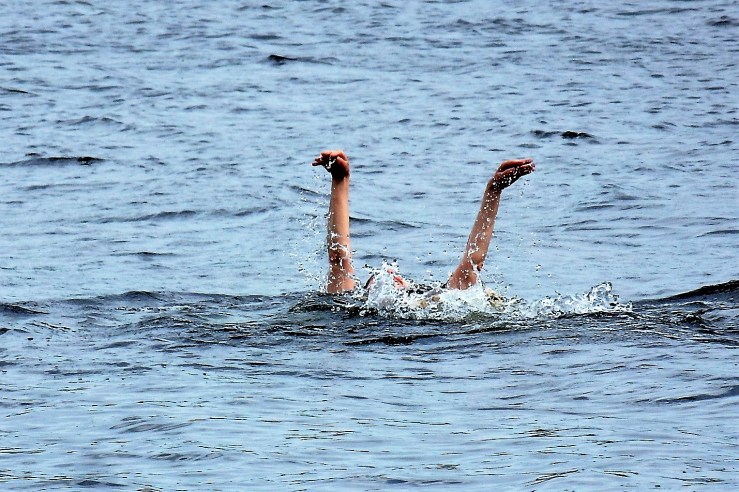
Photo of a swimmer in the Puulavesi and translation by Living in FIN

Vilja-Tuulia Huotarinen, “It Must Happen”

OLYMPUS DIGITAL CAMERA

Tapahduttava on, onnettomuutta ei voi siirtää.
Olen ollut keskellä kauan, syntymästä asti, ja nyt
kivien muodostamaan piiriin ilmestyy tyhjä kohta,
tila mahtua. Ranta murtuu kun käännyn selin.

Äkkiä vaihtoehtoja ei ole, ympyrää enää.
Ensimmäinen askel: heitän hyväilyt, käärin hihat.
Avaan arvet. Toinen askel: järven kalvo repeää.
Menen läpi. Kolmas: syvyys syö sinisen silmän,
kaksi veden väriä, tai taivaan oikeastaan.

Näin lämmintä, ihan sopivaa. Aalto sopii jalkaan,
Tuhkimon kenkä, pirstoutuu rikki. Aika kirkas, kun katso
läpi, kuvaa ei ole, ei heijastusta. Maisema tykyttää
verisuonissa, menetetty. On hetki, jolloin onni päättyy,
palaset putovat, käsistäni kaikki.

* * * * *

It must happen: an accident cannot be moved.
I have been in the middle for a long while, since birth, and now
an empty spot appears in a circle fashioned from stones,
room to fit. The beach crumbles when I turn my back.

Suddenly, there are no alternatives, no more circle.
First step: I throw caresses, I roll up my sleeves.
I open the scars. Second step: the lake’s membrane ruptures.
I’m going through. Third: the depth consumes the blue eye,
the two colors of water. Or the sky’s, actually.

So warm, quite suitable. The wave fits the foot,
Cinderella’s slipper, smashed to smithereens. Time is bright when you look
through it: there is no image, no reflection. The landscape throbs
in the blood vessels, lost. There is a moment when happiness ends,
the pieces all fall from my hands.

— Vilja-Tuulia Huotarinen, Sakset kädessä ei saa juosta (WSOY, 2004), p. 60

Photo and translation by Living in FIN

Vilja-Tuulia Huotarinen, “Our Golden-Brown Heads”

OLYMPUS DIGITAL CAMERA

Meidän kullanruskeat päämme ovat kumartuneet
toisiaan vasten, kynä rapisee hiiren jälkiä, suu avautuu
välillä leijonan kokoiseen haukotukseen, mutta sieraimet
värähtävät valppaasti. Nyt tehdään salaisuuksia. Avaudutaan.
Liittoudutaan. Kuuntelen ekassa pulpetissa Eleanor Rigbya
joka laulaa ikkunalaudalla, jalat eivät mahdu enää
pulpetin alle, katson lasin läpi mustia haavoja
koivujen kyljissä, hiiltyneitä arpia tiukan valon syleilyssä.

Kun tunti loppuu ja sujautamme paperit reppuun,
näen hänen reunamerkintänsä: tähtiä marginaaleissa,
kirkkaita kovia terässiipisiä ikuisia.

:::::::::::::::::::::::::::::::::::::::::::::::::::::::::::::::::

Our golden-brown heads are stooped
towards each other, pencils scratch mouse tracks, mouths open
occasionally into lion-sized yawns, but nostrils
vibrate vigilantly. Secrets are made. They are revealed.
Alliances are formed. At the first desk I listen to Eleanor Rigby
singing in the windowsill. Legs no longer fit
under the desk. I look through glass at black wounds
on the birch sides, charred scars in the taut light’s embraces.

When the lesson ends and we slip our papers into rucksacks,
I see his edge markings: stars in the margins,
bright hard steel-winged everlasting.

— Vilja-Tuulia Huotarinen, Sakset kädessä ei saa juosta (WSOY, 2004), p. 42.

Photo of former Savikanta School (Imatra, South Karelia) and translation by Living in FIN

Vilja-Tuulia Huotarinen, “The Cloud’s Spines Lie”

Modern_mangle_in_a_Swedish_laundry_room

Pilvenrangat makaavat pojan ohimoilla. Suu kiinni nyt.
Sokerisammas kielen päällä hilaan kättä kylkiviivaa pitkin,
jos vähän alemmaksi, se on melkein.

Kainalokarvat kutittavat sukeltajaa ja poika se tutkii tähtiä;
hänen silmänsä ovat sillä tapaa sokeat.
Aamulla vaihdan lakanat, taivaan toiseen.
Tyynyliinaan on jäänyt niskakuoppa.
Vedän sen mankelin läpi suoraksi, silitän vatsaani vasten.

:::::::::::::::::::::::::::::::::::::::::::::::::::::::::::::::::

The cloud’s spines lie on the boy’s temples. Shut up now.
A pillar of sugar on the tongue, I drag a hand along the rib line.
If a bit lower, it is almost.

Armpit hair tickles the diver, and the boy searches the stars.
His eyes thus tend to be blind.
In the morning, I change the bed sheets, to another sky.
The nape has remained on the pillow case.
I pull it straight through the mangle, stroking my stomach against it.

Vilja-Tuulia Huotarinen, Sakset kädessä ei saa juosta (WSOY, 2004), p. 15. Photo of mangle courtesy of Wikipedia.

Translated by Living in FIN

Arto Lappi, Five Poems

P6280002 (1)

1

Kuinka puhuttiin —
sadat, tuhannet sanat
ettei yksikään
mieleen jäänyt: hymysi
kaikkien niiden läpi.

:::::::::::::::::::::::::::::::::::::::::::::::::::::::::::::::::

However much we said—
one hundred, one thousand words—
not a single one
sticks in my mind, because your smile
shines through every one of them.

2

Vaikka pöydän ympärillä oli neljä tuolia
mummo antoi istua vain sillä, joka
varoitti narahtaen. Ja samassa pöytä oli täynnä
mehua, keksejä. Ja kilo voita leivän päällä.

:::::::::::::::::::::::::::::::::::::::::::::::::::::::::::::::::

Although around the table four chairs had been arranged
Grandma would let me sit only in the one chair
That forewarned her by creaking. The table was chockablock
with juice, biscuits, and a kilo of butter heaped on top of the bread.

3

Juosta varjoaan
kiinni, vihdoin tajuta —
makuulta sen saa
napattua: samalla
saa hiukan aurinkoa.

:::::::::::::::::::::::::::::::::::::::::::::::::::::::::::::::::

Running after your shadow,
trying to catch it, finally realizing:
when you are lying down, it can be
snatched. At the same time,
you get some sun.

4

Jaksan katsella
metsäreunaa, mitään ei
tapahdu. Mittaan
sitten kesän lopulla
vatsanympäryksen.

:::::::::::::::::::::::::::::::::::::::::::::::::::::::::::::::::

I manage to go have a look
at the forest’s edge: nothing is
happening. Then I measure
my stomach’s circumference
at summer’s end.

5

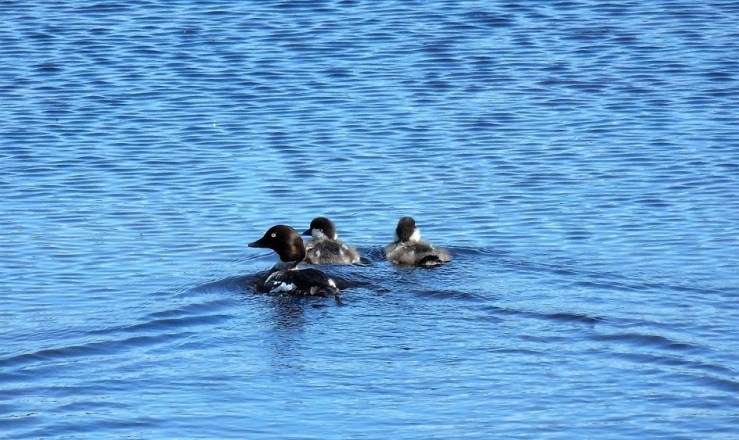
Sorsanpoikaset —
emon perässä uivat
hauenkin kitaan.

:::::::::::::::::::::::::::::::::::::::::::::::::::::::::::::::::

Ducklings,
swimming behind their mother,
right into a pike’s maw.

Arto Lappi, Harakan paja: mitallisia runoja (Turku: Sammakko, 2007), pp. 8, 21, 39, 124, 91. The poems were chosen using the True Random Number Generator at random.org.

Photo and translations by Living in FIN

Hannu Salakka, Three Poems

OLYMPUS DIGITAL CAMERA

1

Seinällä kääntyy kellastunut lehti
toukokuusta kesäkuuhun.
Ilmassa on juuri lakanneen musiikin tuntu,
sävelten, jotka ovat jo vaienneet
tai syntyneet saamatta ääntä.

:::::::::::::::::::::::::::::::::::::::::::::::::::::::::::::::::

The yellowed page on the wall turns
from May to June.
There’s a feeling in the air of music stopping,
of tunes going silent
or starting up again without making a sound.

2

Kolea ilta, vanhaa musiikkia.
Värit menevät valon myötä,
vain sävyt jäävät, hämärä,
jossa vihreää melkein mustasta melkein valkoiseen;
maailma vedenalainen,
rajapinta kuultavan taivasta vasten.

:::::::::::::::::::::::::::::::::::::::::::::::::::::::::::::::::

A chilly evening, old music.
The colors fade in the light,
leaving only overtones, dusk,
in which green has gone from almost black to nearly white.
The world is submerged,
the interface translucent against the sky.

3

Yö on vain varjo,
unet ovat toisesta maailmasta
joka meillä vain yksin on.
Näyt syntyvät
painuakseen jälleen unohduksiin niinkuin ne,
jotka elivät täällä ennen.

:::::::::::::::::::::::::::::::::::::::::::::::::::::::::::::::::

Night is a mere shadow,
dreams are from the other world,
which is the only one in our parts.
Visions are born, as it were,
so those who lived here before
descend once more into oblivion.

— Hannu Salakka, Kesä kesältä syvemmin (Otava, 1977), pp. 7–9

Interior view of the Lauritsala Church (Lappeenranta, South Karelia) and translations by Living in FIN

Eeva Kilpi, “Now We Have an Immense Charge in Us”

OLYMPUS DIGITAL CAMERA

Meissä on nyt valtava lataus
iloa, rakkautta, hyvyyttä ja voimaa
jakaa muillekin.

Niin, hän sanoi, olet käännekohta minun elämässäni,
sinä aukaisit minun aistieni umpeutuneet väylät.
Ensi kerran ymmärrän äitiäni,
anopista puhumattakaan,
sukulaisia melkein rakastan,
ja mikä parasta, vaimo ei maistu enää puulta;
sitä juhlaa mikä meillä on ollut!

*  * * * * *

Now we have an immense charge in us
Of joy, love, kindness, and energy
To share with others.

So, he said, you are a turning point in my life.
You opened my senses’ closed channels.
I understand my mother for the first time,
To say nothing of my mother-in-law.
I almost love my relatives.
And, best of all, my wife no longer tastes like wood.
What a celebration we have had!

— Eeva Kilpi, Laulu rakkaudesta ja muita runoja (WSOY, 1972)

Photo and translation by Living in FIN

Eeva Kilpi, Six Poems

OLYMPUS DIGITAL CAMERA

1

Kun suru häipyy
tulevat muistot
ja jokainen niistä
koskee yksitellen.

* * * * *

When sorrow fades
the memories return
and each of them
hurts one by one.

2

Aika on leveä sänky.
Minä jo kauan
tyytynyt kapeaan.
Turhaan ei sanota:
levitän sinulle vuoteen.
Ahdas avaruus.

* * * * *

Time is a wide bed.
I have long
settled for a narrow one.
It’s not for nothing they say,
I’ll roll out the bed for you.
Space is cramped.

3

Sylissäsi
minä annan elämälle anteeksi
virheen toisensa jälkeen.

Kohta on kaikki lunastettu.

* * * * *

I forgive life
in your embrace
one mistake after another.

Soon it will all be redeemed.

4

Ettäkö vain kerran vuodessa
ja niin lyhyen aikaa?

Meidan rakastaessamme heinä kasvoi nilkoista
lanteita hipomaan,
koiranputki olkapäitten ympärille,
polku syveni pois.

* * * * *

Only once a year
and for such a short time?

As we made love, the grass grew ankle high,
grazing the hips,
the cow parsley encircled the shoulders,
the path deepened and vanished.

5

Jo kauan olen ollut varovainen,
kysynyt:
— Onko tämä Jumalan lähettämä mies?
Nyt kysyn lisäksi:
— Onko tämä ihminen jolle tahdon
avata yksinäisyyteni veräjän
astua korpeeni,
häiritä sen hitaasti kasvanut
luonnonmukainen epäjärjestys,
nähdä sen rauhoitetut kasvit,
valonranat linnut
jättää jälkensä sen soiselle polulle
makuuksensa sen ruohoon,
enkelinkuvansa sisimpäni hangelle.

* * * * *

I have been cautious for a long time,
asking,
“Has God sent me this man?”
Now I also ask,
“Is this the person whom I wish
to open the gates of my solitude,
to step in my backwoods,
disturbing its slowly cultivated
natural disorder,
seeing its protected plants,
its light-sensitive birds,
leaving his footprints on its marshy trail,
his resting place on its grass,
his snow angel on the snowdrift inside me?

6

Kun yksinäisyys on häiriötön
ei ole enää kärsimystä.

* * * * *

When loneliness is undisturbed
it is no longer suffering.

— Eeva Kilpi, Terveisin (WSOY, 1976), pp. 7, 9–13

Photo and translations by Living in FIN