Hannu Salakka, Three Poems

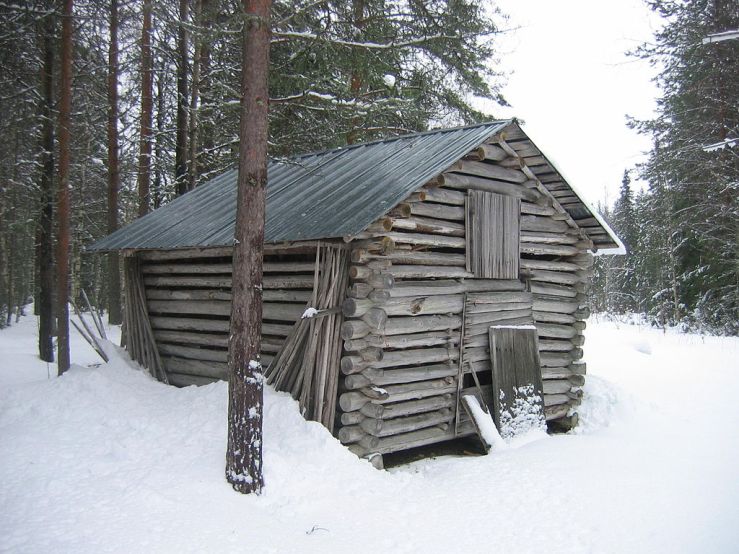
1024px-Finnish_barn

1.

Sateen jälkeen kävelen kalliola
jolta hevonen putosi ja kuoli.
Katson alas.
Mutta ei,
putous ei ole kyllin suuri,
tuskin edes tömähtäisin.
Ja täällä on jo tapahtunut jotakin suurta.

After the rainshower, I walk to the cliff
where the horse fell and died.
I look down.
But no,
the fall is not long enough.
I would barely make a thud.
Yet something great has already happened here.

2.

Maailmalla

Katuja kulkien
voi katsella pensasaitoja,
talojen seinämiä,
autolla voi ajaa halki maaseudun,
kuulla ehkä hevosen hirnuvan,
nähdä tytön istuvan pienen joen rannalla,
mutta kuolema ei enää aja vaunilla öisin
musta viitta hulmuten:
jo aamuisin se tummassa puvussaan
istuu autoon
ja päivän kiitää tiellä,
juna pääsee rataa pitkin
asemalta asemalle
ja voi matkustaa kuin pakeneva,
mutta mistä enää löytä vieraat kasvot,
jotka eivät ole kaupan,
ystävällisen kansan,
joka kutsuu elämään hetkeksi heidän keskelleen
sovussa sen tapojen kanssa.

Out in the World

Walking through the streets
you can see hedgerows,
walls of houses.
By car you can drive across the countryside,
maybe hear a horse neighing,
see a girl sitting on the bank of a tiny river,
but death no longer rides in a wagon by night,
black cape fluttering.
In the mornings, dressed in a black suit, it
gets into a car
and speeds the day down the road.
A train travels along a track
from station to station.
You can travel like an escapee,
but where do you find strange faces anymore
that are not for sale,
a friendly people
who would invite you to live among them for a moment
in keeping with their customs?

3.

Tiimalasi

Talvet ovat äänettömiä,
suunnattomia,
ja kaikki yhdessä.
Kuka piirtäisi hangen täyteen kirjaimia
joista ei muodostuisi kaipuuta
ja puhuisi ilman täyteen sanoja
joissa ei olisi mitään surullista.

Olen nähnyt ihmisten tulevan,
tehtaan imaisevan heidät sisäänsä
ja sylkäisevan puolijuoksua ulos,
ja ihmisten katoavan.

Olen herännyt kellon ääneen
ja nukahtanut sen jäädessä vartioimaan unta,
nähnyt kevään jokaisen alastoman aamun,
yhden kerrallaan.
Päivästä päivään olen nähnyt
saman auringon nousevan
saman ladon ohi saman joen ylle
ja laskevan saman synkän metsän taa.

Niin monet ovat kuolleet.
Niin monet ovat synytmättä
ja tulevat kuolemaan.
Kuka muistaisi kaikki kuolleet
ja jättäisi heistä kertomatta.

Kaikki tuulet tulevat kaukaa mereltä
ja menevät sinne takaisin.
Minä vain pimeästä toiseen.
Kuin yli joen.

Hourglass

The winters are silent,
immense,
and all together.
Who would draw letters full of snowdrifts
for which no one would long,
and speak words full of air
about which there is nothing sad.

I have seen people come,
seen the plant suck them in,
seen them spit halfway out,
and seen people disappear.

I have been awakened by the sound of the clock,
and fallen asleep while keeping watch over its sleep.
I have seen every naked spring morning,
one at a time.
Day after day, I have seen
the same sun rising over the same river near the same barn
and setting behind the same sullen forest.

So many have died.
So many have not been born
and are coming to die.
Who would remember all the dead
and leave them unnamed?

All the winds come from far off the sea
and go back there.
I just go from one time of darkness to another.
Like across the river.

—Hannu Salakka, Kuin unessa viipyen (Otava, 1990), pp. 577, 81, 304. Translated by Living in FIN. Photo courtesy of Wiktionary
Hannu Salakka, “Any Hilltop of Yours”

andreyeva-ukkokoli.jpg
On mikä tahansa mäenharjanne tai kukkula,
vuori tai niin pieni kumpare
että mahtuu kokonaan kämmenen alle,
niin heti haluan kiivetä sille katselemaan
ja painaa mieleen kaiken
minkä matkalla olen nähnyt.
•••••••••
Any hilltop of yours or hillock whatsoever,
a mountain or a knoll so small
it fits completely under the palm,
so I immediately want to climb it and have a look,
and commit to memory everything
I have seen en route.
 
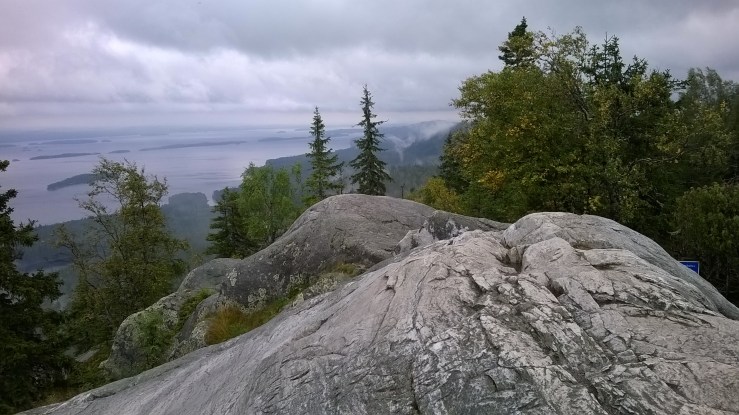
—Hannu Salakka, Ennen kapaisin tähän (Otava, 1983), p. 21. Translated by Living in FIN. View of Ukko-Koli (Koli National Park, North Karelia) courtesy of Yekaterina Andreyeva and reprinted with her permission.

Hannu Salakka, “My Life Is Called Dismal”

OLYMPUS DIGITAL CAMERA

Elämääni sanotaan ankeaksi,
itseäni alakuloiseksi,
vaikka olen vain ajatuksissani.
Mielissäni.
Mielin kielin.
Jos näyttäisin miltä minusta tuntuu todella
heidän keskellään olla,
ei olisi sellaista sanaa.

……………………………

My life is called dismal,
I am said to be gloomy,
although I am only lost in my thoughts.
In my moods.
Mindful.
If I looked how I really feel,
being amidst them,
there would be no word for it.

—Hannu Salakka, Niin joudun kauas tulevaisuuteen (Otava, 1989), p. 82. Photo and translation by Living in FIN

Deportees

Odotus vaeltaa maisemaa
kuin muistot läpi koko entisen elämän.

Waiting to wander the landscape
like memories through a whole former life.

—Hannu Salakka, Kesä kesältä syvemmin (Otava, 1977), p. 41. Translated by Living in FIN

…………………………………

The shameful thing about Finland’s deporting legitimate asylum seekers back to clearly dangerous countries like Afghanistan and Iraq is that there is so much empty commercial and residential space in many Finnish cities and towns that all the asylum seekers Finland temporarily granted refuge during the peak “crisis” year of 2015—approximately 33,000 people, according the Finnish Migration Service’s own statistics—could easily be spread around the country and housed in all that empty space, which is either ready for habitation or could be easily and quickly adapted as living quarters, especially given the Finnish construction sector’s otherwise dangerous eagerness to generate new work for themselves.

Adapting these people to life in a new, very different country is another matter, but it’s not as if Finland hasn’t done it before. After the war, the country took in way more refugees from the parts of Finland ceded to the Soviet Union than it would have to take now (granted, they were already Finnish-speaking Finns), and in much later times, people from Somalia, the Sudan, and other war-torn countries found refuge in Finland in fairly large numbers. A whole generation of these refugees’ kids have already grown up who speak Finnish perfectly and are mostly doing well in life.

One of them was recently elected to the Jyväskylä city council from the Greens: she got the second highest vote tally in the entire city. What a sad irony that the latest deportation of the new asylum seekers, on the run from the wars in Iraq, Syria, and Afghanistan, should take place in Jyväskylä. (See Yle’s article, below.)

So what’s the real problem? The real problem is the current “bourgeois” government, which I predict will go down in flames at the next elections in 2019. Unfortunately, before that happens, they will have managed to wreck much of Finland’s social democracy—all in the name of a mythical “competitiveness”—and blacken the country’s reputation with this wholly unnecessary asylum seeker farce.

In reality, Finland’s population is aging rapidly, so why not take a chunk of refugees, only too happy to live in a peaceful country after the hell they have been through in their homeland, and put some of them to work looking after the country’s elders, while the rest can be employed elsewhere (including building houses for themselves as needed) or start their own businesses. What could be more “competitive” and “innovative” than that?

But no, Finland’s ruling coalition has a weak link in the shape of the so-called Finns Party, which over the summer was taken over by its far-right wing in the person of the certified racist Jussi Halla-aho, causing the party’s previous chair, Timo Soini, and the party’s entire parliamentary delegation of twenty MPs, including all its government ministers, to bail and form a new party called New Alternative.

The other two parties in the coalition, the Center Party (which won the most votes in the last elections and controls the prime minister’s office) and the National Coalition Party are not exactly known for their racist policies, but I can easily imagine they are so lacking in backbone and imagination that they promised the Finns Party not to accept “too many” asylum seeker claims in order to keep them onside voting for their other so-called reforms.

Ironically, it was just this that had caused the ratings of the Finns Party to sink precipitously, because their supporters are all for Finnish social democracy, just Finnish social democracy for ethnic Finns and Finnish Swedes. Suddenly, their party’s leadership blindsided them by going into government (something they said they would never do if it was not on their own terms; that is, if they had not won a plurarity of votes and were the party forming the new government) with the country’s two major “bourgeois” parties, who were hellbent on a program of heavy austerity to alleviate Finland’s very real economic woes.

So, basically nobody is getting what they want, and the country is making itself look cruel and foolish to boot, when in reality, given the gains in the ratings made by the Social Democrats, the Left Alliance, and the Greens, who are now the second most popular party in the country, this crackdown on asylum seekers probably does not reflect the popular will at all.

It reflects two things: a) a tiny racist minority that weaseled its way into government even as its popularity was falling (it did much better in the elections before last, when absolutely all the other parties were still determined never to allow the Finns Party into government), and whose popularity has now tanked altogether, but which is still somehow managing to set the tone in the government’s approach to asylum seekers, and b) a migration service that has been poorly equipped to deal with so many asylum seekers, especially in terms of decent interpreters, so it has been making asylum decisons, or so I have read on activist websites, based on partial or false information.

The people in Finnish (or EU?) officialdom who made up the fairy tale that Afghanistan and Iraq are “safe” countries again are the real culprits, however, not the wacko racists like Jussi Halla-aho, who have always been fairly easy to neutralize in one way or another.

I have no idea who these people were. They should be outed, at very least. LIF

…………………………………

Despite Jyväskylä protests, police start deportation of Afghan family
Yle
September 5, 2017

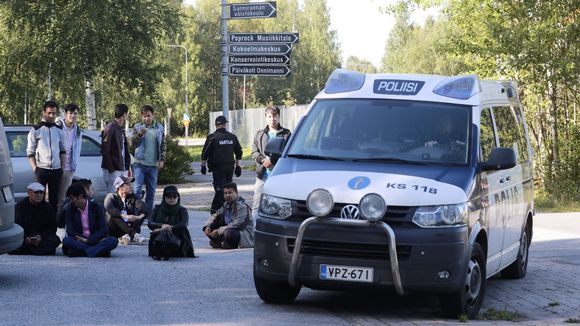
Dozens of demonstrators outside an asylum reception centre in Jyväskylä, in central Finland, attempted to prevent police from removing an Afghan family ordered to be deported on Monday afternoon. But several hours later after the arrival of several backup units, police announced that they had carried out the family’s removal from the centre at around 6 pm.

LKS_jyvaskyla_39-42582859ad4f8a151a2

Police had originally planned to begin the deportation of an Afghan family at about noon on Monday when they were surrounded by a human chain of people who temporarily foiled their attempt to remove them.

Police had reportedly used pepper spray after being attacked by some demonstrators, according to police.

More officers outfitted in riot gear arrived to the scene at about 16:45 pm and in a tweet about a half-hour later, police reported that the reinforcements would enable them to carry out the deportation operation.

According to Detective Chief Inspector Jari Kinnunen a few dozen protestors had taken part in the incident.

“It was a few dozen protestors. The police are trying to solve the situation peacefully, by negotiating as long as required,” Kinnunen said at about 3 pm.

“If we go back, we’ll be killed”
The family being deported—a father, mother and their eight month-old baby—are originally from Ghazni, Afghanistan.

Before leaving Afghanistan some two years ago the father worked as a taxi driver.

The father said that the family could not return to Afghanistan because they were Shia Muslims, saying that they faced persecution there.

“If we go back we’ll be killed,” the father told the newspaper Keskisuomalainen.

Roughly 80 percent of Afghanistan’s population, including the Taliban,are Sunni Muslims.

Photo courtesy of Lehtikuva/Juha Sorri

Hannu Salakka, “It Cools Slowly”

imatra-destroyed sculpture

Viilenee hitaasti,
miedot tuoksut kohoavat aaltoina.
Valvoa myöhään, herätä varhain,
olla jouten koko pitkän päivän.
Mutta jokin huolestuttaa.
Ehkä kadonnut taito päästä irti asioista,
jotka eivät tapahdu täällä.

* * * * * * * * * *

It cools slowly,
the mild smells rising like waves.
Staying up late, waking up early,
being idle the livelong day.
But something is unsettling.
Perhaps the lost art of getting loose of things
that did not happen here.

—Hannu Salakka, Kesä kesältä syvemmin (Otava, 1977), p. 36. Translation and photo by Living in FIN.

A few years ago, citing “numerous” complaints from the “general public,” the Imatra municipal parks and maintenance department summarily loaded the lovely brutalist modernist sculpture in the middle of the picture, above, onto a flatbed truck, took it to the local rolled steel plant, and melted it down in the plant’s blast furnace.

It was left to the Imatra municipal culture department, which had not been warned by the parks and maintenace department it was planning to commit this act of iconoclasm, to telephone the sculptor, who is quite famous in Finland and alive and well in Helsinki, to explain what had been done to his artwork by the yahoos in Karelia. It was reported that he took the strange news quite well, all things considered. LIF

Hannu Salakka, “There Has Been Nothing Special”

OLYMPUS DIGITAL CAMERA

Ei ole mitään erikoista.
Talosta ei kuollut ketään,
pois matkustaneista ei ole kuulunut.
Aivan tavallinen syksy.

Nämä silmät vain
niin monta kymmentä kuvaa syksyistä nähneet
eivät luota ainoaan käsilläolevaan.

Selailevat ennakkotapausten arkistoja.

* * * * * * * * * *

There has been nothing special.
No one from the house died,
nothing has been heard of those who journeyed away.
Quite a normal autumn.

These eyes alone,
which have seen so many dozen pictures of autumns,
do not trust the only thing ready to hand.

They browse the archives for precedents.

—Hannu Salakka, Niin joudun kauas tulevaisuuteen (Otava, 1989), p. 120. Translation and photo by Living in FIN


Hannu Salakka, “Reflections”

OLYMPUS DIGITAL CAMERA

Mietteitä | Reflections

Se mitä tarjotaan ei ole sitä, mikä on tarpeen, vaan yleisen edun vuoksi; niinkuin mies, joka saa muuttaa pois, vuokrata huoneen ja tehdä työtä voidakseen asua sen huoneen.

What is supplied is not what is needed but in the public interest, like a man who can move away, rent a room, and work to live in his room.

Vaihtoehdoilla on pakon luonne, en suostu kuuntelemaan, opettelemaan, puhun omin sanoin, omin silmin totean.

Alternatives are compulsory by nature. I’d rather not listen and learn, but speak my own words and note things with my own eyes.

Käytännöllistäkö järjestelyä se, että ihminen sinällään ei enää riitä, että tarvitaan jokin tunnustus?

Is it a practical arrangement that the individual as such is no longer enough to need any recognition?

Kun kuuntelee ihmisiä yhdessä ja erikseen, ei ole enää puhe samasta asiasta.

When you listen to people together and separately, they are no longer talkinga about the same thing.

En halunnut puhua heille enkä osannut välttyä; nyt he haluavat kuulla ääneni osoitaakseen olevansa välittämättä siitä, tietääkseen miten asiat hoidetaan vaikenemalla.

I didn’t want to talk to them nor could I avoid it. Now they want to hear my voice to show they are ignoring it, to know how things are done by keeping one’s mouth shut.

Vanhaa taloa purettiin. Jätin patsaat katselematta sillä niiden olemassaolon ainoa tarkoitus on, että ne pysyisivät aina näkyvillä.

The old house was demolished. I left the statues without looking, because the only point of their existence was they would always be visible.

Äänien sekasorto; kaikki haluaisivat sanoa, kukaan ei kuuntelisi, vain joku suostuisi puhumaan itsekseen.

A babel of voices: everyone would like to speak, no one would listen, only some would be willing to speak to themselves.

Kun ihmisestä tulee tunnus, tietoja lomakkeella, häntä itseään ei enää kutsuta kuultavaksi asiasta.

When inviduals become IDs, data on a questionnaire, they will no longer be asked to hear their dossiers.

Näillä totuuksilla, ulottuvuuksilla ei ole tarpeeksi etäisyyttä, syvyyttä, vain se minkä ovat ennalta alitajunnassa tulevat askeleet.

These truths and dimensions lack distance and depth. They are only preliminary future steps in the subconscious.

Maisema ei ole alakuloinen vaan mieli, jonka silmät sitä katselevat. Sanotaan ajan olevan sellainen, että palaajan mieli halaa siihen maahan, josta hän on lähtenyt.

A landscape is not melancholic, but rather the mind whose eyes regard it. They say time is such that the returnee’s mind embraces the land he has left.

Kuoriutua kerros kerrokselta, kunnes jää vain yksi ainoa lause: mikään ei ole merkitykseltään vähäinen vaan mitätön.

Hatch one layer from the next until only a single sentence remains. Nothing has little meaning but nothingness.

Miten erilaiset ilmeet, kun hymyilee tai on vaiti.

How different your expression is when you smile or keep quiet.

Niin monilla sanoilla on kuolleen arvo, musta arvokas kyyti.

So many words have dead value, a black valuable lift.

Päämääriä ei ole muita kuin se mitä meille näistä päivistä jää.

Goals are nothing other than what remains of our days.

Usein asioissa on hyvää juuri se että ne kuin huomaamatta jäävät kesken.

Sometimes, it is good when things are left imperceptibly unfinished.

Vain pienet hetkelliset ajatukset ovat todellisia, kuolemattomillla ei ole käytännön merkitystä.

Only tiny fleeting thoughts are tangible. Immortal thoughts have no practical meaning.

En näe tätä kaikkea, tai jos näеnkin, jokin minussa ei sitä nimeä.

I can’t see all of it, and when I can see it, I don’t have a name for whatever it is.

En puhu enää maani kieltä enkä toisilla kielilla; ajattelen itsekseni.

I will no longer speak my country’s language or another language. I will think myself.

Milloin puhun, en puhu omia puheitani, niin syvälle en itseäni tiedä.

When I do speak, I won’t speak about my own words. I don’t know myself so deeply.

Kädestä käteen kiersivat itselle kirjoitetut viestit tapaamatta vastaanottajaa.

They circulated messages by hand to themselves without meeting the recipient.

Ottaisi osaa keskusteluun; odotettaisiin sanovan asioita, joita muut puhuvat.

If you took part in a discussion, you would be expected to say the things the others are talking about.

Kun ongelmat käännetään ratkaisuiksi, ostetaan kaikki mitä myydään.

When problems are translated, everything is up for sale.

Vakiintunut ja tavanomainen tuovat aina väistämättä mieleen henkisen köyhyyden; elämä on siellä missä tunteet aina ylittävät järjestykseen.

The standard and commonplace inevitably bring spiritual poverty to the soul. Life is where the emotions transgress order.

Auringon paistaessa ajattelen; miten se myisi kuvana, menestyisi, kuin tämä aika mittaan arvon sille mistä pystyy luopumaan.

As the sun shines, I think how would it sell as a picture, would it be successful, as this time is measured by the value of what it can abandon.

—Hannu Salakka, Myötäisien tuulien risteykssesä (Otava, 1978), pp. 39-44. Photo and translation by Living in FIN

Hannu Salakka, “No One I Meet Here”

OLYMPUS DIGITAL CAMERA

Kukaan,
jonka täällä tapaan,
ei ole täältä, enkä minäkään.
Vieraat ihmiset vain kulkevat ikkunan ohi
niinkuin aamut tuoden vastustamattomasti päivät,
viholliset
joita ei voi tappaa yhtä kerrallaan,
kasvoista kasvoihin,
ja yhdessä ne ovat voima
jolle ei voi mitään.

::::::::::::::::

No one
I meet here
is from here, and neither am I.
Strangers just walk past the window,
as the mornings irresistibly bring the days.
Enemies
who cannot be killed one at a time,
face to face,
while together they are a power
to whom nothing can be done.

—Hannu Salakka, Myötäisien tuulien risteyksessä (Otava, 1978), p. 70. Photo and translation by Living in FIN

Hannu Salakka, Three Poems

OLYMPUS DIGITAL CAMERA

1

Seinällä kääntyy kellastunut lehti
toukokuusta kesäkuuhun.
Ilmassa on juuri lakanneen musiikin tuntu,
sävelten, jotka ovat jo vaienneet
tai syntyneet saamatta ääntä.

:::::::::::::::::::::::::::::::::::::::::::::::::::::::::::::::::

The yellowed page on the wall turns
from May to June.
There’s a feeling in the air of music stopping,
of tunes going silent
or starting up again without making a sound.

2

Kolea ilta, vanhaa musiikkia.
Värit menevät valon myötä,
vain sävyt jäävät, hämärä,
jossa vihreää melkein mustasta melkein valkoiseen;
maailma vedenalainen,
rajapinta kuultavan taivasta vasten.

:::::::::::::::::::::::::::::::::::::::::::::::::::::::::::::::::

A chilly evening, old music.
The colors fade in the light,
leaving only overtones, dusk,
in which green has gone from almost black to nearly white.
The world is submerged,
the interface translucent against the sky.

3

Yö on vain varjo,
unet ovat toisesta maailmasta
joka meillä vain yksin on.
Näyt syntyvät
painuakseen jälleen unohduksiin niinkuin ne,
jotka elivät täällä ennen.

:::::::::::::::::::::::::::::::::::::::::::::::::::::::::::::::::

Night is a mere shadow,
dreams are from the other world,
which is the only one in our parts.
Visions are born, as it were,
so those who lived here before
descend once more into oblivion.

— Hannu Salakka, Kesä kesältä syvemmin (Otava, 1977), pp. 7–9

Interior view of the Lauritsala Church (Lappeenranta, South Karelia) and translations by Living in FIN