Jorma Etto, “The Dogs”

OLYMPUS DIGITAL CAMERA

Koirat
Nuuskimme jälkiä, haistoimme jätteitä,
nuolimme kivien raot,
vainusimme varjot jotka kerran olivat.
Viimein löysimme unohtuneen
mirhamintuoksuisen liinan
kaukaa Jordanin takaa.

* * * * *

The Dogs
We sniffed tracks, we smelled trash,
we licked cracks in rocks,
we scented the shadows that once had been.
Finally, we found a forgotten
cloth that smelled of myrrh
far beyond the Jordan.

Jorma Etto, Ajastaikaa (WSOY, 1964)

Translation and snapshot by Living in FIN

Vilja-Tuulia Huotarinen, “If You Let the Cows Out on Monday”

cows near kuninkaantie in sipoo-wiki commons

Jos lehmät päästää ulos maanantaina
ne menevät metsään, painuvat pitkälle
pyrkivät putouksiin, kallionkoloon ja alas jyrkänteeltä.
Kuolleet palaavat pihatietä pitkin:
Rebekka, Isolde, Rosamunda.
Allison, Eulalia, Eufrosyne.
Ne eivät tule kummituksina vain vanhoina ystävinä.
Ketä ne, siivettömät, täällä suojelevat?
Laihaa likkaa, laihaa likkaa.

* * * * *

If you let the cows out on Monday
they head for the woods, they go far
they run for the falls, the hole in the rock and off the cliff.
The dead return along the road to the yard:
Rebecca, Isolde, Rosamunde,
Allison, Eulalia, Euphrosyne.
They come not as ghosts, but as old friends.
Who are they protecting here, the wingless ones?
The skinny girl, the skinny girl.

— Vilja-Tullia Huotarinen, Iloinen Lehmän Runot (WSOY, 2009)

Translated by Living in FIN. Photo courtesy of Wiki Commons

* * * * *

https://youtu.be/De10ASxdfu0


Hannu Salakka, “The Snowfall Slowly Sifts the Air Pollution”

P2250022

Lumisade seuloo hitaasti ilman epäpuhtaudet.
Seinät ovat kylmät,
tekee mieli nostaa jalat tuolille.
Vatsassasi
ihon alla on arpia
niinkuin jonkin tuntemattoman eläimen kynsiminä.
Lapsi juoksi jo lattiala
ja puhuu itselleen omalla kielellään,
se on jo lähdössä,
me jäämässä tähän.

**********

The snowfall slowly sifts the air pollution.
The walls are cold,
Making you feel like propping your feet on the armchair.
Under the skin
In your stomach are scars
Like an unknown animal’s claws.
The child dashes round the floor,
Speaking to itself in its own tongue.
It’s on its way,
We’re staying here.

Hannu Salakka, Ennen kapaisin tähän (Otava, 1983)

Translation and photograph by Living in FIN

Finland Asylum Seeker Blues (MigriLeaks)

10 Problems with Migri’s Processes and Decisions

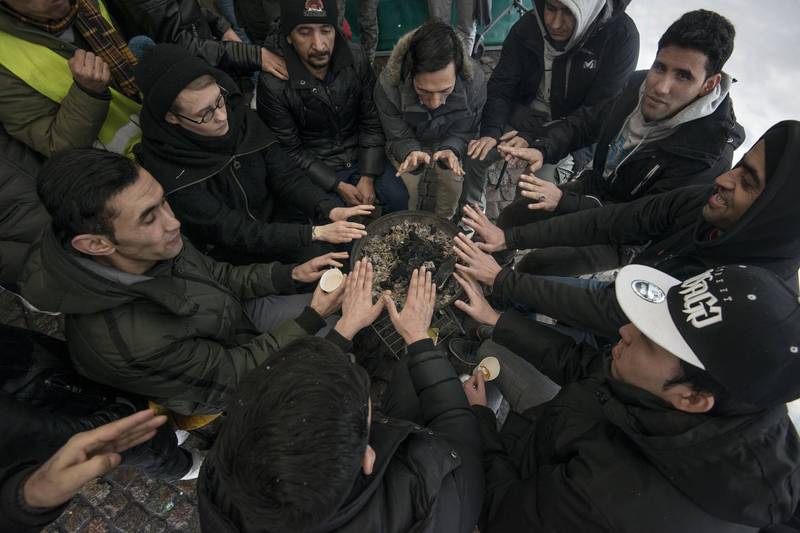
For the past month, Iraqi and Afghan asylum seekers, in particular, have been demonstrating in downtown Helsinki. One of their central demands is that asylum cases in which there have been problems in the handling should be processed again.

The Finnish Immigration Service (Migri) systematically refuses to admit the problematic nature of its processes and decisions, let alone fix them. An excellent example of this was Migri Director General Jaana Vuorio’s op-ed piece, “A Negative Decision Is Not a Wrong Decision,” in the 3 December 2017 issue of Helsingin Sanomat. A negative decision is definitely not a wrong decision, but a flawed decision is a flawed decision.

What, then, are these problems?

1. Migri has been using inexperienced and inappropriate interpreters. For example, an Iraqi asylum seeker’s Arabic language interpreter may have been from North Africa. The Arabic dialects spoken in Iraq and North Africa differ to such an extent that the asylum seeker and the interpreter may not have understood each other seamlessly, whereupon the interpreter has made essential errors in the translation. Yes, the asylum seeker is asked whether s/he understands the interpreter, but this is difficult to verify when the asylum seeker cannot know what the interpreter is translating in reality.

2. Migri has been leaving essential questions unasked or unclarified in the asylum interview, even when the asylum seeker has clearly said s/he has more to say. (See, for example, Ali’s case.)

3. Migri has been ignoring and minimizing the testimony offered by the asylum applicants. For example, not all the written evidence has been translated and, among other things, the value of photographs and doctor’s certificates has been nullified.

4. The asylum process should be unique. That is not the case now, however. Migri, for example, has been copying and pasting the texts of asylum decisions that are not in any way relevant to the asylum seeker’s case. (See Item 1 here.)

5. Migri has been leaving out of negative asylum decisions essential details that have come up in the interviews, details suggesting the asylum seeker is at serious risk. (See, for example, Nouri’s case.)

6. In its negative asylum decisions, Migri ignores the fact that persecution is likely to continue in the future, even when the information and evidence given by the asylum seeker clearly indicates the persecution will continue. This, for example, is the case when the asylum seeker has been asked about at his or her parents’ home in the recent past.

7. It is quite common that the actual target of persecution, such as a family’s father, is being blackmailed by threats or even the kidnapping and torture of other family members. Migri, however, seemingly evaluates these cases more from the perspective of Finnish society than from the perspective of the asylum seeker’s society, and thus does not believe that children could be targetted for persecution in addition to the father, even when a direct threat to a child has been presented in evidence. (See Fatimah’s case.)

8. Migri refuses to believe so-called secondary information, for example, that an asylum seeker’s home has been subjected to bombing. Migri doesn’t consider this information reliable if the asylum  seeker has not witnessed it herself or himself, but has only heard about it from another family member, for example.

9. In its negative asylum decisions, Migri has admitted that the asylum seeker is subject to personal persecution, but the decision has been made, however, in light of the overall security situation in his or her country, not on the basis of the application’s personal criteria.

10. Migri’s country guidelines, on which [its assessments] of the safety of a country or region are rationalized, are based, at least in part, on outdated sources and are not in line with the UNHCR’s present guidelines.

Such are all the faults of this kind, which are not based on Finnish laws, but on Migri’s internal practices. Thus, Migri can also fix them.

Although Migri admits mistakes have occurred, it blames them on individual employees. However, the mistakes in Migri’s processes and decisions have been so widespread that they cannot be a matter of mistakes on the part of individual employees. Rather, the mistakes seem to be standard and deliberate practices at Migri.

Migri also evokes the fact that asylum seekers have the right to appeal decisions to the Administrative Court, which corrects possible mistakes. The Administrative Court’s decisions are mainly based on the documents produced by Migri, so mistakes that have occurred in Migri’s processes are repeated  rather than rectified in the appeals process.

MigriLeaks will return to these problematic points in more detail in future posts.

Source: MigriLeaks

Translated by Living in FIN. Thanks to Comrade AR for the heads-up and Comrade EN for help with the translation. Photo courtesy of Meeri Utti/Aamulehti

Ultra Bra, “Ken Saro-Wiwa Is Dead”

Ultra Bra. Photo courtesy of 375 Humanists

I’ve always found the wildly popular 1990s Finnish group Ultra Bra slightly baffling albeit intensely interesting.

Only Ultra Bra were capable of packaging trenchant, politically progressive lyrics in musical and vocal arrangements that wouldn’t be out of place on the TV series Glee.

Here’s a great example, “Ken Saro-Wiwa Is Dead,” a wildly upbeat song about a horrible miscarriage of justice.

The lyrics are partly based on the text of Ken Saro-Wiwa’s final statement in court, which, apparently, was never heard by the judges who sentenced him to death.

***

Ken Saro-Wiwa Is Dead

Lord,
I’m a man of peace, of ideas
And I am angered
By the devastation
Of my people’s land
The oil is burning
Just this he once said to them
Ken Saro-Wiwa

Lord,
The man who dared open his mouth thus
Let him finally leave
For such speeches
The electric chair
Or the guillotine
He cannot live after this
Ken Saro-Wiwa

We all stand before history
I and my colleagues are not the only ones on trial
Shell is here on trial as well
And crimes are punished according to merit
And a crime is punished

Lord,
The man who dared open his mouth thus
Let him finally leave
For such speeches
The electric chair
Or the guillotine
He cannot live after this
Ken Saro-Wiwa
Ken Saro-Wiwa, Ken Saro-Wiwa

***

Herra tuomari
olen rauhan ja aatteen mies
ja olen vihainen
tuhoamisesta
kansani maan
öljy palaa
vain tämän heille sanoi kerran
Ken Saro-Wiwa

Herra tuomari
kuinka uskalsi avata suunsa tuo mies
korjatkoon luunsa
tuollaisista puheista
sähkötuoli
tai giljotiini
tämän jälkeen ei saa elää
Ken Saro-Wiwa

Me olemme täällä kaikki historian tuomittavina
minä ja kollegani emme ole ainoita syytettyjä
myös Shell on täällä tuomiolla
ja tehdyt rikokset rangaistaan ansionsa mukaan
ja tehty rikos ansionsa mukaan

Herra tuomari
kuinka uskalsi avata suunsa tuo mies
korjatkoon luunsa
tuollaisista puheista
sähkötuoli
tai giljotiini
tämän jälkeen ei saa elää
Ken Saro-Wiwa

Ken Saro-Wiwa, Ken Saro-Wiwa
Ken Saro Wiwa, Ken Saro-Wiwa

—Ultra Bra, “Ken Saro-Wiwa on kuollut” (Vapaaherran elämää LP, 1996); source: letssingit.com

Jouni Inkala, “This Is the World”

OLYMPUS DIGITAL CAMERA

Tässä on maailman, tässä sen reuna.
Pilvien nyrkit, kallonvalkoinen valo.

Sen nauru. Painovoimattomien lokkien nokista
niiden kirkaistessa,
kivien pinnoilta, missä aika raastaa näkyvää hiljaisuutta.

Tässä kuiskauksessa jos se on ainoaa vapautta.

******

This is the world, this is its edge.
Clouds likes fists, light white as a skull.

Its laugh. From the beaks of weightless gulls
When they shriek.
From the surfaces of rocks, where time grates a conspicuous silence.

In this whisper if it is the only freedom.

—Jouni Inkala, Tässä sen reuna (WSOY, 1992)

Translation and photograph by Living in FIN

Eeva Kilpi, “February”

eeva_kilpi_4
Eeva Kilpi

Helmikuu
On irrottava lapsistaan, sanoo isoäiti.
Se on vaikeampaa kuin vanhemmista irtoaminen,
koska vastuu siirtyy eteenpäin
ja kulkee mukana hautaan saakka.

On suojeltava lapsuutta lapsissaan,
heidän viattomuuttaan
joka vajoaa aikuisuuden kerrosten alle.

Siellä se kuitenkin yhä on,
syvällä, ahtaalla ja piilossa,
kunnes sen kohtaa taas
lapsenlapsissaan.
Silloin on suojeltava heitä,
sillä äkkiä hekin vain pyörivät maailmalla
ikäistensä kanssa

ja sinä ihmettelet
mihin aika meni,
miksi he muuttuivat
kun itse pysyit samana:

lapsena joka tarkkailee maapallon elämää
vanhuutensa periskoopilla.

Eikä kukaan tiedä
että tähystäjä on talvisodan aikainen pikkutyttö,
vanhentumaton,
jolle yhä tapahtuu mullistavia asioita,
jonka maailma yhä järkkyy.

– Minä virtailen, sanoi äiti.
– Minäkin virtaan, äiti,
ees ja taas.

February
You need to detach yourself from your children, says grandmother.
It is harder than separating from parents,
because the responsibility moves on
and goes with you to the grave.

You need to protect the childhood in your children
their innocence
which sinks under adulthood’s layers.

It is still there, however,
deep, cramped and hidden,
until you encounter it again
in your grandchildren.
Then the need to protect them,
since suddenly they too are spinning round like the globe
with peers

and you wonder
where the time went
why they changed
while you yourself stayed the same:

a child who monitors life on earth
through the periscope of old age.

No one knows
that the lookout is a little girl from the Winter War,
who never grows old,
to whom devastating things are still happening,
whose world is still shaking.

“I’m flowing,” said mother.
“I’m flowing, too, mother,
back and forth.”

—Eeva Kilpi, Kuolinsiivous (WSOY, 2012)

Translated by Living in FIN. Photo of Eeva Kilpi courtesy of Kotiliesi magazine

Eeva Kilpi, “Animalia”

Animalia

Jokainen eläin on subjekti.
Se on: oman elämänsä keskipiste,
itsensä puolustaja,
varuillaan joka suuntaan
niin kuin sinä ja minä.
Omanarvontuntoinen:
ei sallisi itseään loukattavan.

Kohteita on vain rakkaudella
ja julmuudella ja toiveilla,
muuten on kaikki vain omaa kokemusta
Kaikki on minä.

Minä riipun sinun olkapäilläsi tapettuna.
Minä pelkään kun lähestyt pihdit kädessä.
Minä istun ja odotan sinun häkissäsi.
Minä palelen. Minulla on ahdasta.
Minuun koskee.

Olet unohtanut jotain oleellista.
Olet unohtanut että
minä olen minä
Ei tämä ole stressiä.
Minä kärsin.

Every animal is a subject.
That is, the focal point of its own life,
Defender of itself,
Vigilant in all directions
Like you and me.
Self-respecting:
It would not let itself be injured.

Only love and cruelty
And desire have objects.
Otherwise, everything is only one’s own experience.
One’s experience is everything.
Everything is me.

I dangle from your shoulders, murdered.
I am afraid when you approach, pliers in hand.
I sit waiting in your cage.
I am freezing. I am cramped.
I hurt.

You have forgotten something essential
You have forgotten
I am me.
This is not stress.
I am suffering. Continue reading “Eeva Kilpi, “Animalia””

Jouni Inkala, “Limpid Pearls, Drops of Water”

h-52032649

Vesipisaroiden kirkkaat helmet välähtävät hämähäkinverkossa,
myrskystä tyyneen aamuun käännähtäneellä pyykkinarulla.
Ja on hiljaista.
Aurinko lehahtaa lukkina sen raukeaan keskukseen,
ahmii yönkosteat saaliinsa.

Kunnes on keskipäivä eikä muuta tapahdu.

Viinimarjapensaat raivosivat pimeässä tuulessa
kuin törkeästi
liian monta nukkujaa pidättelevät teltat.

Siittävät muistissa vieläkin jälkeläisiään,

jotka syntyivät vuosia sitten kun maa oli kylmä
ja leirin aamiaislihapullat lautasella

näyttivät pöllön oksennuspalloilta.

Jonkin linnun hysteria, joka alkaa vaatia itselleen
uutta tulkintaa,
sitten oravassa laukeavan ajan syöksy läpi nurmikon
todistavat että jokin on ehdottomasti olemassa.

Sillä on minunhajuinen ääni,
minunvärinen valottunut ilme.

Limpid pearls, drops of water glisten in a spider’s web,
in the morning calm on a clothesline twisted by the storm.
And it’s quiet.
The sun wafts like a daddy longlegs into its languid center,
devouring its nightmoist prey.

Until it’s noon and nothing else happens.

The currant bushes raged in the dark wind
like an indecent
mob of sleepers clutching tents.

In their memories they sire even more offspring,

born years ago when the ground was cold
and the breakfast meatballs on the plate at camp

resembled owl pellets.

A bird’s hysteria, which begins insisting
on its own new rendition,
then the ejaculation time’s dash across the lawn in the squirrel
testify that something definitely exists.

It has a voice that smells like me,
an exposed expression my color.

— Jouni InkalaTässä sen reuna (WSOY, 1992)

Translated by Living in FIN. Original courtesy of Electric Verses. Photo courtesy of MTV Uutiset