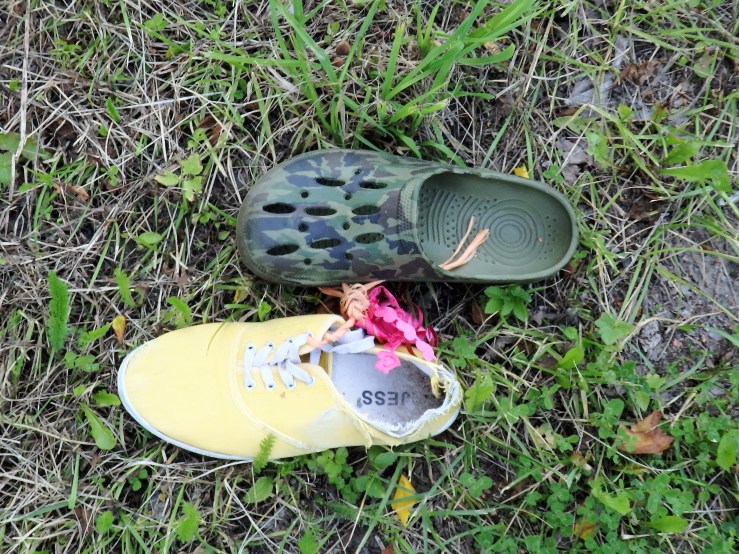
Hannu Salakka, “My Life Is Called Dismal”

OLYMPUS DIGITAL CAMERA

Elämääni sanotaan ankeaksi,
itseäni alakuloiseksi,
vaikka olen vain ajatuksissani.
Mielissäni.
Mielin kielin.
Jos näyttäisin miltä minusta tuntuu todella
heidän keskellään olla,
ei olisi sellaista sanaa.

……………………………

My life is called dismal,
I am said to be gloomy,
although I am only lost in my thoughts.
In my moods.
Mindful.
If I looked how I really feel,
being amidst them,
there would be no word for it.

—Hannu Salakka, Niin joudun kauas tulevaisuuteen (Otava, 1989), p. 82. Photo and translation by Living in FIN

Hannu Salakka, “It Cools Slowly”

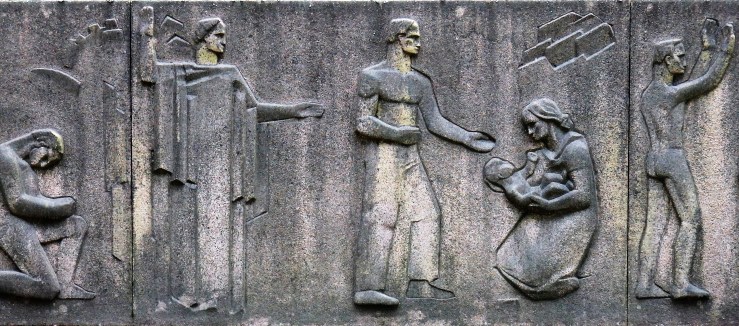
imatra-destroyed sculpture

Viilenee hitaasti,
miedot tuoksut kohoavat aaltoina.
Valvoa myöhään, herätä varhain,
olla jouten koko pitkän päivän.
Mutta jokin huolestuttaa.
Ehkä kadonnut taito päästä irti asioista,
jotka eivät tapahdu täällä.

* * * * * * * * * *

It cools slowly,
the mild smells rising like waves.
Staying up late, waking up early,
being idle the livelong day.
But something is unsettling.
Perhaps the lost art of getting loose of things
that did not happen here.

—Hannu Salakka, Kesä kesältä syvemmin (Otava, 1977), p. 36. Translation and photo by Living in FIN.

A few years ago, citing “numerous” complaints from the “general public,” the Imatra municipal parks and maintenance department summarily loaded the lovely brutalist modernist sculpture in the middle of the picture, above, onto a flatbed truck, took it to the local rolled steel plant, and melted it down in the plant’s blast furnace.

It was left to the Imatra municipal culture department, which had not been warned by the parks and maintenace department it was planning to commit this act of iconoclasm, to telephone the sculptor, who is quite famous in Finland and alive and well in Helsinki, to explain what had been done to his artwork by the yahoos in Karelia. It was reported that he took the strange news quite well, all things considered. LIF

Hannu Salakka, “There Has Been Nothing Special”

OLYMPUS DIGITAL CAMERA

Ei ole mitään erikoista.
Talosta ei kuollut ketään,
pois matkustaneista ei ole kuulunut.
Aivan tavallinen syksy.

Nämä silmät vain
niin monta kymmentä kuvaa syksyistä nähneet
eivät luota ainoaan käsilläolevaan.

Selailevat ennakkotapausten arkistoja.

* * * * * * * * * *

There has been nothing special.
No one from the house died,
nothing has been heard of those who journeyed away.
Quite a normal autumn.

These eyes alone,
which have seen so many dozen pictures of autumns,
do not trust the only thing ready to hand.

They browse the archives for precedents.

—Hannu Salakka, Niin joudun kauas tulevaisuuteen (Otava, 1989), p. 120. Translation and photo by Living in FIN


Eeva Kilpi, “Reflections”

OLYMPUS DIGITAL CAMERA

Mietteitä | Reflections

Hallitsija on suojeltavin.
Riistäjä haavoittuvin.
Saalis rakastettavin.

The ruler is the most protected.
The exploiter, the most vulnerable.
The prey, the most loved.

::::::::::::::::

Sosialistinen realismi.
Hyväsdämisen Gorki-ressukan
liberaali erehdys.

Socialist realism.
Gorky the kind-hearted wretch,
the liberal mistake.

::::::::::::::::

Humanismin heikkous on itse periaatteessa:
antaa myöten.
Juuri siksi sita kannattaa levittää.

Humanism’s weakness is in the principle itself:
giving in.
That is exactly why it is worth spreading.

::::::::::::::::

Demokratian perusoikeuksia on sananvalta.
Mutta siinäkin tavallisella kansalaisella on
useimmiten vain sana, ei valtaa.

The power to deliberate and decide is among democracy’s basic rights.
When it comes to it, though, the run-of-the-mill citizen has
only the say more often, not the power.

::::::::::::::::

Kaikesta mikä on hyvää voi luopua.
Pahasta luopuminen on vaikeampaa,
koska sen haluaisi muuttaa.

How nice if you can give up everything.
Giving up bad things is harder,
because you would like to change them.

::::::::::::::::

P.S. Arvostellessani politikkaa
en koskaan tarkoittanut,
että lahjakaitten pitäisi luopua siitä.

P.S. When criticizing politics
I have never implied
the gifted should give it up.

::::::::::::::::

Anna tuhannen kukan kukkia:
älä poimi niitä.

Let a thousand flowers bloom:
do not pick them.

::::::::::::::::

Kaikki on paljaana edessämme.
Meidän mieltämme vain kattaa selitysten kuori.

Everything is naked before us.
Our opinion only papers over the shell of explanation.

::::::::::::::::

Säännöt ovat yleisimpia poikkeuksia.

Rules are the most common exceptions.

::::::::::::::::

Institutionalisointi.
Sana on yhtä kauhea kuin asia.

Institutionalization.
The word is as awful as the thing.

::::::::::::::::

Ole oma instituutiosi.

Be your own institution.

::::::::::::::::

Jää punajuova:
Kauneuden voimakas kaipuu.
(Korjaus E. Leinon tekstiin)

A red streak of ice:
The powerful longing for beauty.
(A correction to Eino Leino’s 1908 “Elegy)

::::::::::::::::

On vain yksi periaate: epätäydellisyys.
Joka hyväksyy sen, jaksaa elää.

There is only one principle: imperfection.
Anyone who accepts it can bear to live.

::::::::::::::::

Kammoan täydellisyyttä.
Luojan kiitos se vaara ei minua uhkaa.

I dread perfection.
Thanks to the Creator that danger does not threaten me.

::::::::::::::::

Viimeinen josta haluan pitää kiinni:
Oikeus omiin virheisiin.

The last thing I hold on to:
The right to my own mistakes.

::::::::::::::::

Heikkous se todella voimaa kysyy.

Weakness really asks for power.

::::::::::::::::

Miehistä ihminen oppii.

A person learns from men.

::::::::::::::::

Köyhyyteen ei auta edes raha.

Even money is no help in poverty.

::::::::::::::::

Se jonk’ ei leipää kyynel kastellut,
se jok’ ei koskaan vaipuin sielun vaivaan,
oo itkein autossansa istunut,
ei tunne teitä hän, te vallat taivaan.
(Goethe – Koskenniemi – E. Kilpi)

Who ne’er watered bread with tears,
Who ne’er suffered from an ailing soul,
Sat weeping in his car,
He knows you not, ye powers of heaven.
(Goethe, “Song of the Harper,” adapted by Eeva Kilpi from Veikko Koskenniemi’s Finnish translation)

::::::::::::::::

En pysty ystävytteen:
se vaatii niin paljon.
Osaan rakastaa.
Siihen tarvitaan vain yksi.

I cannot manage friendship:
it requires so much.
I know how to love.
It requires only one.

::::::::::::::::

Lempeys on miltei poikkeuksetta älykkyyttä.
Älykkyys usein julmaa.

Tenderness is almost without exception intelligence.
Intelligence is often cruel.

::::::::::::::::

Minkä metsäsissin maailma minussa menettikään
riutumaan yhdistyksiin,
kokouksissa kalpenemaan.

What a Forest Guerilla* the world lost in me,
languishing in associations,
turning pale at meetings.

* The Forest Guerrillas (Finnish: metsäsissit) were a Finnic resistance movement formed by some of the inhabitants of the parishes of Repola and Porajärvi in addition to several White Guard volunteers after their territory was ceded to Bolshevist Russia in the Treaty of Tartu of 1920. The conflict is known as the East Karelian Uprising. The 2,000 metsäsissi forces managed to capture large parts of East Karelia during their rebellion against their Russian rulers in 1921, aiming to unite these areas with the newly formed Republic of Finland. Ultimately, however, in 1922 the rebel forces withdrew into Finland. Source: Wikipedia

::::::::::::::::

Kyllä ihiminen pystyy olemaan kova:
hylkämään, loukkaamaan, pettämään,
jättämään, olemaan välittämättä.
Mutta miksi hän yrittää kaikin tavoin
todistaa sitä itselleen?

Yes, humans can be tough:
forsaking, insulting, betraying,
neglecting, heedless.
But why do they try in every way
to prove it to themselves?

::::::::::::::::

Ei yksinäisyydesta pidä kärsiä.
Se on muutenkin kyllin raskas taakka
yhden hengen kannettavaksi.

You must not suffer from loneliness.
It is enough of a burden as it is
having to be one person.

::::::::::::::::

Olen menettänyt muistini:
en muista aikaa
jolloin en olisi ollut väsynyt.

I have lost my memory.
I cannot remember a time
when I was not tired.

::::::::::::::::

En muista asioita, vain ilmaisuja.
Minun mielikuvitukseni todellisuusko
se pyrkii näin voimakkaasti toteutumaan:
tappaa minusta kaiken näennäisen.
Mikä pettymys olla henkihieverissä.

I do not remember things, just expressions.
The reality of my imagination
strives so mightily to make it come true:
to kill everything apparent in me.
What a disappointment to be feeble spirited.

::::::::::::::::

On paljon inhimillistä
joka on minulle vierasta.

Much that is human
is alien to me.

::::::::::::::::

Että mitäkö odotan elämältä?
Elämyksiä:
iloa ja moraalisia ongelmia.

And what do I expect from life?
Experiences:
joy and moral dilemmas.

::::::::::::::::

Rakkaus: vallankumous ihmisessä.

Love: revolution in a person.

::::::::::::::::

Rakkaus on ihmisen elastisin ulottuvuus.
Se on kuin emätin.
Sopeutuu isoon ja pieneen.

Love is a person’s elastic dimension.
It is like the vagina.
It adapts itself to big and small.

::::::::::::::::

Luonto ei petä.

Nature does not disappoint.

—Eeva Kilpi, Terveisin (WSOY, 1976), pp. 99–106. Photo and translation by Living in FIN. Thanks to VVZ for identifying the creature in the photo as a hoverfly.

Hannu Salakka, “No One I Meet Here”

OLYMPUS DIGITAL CAMERA

Kukaan,
jonka täällä tapaan,
ei ole täältä, enkä minäkään.
Vieraat ihmiset vain kulkevat ikkunan ohi
niinkuin aamut tuoden vastustamattomasti päivät,
viholliset
joita ei voi tappaa yhtä kerrallaan,
kasvoista kasvoihin,
ja yhdessä ne ovat voima
jolle ei voi mitään.

::::::::::::::::

No one
I meet here
is from here, and neither am I.
Strangers just walk past the window,
as the mornings irresistibly bring the days.
Enemies
who cannot be killed one at a time,
face to face,
while together they are a power
to whom nothing can be done.

—Hannu Salakka, Myötäisien tuulien risteyksessä (Otava, 1978), p. 70. Photo and translation by Living in FIN

For the Union Dead

Their monument sticks like a fishbone
in the city’s throat.
—Robert Lowell, “For the Union Dead”

On her always surprising blog Found in Translation, Kate Sotejeff-Wilson, a translator based in Finland, has recently reviewed Tiina Lintunen’s Punaisten naisten tiet (Red Women’s Paths).

Ms. Lintunen has traced the lives of women in the Pori area who fought for the Reds during Finland’s brief civil war (1918) and the aftermaths of their decisions.

As Ms. Sotejeff-Wilson writes in her conclusion, Ms. Lintunen’s book seems to be a perfect candidate for translation into English, especially in this centennial year. (Finland is celebrating 100 years of independence this year.)

“The immediate consequence was often months of waiting—if not dying—in near-starvation conditions in prison camps before their case went to court. The daughter of one woman, Katri, remembers the story of how her mother stole fresh bread from her own mother’s kitchen and was hysterical when her little sister wanted to leave the house with red ribbons in her hair. Katri was sure that her sister would be arrested for openly supporting the Reds. Another woman remembers her teacher knocking a boy’s head against a brick wall for taking 1 May, the international workers’ day, off school.”

In my adopted semi-hometown of Imatra, there is a war memorial, seemingly leftist in its aesthetic, and twelve headstones at the city’s cemetery. They sit cheek by jowl with the clearly delineated, amply identified part of the cemetery where the “real” Finnish war heroes lie, i.e., men who died fighting the Soviet Union in the Winter War and the Continuation War.

OLYMPUS DIGITAL CAMERA
“Leftist” memorial and gravestones to twelve “non-heroes” of the Finnish Civil War, Tainionkoski Cemetery, Imatra
OLYMPUS DIGITAL CAMERA
The section where those who fought and died against the Soviet Union lie in rest is much better looked after and more clearly identified.  Tainionkoski Cemetery, Imatra

Until quite recently, all the names and dates of the dead and brief details of their deaths were listed on large laminated sheets of paper, hung behind glass in a information stand situated midway between the two memorials.

OLYMPUS DIGITAL CAMERA
“Tainionkoski [Cemetery] War Graves.” This schematic is keyed to the lists of the war dead, most of them local soldiers and officers who fought in one of the two wars against the Soviet Union from 1939 to 1944. The twelve graves situated perpendicularly and at a distance from the main mass of war graves are marked on this schematic, but the men and one woman who lie in those graves are no longer listed on the information stand, although only a few years ago they, too, were deemed worthy of inclusion in the list of war heroes.
OLYMPUS DIGITAL CAMERA
All the local men who perished the Winter War and Continuation War are still listed on the information stand, as are their dates of birth and death, as well as their exact location in the “heroes” section of Imatra’s Tainionkoski Cemetery. But you will find no information about the war dead buried nearby, eleven men and one woman, who were most likely executed by the Whites during the waning days of the Finnish Civil War.

Then, about a year or two ago, the names of the twelve—who most likely were Finnish Reds executed during late April and early May 1918 at Ruokolahti, near present-day Imatra, if my memory serves me as to what was written on the old lists—were mysteriously removed from the stand.

When I last visited the cemetery again, a week or two ago, the graves of the twelve “traitors” seemed to have been spruced up a bit. The names and dates engraved on the headstones had been outlined in white to make them more legible, but their bearers were still absent from the laminated list of heroes in the information stand, and there was nothing but the memorial behind them that would suggest to anyone who they were and what side they could have fought on.

OLYMPUS DIGITAL CAMERA
This is all Imatra’s Tainionkoski Cemetery has to tell us about Amanda Knutars, who was, I seem to remember, executed near Ruokolahti (which in the administrative toponymy of that era, before Imatra and Ruokolahti were incorporated as full-fledged municipalities, could have been almost literally down the street). It also strikes me as odd that the modest headstones of her and eleven companions in death are marked with crosses. Were they Reds or Whites? Or is the current generation too modest to tell us plainly, passing off Reds shamefacedly as “good Christians”?
OLYMPUS DIGITAL CAMERA
Meanwhile, nearly all the gravestones marking the final resting places of the “real” heroes bear traces of the German Junker aesthetic that has been all too prominent in the insignia and symbolism of the Finnish Army, even to this day.

I am sure the memorial to the twelve, by the way, is no longer legible to the younger generation, i.e., people born after 1991, just as the motto etched on its base, something about “brotherly sacrifice” has long been overgrown with moss.

OLYMPUS DIGITAL CAMERA

The only real clue to their identities is the fact that members of the Finnish Social Democratic Party march to the Tainionkoski Cemetery very early in the morning every May first and place a wreath at the memorial before going to have their Mayday coffee and roll. Next year, I am marching with them.

Update (14 April 2020). Today, quite by chance, I happened upon a useful website, Punaisten Muistomerkkit (“Red Memorials”), which has an entry on this particular memorial. Designed by Veikko Jalava, it was erected in the 1960s by the local Social Democrats when the paper and pulp manufacturer Enso Gutzeit (now known as Stora Enso) decided to build a new plant near the site of the former Harakka sawmill lumberyard, where the twelve had been buried. Their remains were dug up and transferred to the Tainionkoski Cemetery.

Text and photos by Living in FIN

Eeva Kilpi, “Sweating as I Drink My Tea on a Hot Morning”

OLYMPUS DIGITAL CAMERA

Hikoillen juon teetäni hellepäivän aamuna
nauttien joka pisarasta.
Löyhähdän olemassaoloani tähän maisemaan.
Hyttyset ja paarmat rakastavat minua,
juovat mahansa killalleen,
hoippuroivat humalaisina verestäni.
Ja kun “Metsäkukkia” soi
tanssii sieluni harjulta harjulle,
pyörii kuusien päissä,
liitää pitkin lammen pintaa korennon selässä.
Mutta aina se hupsu palaa
tähän ruumiiseen.
Mikä kuolevaisuudessa viehättää?

::::::::::::::::

Sweating as I drink my tea on a hot morning,
savoring every drop.
My existence wafts into the landscape.
The mosquitoes and horseflies love me.
They drink their bellies to bursting.
Drunk on my blood, they stagger.
And when “Forest Flowers” plays,
my soul dances from one ridge to the next,
twirling on the tiptops of spruces,
soaring along a pond’s surface on a mayfly’s back.
But the silly one always returns
to this body.
What is mortality’s charm?

—Eeva Kilpi, Terveisin (WSOY, 1976), p. 18. Photo and translation by Living in FIN

::::::::::::::::

Olavi Virta’s 1952 recording of “Metsäkukkia” (“Forest Flowers”)


Vilja-Tuulia Huotarinen, “We Open the Gift Package”

P8090014.JPG

Avataan lahjapaketti, ahmitaan suklarasia.
Nuolaisen ennen kuin tipahdan.
Kieli on kylmä lusikka kieltä vasten,
taipuu kun taivutan,
matolla minttuliköörin soma lemu
ja finni nenänpäässä,
yksi kukkavihkosta ilmestynyt nätti orvokki.

Nipistän ihon pintaa ja siihen herahtaa mustelma.
Mikään täällä tuskin on unta,
Jon Bon Jovi vilkuttaa seinällä silmää
kun puen farkut,
pyyhin viimeiset kärpäset suupielistä.
On liian myöhäistä
nukahtaa nyt,
ripustan rintaliivit kattolamppuun.
Ja lamppu sammuu.

Ekakerta on merkittävä, muista ei niin väliä.

Katson käsivarttani kuin kannibaali satukirjan sivua,
otsa nojaa vasten eebenpuuta,
lumi putoo punaiseen katuun.
Vaikka miten päin kääntäisin päätä, suipistaisin suuta,
lyhtypylväät seisovat suorassa rivissä, niin suorassa
että pää tulee kipeäksi.

:::::::::::::::::::::::::::::::::::::::::::::::::::::::::::::::::

We open the gift package, wolf down the boxes of chocolate.
I lick before I drop.
The tongue is a cold spoon against the tongue,
it bends when I bend.
The sweet stench of mint schnapps on the carpet
and a pimple on the nose’s tip,
one cute pansy popped from the flowery notebooks.

I pinch the skin’s surface and a bruise wells up.
Hardly anything here is a dream,
Jon Bon Jovi winks on the wall
when I put on jeans,
I wipe the last flies from the corner of the mouth.
It’s too late
to fall asleep now,
I hang the bra on the ceiling lamp.
And the lamp goes off.

The first time is important, don’t mind so much about the others.

I look at my arm like a cannibal looking at a page in a storybook.
The forehead leans against an ebony tree,
snow falls on the red street.
Whatever way I turn the head, I purse the mouth.
The lamp posts stand in a straight row, so straight
I’m going to get a headache.

— Vilja-Tuulia Huotarinen, Sakset kädessä ei saa juosta (WSOY, 2004), p. 17

Photo and translation by Living in FIN

Vilja-Tuulia Huotarinen, “The Quiet and the Blessed”


OLYMPUS DIGITAL CAMERA

Hiljaisia ja autuaita ei valita pesäpallojoukkueseen,
me lähdemme uimaan pitkää matkaa.
Päivät solahtavat kyynarpäistä, iho tummuu
ja menee kurttuun. Meidan vaihtoehtomme
ovat vähäiset: tarttua puukkoon tai pudota.

Me olemme vedenneitoja jotka heittävät terän aaltoihin,
emme uhraa ketään, emme peri edes omaa sydäntämme.
Syvyyden päihtymys ei meihin ulotu eikä kiiman kaipuu.
Mutta tiedämme, miten liu’utaan kasvot pohjaan päin.
Miten niellään suolaista vettä ilman oksennusrefleksiä.

Laulamme yhteen ääneen yhtä ääntä, aina ihanaa,
päät nousevat laineiden keskeltä, keltaiset pyöreät pallot,
joita rannalla etsitään. Pinnalla kaikki on hyvin.

:::::::::::::::::::::::::::::::::::::::::::::::::::::::::::::::::

The quiet and the blessed are not chosen for the baseball team:
We head out on a long, long swim.
The days slip off the elbows, the skin darkens
and wrinkles. Our choices
are few: catch the knife or fall.

We are water nymphs who toss the blade into the waves.
We sacrifice no one, we do not even inherit our own hearts.
Nitrogen narcosis does not get to us nor do we miss being in heat.
But we know how to glide face down in water.
How to swallow saltwater without gagging.

We sing in unison at the same volume, always marvelously.
Heads rise amid the waves, the round yellow balls
sought on shore. Everything on the surface is fine.

— Vilja-Tuulia Huotarinen, Sakset kädessä ei saa juosta (WSOY, 2004), p. 12

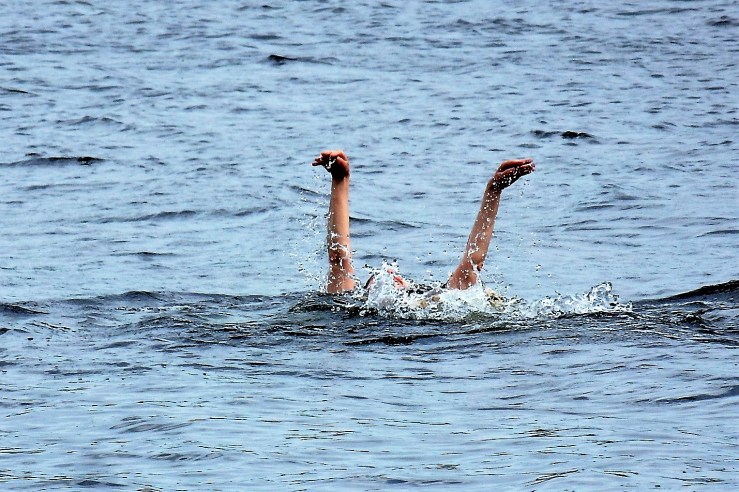
Photo of a swimmer in the Puulavesi and translation by Living in FIN