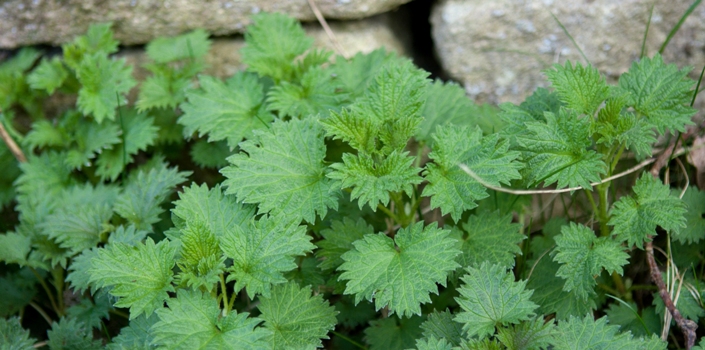
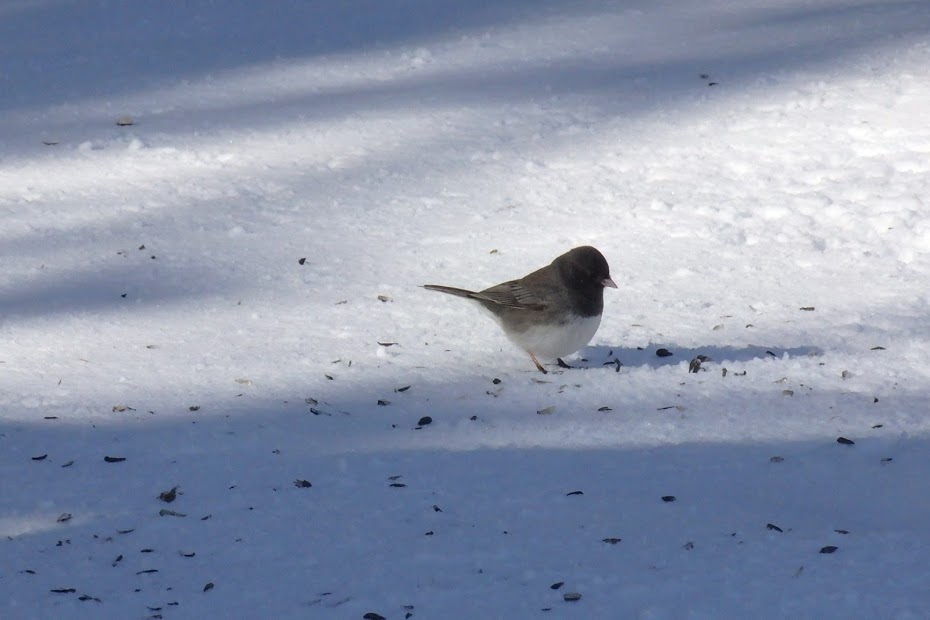
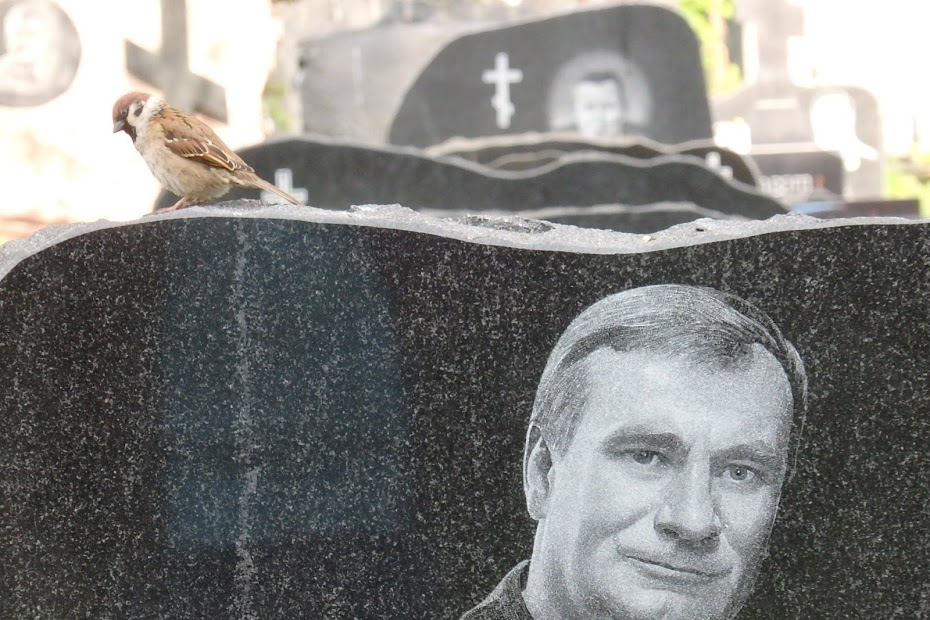
Ei mutta nokkoseni ovat jääneet kokonaan kehumatta.
Nokkonenhan se on kesän viimeinen, sitkein
ja runsain kukkija.
Kauniit, rehevät röyhyt taivuttavat sen
aistikkaalle kaarelle
ja se nojaa kivijalkaa vasten
kuin lepuuttaen raskasta, koristeiden painamaa päätään
tai kuin iso koira olisi laskenut siihen leukansa,
karvaisena, pörröisenä, paijattavan näköisenä.
No, but my nettles have been left entirely unpraised.
The nettle, in fact, is summer’s last, its hardiest
and most abundant flower.
Lush, pretty panicles bend it
in an elegant arch,
and it reclines against a plinth,
as if resting its heavy, ornament-laden head,
or like a big dog that has laid its chin down,
hirsute, shaggy, and looking petted.
What about yarrows, hawkweeds,
September strawberry blooms?
Leave me in peace, poems. I am praying.
Source: Eeva Kilpi, Terveisin (WSOY, 1976), p. 35. Translated by Thomas H. Campbell. Photo courtesy of demuths.co.uk
Minä syön kaurapuuroa ja ruisleipää sen kanssa.
Lapsuus nousee mieleen. Uunipuurot. Kiisselit.
Aamiaisaika oli silloin kello yhdentoista maissa.
Se mitä nyt sanotaan aamiaiseksi oli aamukahvi
tai aamupuuro. Se oli “syö ennen lähtöäsi”.
Tai “aamuplöröt”.* Tai “mie haukkaan ens vähän jottain”.
Tai “elä lähe tyhjin vatsoin”.
Tai “kuhan on märkää ja lämmintä”.
Unessani olivat isä ja äiti nuoria
ja minä imetin lasta.
I’m eating oatmeal with rye bread.
Childhood comes to mind. Baked porridges. Kissels.
Breakfast time was around eleven o’clock then.
What they call breakfast nowadays was morning coffee
or morning porridge. It was “eat before you leave.”
Or “morning coffee with a shot.”* Or “I’ll have a bite of something first.”
Or “don’t leave on an empty belly.”
Or “get it while it’s moist and warm.”
In my dream, mother and father were young,
and I was breastfeeding a child.
—Eeva Kilpi, Kiitos eilisestä (WSOY, 1996)
* Plörö. A mixture of coffee and spirits, traditionally enjoyed as follows: 1. Place a coin on the bottom of the cup. 2. Pour coffee into the cup until the coin is no longer visible. 3. Pour liquor into the coffee until the coin is visible again. 4. Drink and enjoy! 5. Repeat or, alternately, remove the coin to a safer place.
Pikkulepinkäinen, mustakulmani,
suussaan iso keltainen perhonen, silmieni ilo,
puoliksi nieltynä, siivet harallaan nokassa,
ja koko tämä asetelma
sijoitettuna mahtavaan karhunputkeen,
taustalla ohdakkeitten hillitty sinipuna
jossa perhonen äsken lensi.
Ja minäkö ainoa tietoisuus?
En taatusti.
Tuskassa ja tyytyväisyydessä sen siemen jo on.
Red-backed shrike, my black-browed mollymawk,
a big yellow butterfly, joy of my eyes, in its mouth,
half-swallowed, the wings splayed in the beak.
And this whole still life
set in a prodigious wild angelica,
against the muted purple of the thistles
where the butterfly just flew.
And am I the only consciousness?
Certainly not.
Its seed is already there in the suffering and satisfaction.
Source: Eeva Kilpi, Terveisin (WSOY, 1976), p. 32. Translated by Thomas H. Campbell. Photo courtesy of Wikipedia
In real life, I’m a fairly experienced professional translator from Russian to English.
In my virtual life, I’m a hapless tyro still trying to get a handle on the orderly but utterly alien beauty of Finnish.
I’m only happy to say that, after studying the language for five or six years more or less seriously, some things are starting to feel less alien.
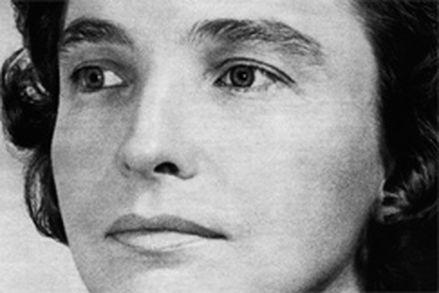
Then there are the dumb things you do when you’re “young”—in a language, not in life. I’ve fallen in love with an 88-year-old Finnish writer whom I’ve never met in real life and probably never will meet.
Her name is Eeva Kilpi. In Finland and other parts of the world, she is quite famous. She has even been rumored to be on the long list or shortlist (I don’t really know) for the Nobel Prize in Literature.
In English, however, she is virtually unknown. The first selection of her poems in English translation, wonderfully translated by Donald Adamson, A Landscape Blooms within Me, was published only two years ago. I could not recommend it more highly, especially because, as a bilingual edition, the book is a real boon to Finnish language learners like me.
If you’re one of the eight or nine humanoids who have been following this blog, you will have noticed I’ve been making way too much space lately for my own dubious translations of Eeva Kilpi’s poems.
So I can think of no better way of celebrating International Translation Day than pumping up the old random number generator to pick me a page number and, thus, a poem from Kilpi’s collected poems, Perhonen ylittää tien (A Butterfly Crosses the Road, WSOY, 2000), to translate for the occasion.
Chance operations took mercy on me today. They directed me to page seventy-one.
Vain kirjeen alussa me tohdimme enää
nimittää toisiamme rakkaaksi ja hyväksi.
Only at the letter’s beginning do we still dare
To call each other darling and dear.
—Eeva Kilpi, Laulu rakkaudesta ja muita runoja (WSOY, 1972)
Translated by Living in FIN. This translation is dedicated to V., my comrade in life, translating, and Finnish. It also happens to be her name day today.
Kuolevat syöttävät lintuja.
Siksi sanotaan että linnut tietävät kuolemaa.
Eläimet ymmärretään aina väärin.
Ajat ovat sellaiset että olisi sanottava joka hetki
jotain lopullista.
Olla niin lähellä maata
että kuulee mitä se sanoo,
tulla osaksi sen ääntä,
olla sen tahtoa ja tajuntaa,
palata siihen mitä on aina tiennyt.
Se on itsestään selvää
mutta ei yksinkertaista.
Moninaisuuden voi tajuta vain
koko olemuksellaan
eikä sen tajuamisesta enää halua pois.
The dying feed the birds.
So it is said birds presage death.
Animals are always misunderstood.
The times are such one should say something final
every instant.
Be so close to the earth
one hears what it says,
become a part of its voice,
be its will and consciousness,
go back to what has always been known.
That is self-evident
but not simple.
The manifold can be grasped only
by its entire essence
not by wanting to avoid grasping it anymore.
Runolaituri (Poetry Platform), Jäppilä Point Road, Imatra, South Karelia
Our dead speak to us through our senses
as the marsh respires
reeks and squelches
bubbles and blooms
proffers its berries
and carries the bear.
Like the wind passing over the marsh
Lulling the cottonsedge as far as the eye can see
So our dead are present
underwater
in our soul’s
depths
drowned plants are swaying.
Our dead are rooted in us
they rest in us
our soul is heavy with drowned snags
and perhaps fruitful
perhaps in its cavities something forms a chain
and something invisible to us
surreptitiously proffers its purpose
which
(what relief)
is none of our business.