Jouni Inkala, “Limpid Pearls, Drops of Water”

h-52032649

Vesipisaroiden kirkkaat helmet välähtävät hämähäkinverkossa,
myrskystä tyyneen aamuun käännähtäneellä pyykkinarulla.
Ja on hiljaista.
Aurinko lehahtaa lukkina sen raukeaan keskukseen,
ahmii yönkosteat saaliinsa.

Kunnes on keskipäivä eikä muuta tapahdu.

Viinimarjapensaat raivosivat pimeässä tuulessa
kuin törkeästi
liian monta nukkujaa pidättelevät teltat.

Siittävät muistissa vieläkin jälkeläisiään,

jotka syntyivät vuosia sitten kun maa oli kylmä
ja leirin aamiaislihapullat lautasella

näyttivät pöllön oksennuspalloilta.

Jonkin linnun hysteria, joka alkaa vaatia itselleen
uutta tulkintaa,
sitten oravassa laukeavan ajan syöksy läpi nurmikon
todistavat että jokin on ehdottomasti olemassa.

Sillä on minunhajuinen ääni,
minunvärinen valottunut ilme.

Limpid pearls, drops of water glisten in a spider’s web,
in the morning calm on a clothesline twisted by the storm.
And it’s quiet.
The sun wafts like a daddy longlegs into its languid center,
devouring its nightmoist prey.

Until it’s noon and nothing else happens.

The currant bushes raged in the dark wind
like an indecent
mob of sleepers clutching tents.

In their memories they sire even more offspring,

born years ago when the ground was cold
and the breakfast meatballs on the plate at camp

resembled owl pellets.

A bird’s hysteria, which begins insisting
on its own new rendition,
then the ejaculation time’s dash across the lawn in the squirrel
testify that something definitely exists.

It has a voice that smells like me,
an exposed expression my color.

— Jouni InkalaTässä sen reuna (WSOY, 1992)

Translated by Living in FIN. Original courtesy of Electric Verses. Photo courtesy of MTV Uutiset

Eeva Kilpi, “My Nettles”

Nettles

Ei mutta nokkoseni ovat jääneet kokonaan kehumatta.
Nokkonenhan se on kesän viimeinen, sitkein
ja runsain kukkija.
Kauniit, rehevät röyhyt taivuttavat sen
aistikkaalle kaarelle
ja se nojaa kivijalkaa vasten
kuin lepuuttaen raskasta, koristeiden painamaa päätään
tai kuin iso koira olisi laskenut siihen leukansa,
karvaisena, pörröisenä, paijattavan näköisenä.

Entäpä kärsämöt, keltano,
syyskuinen mansikankukka?

Runot, jättäkää minut rauhaan, minä rukoilen.

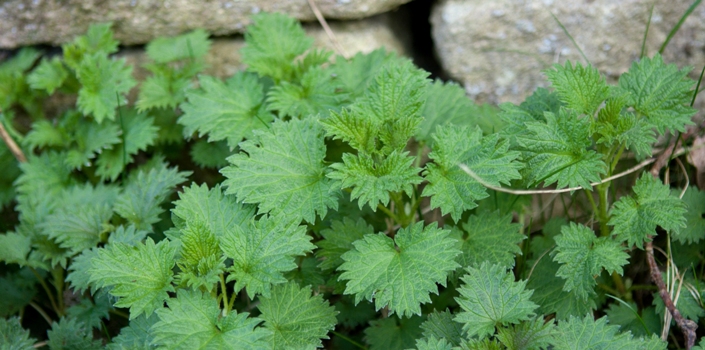
No, but my nettles have been left entirely unpraised.
The nettle, in fact, is summer’s last, its hardiest
and most abundant flower.
Lush, pretty panicles bend it
in an elegant arch,
and it reclines against a plinth,
as if resting its heavy, ornament-laden head,
or like a big dog that has laid its chin down,
hirsute, shaggy, and looking petted.

What about yarrows, hawkweeds,
September strawberry blooms?

Leave me in peace, poems. I am praying.

Source: Eeva Kilpi, Terveisin (WSOY, 1976), p. 35. Translated by Thomas H. Campbell. Photo courtesy of demuths.co.uk

Eeva Kilpi, “I’m Eating Oatmeal with Rye Bread”

Source: http://aikani-kuluksi.blogspot.co.uk/2014/02/kaffekask-eli-ploro-pontikka-ja.html


Minä syön kaurapuuroa ja ruisleipää sen kanssa.
Lapsuus nousee mieleen. Uunipuurot. Kiisselit.
Aamiaisaika oli silloin kello yhdentoista maissa.
Se mitä nyt sanotaan aamiaiseksi oli aamukahvi
tai aamupuuro. Se oli “syö ennen lähtöäsi”.
Tai “aamuplöröt”.* Tai “mie haukkaan ens vähän jottain”.
Tai “elä lähe tyhjin vatsoin”.
Tai “kuhan on märkää ja lämmintä”.

Unessani olivat isä ja äiti nuoria
ja minä imetin lasta.

I’m eating oatmeal with rye bread.
Childhood comes to mind. Baked porridges. Kissels.
Breakfast time was around eleven o’clock then.
What they call breakfast nowadays was morning coffee
or morning porridge. It was “eat before you leave.”
Or “morning coffee with a shot.”* Or “I’ll have a bite of something first.”
Or “don’t leave on an empty belly.”
Or “get it while it’s moist and warm.”

In my dream, mother and father were young,
and I was breastfeeding a child.

—Eeva Kilpi, Kiitos eilisestä (WSOY, 1996)

* Plörö. A mixture of coffee and spirits, traditionally enjoyed as follows:
1. Place a coin on the bottom of the cup.
2. Pour coffee into the cup until the coin is no longer visible.
3. Pour liquor into the coffee until the coin is visible again.
4. Drink and enjoy!
5. Repeat or, alternately, remove the coin to a safer place.

Source: urbaanisanakirja.com

Translated by Living in FIN. Photo courtesy of aikani-kuluksi.blogspot.co.uk. Thanks to TP for her help in translating the poem.

Hannu Salakka, “A Sleepy Girl on the Morning Bus”

Aamulla bussissa uninen tyttö
toiselle tytölle:
Miun pitää mennä kurseille Valkeekoskelle,
vaikka mie en tiiä missä se semmonen Valkeekoski
on,
kaipa se jostakin löytyy.

Asemalla kaljuksi ajettu mies
käveli pientä ympyrää ja puhui itsekseen.

Ihmiset saavat joskus merkillisiä ajatuksia.

Jo uutiskuvien kasvoista näkee,
että tässä maailmassa vain vanhat miehet
ovat kotonaan.
Jättävätkö he meille perintöä,
enemmän aikaa kuin heillä itsellään on jäljellä?

Käärmeiden pyydystämisestä ei ole hyötyä,
vastamyrkkyä ei löydetä.
Jos ydinsota todella käydään,
se päättyy siihen
että eloonjääneet syövät toisiaan.
Mita muutakaan syötävää heillä olisi?

Kun kävelin tiellä,
korviini tuuli,
jäiset puut napsahtelivat,
lumi narisi ja parkui.
Tiesin ettei ketään olisi kotona.

A sleepy girl on the morning bus
said to another girl,
“I gotta take classes in Valkeekoski,
even though I dunno where this Valkeekoski place
is.
Maybe it will turn up somewhere.”

At the station, a man whose head was shaved bald
walked in tiny circles and talked to himself.

People sometimes get peculiar ideas.

You can see from the faces in the news
that only old men are at home
in this world.
Will they leave us a legacy,
more time than they have left themselves?

There is nothing to be gained from snaring snakes
if no antidote can be found.
If nuclear war really takes place,
it will end with
the survivors eating each other.
What else would they eat?

As I walked down the road,
the wind blew in my ears,
the icy trees snapped,
the snow whined and blubbered.
I knew that no one would be at home.

Hannu Salakka, Ennen kapaisin tähän (Otava, 1983)

Translation and photo by Living in FIN

Eeva Kilpi, “Red-Backed Shrike”

angelica_sylvestris_2
Wild angelica (Angelica sylvestris)

Pikkulepinkäinen, mustakulmani,
suussaan iso keltainen perhonen, silmieni ilo,
puoliksi nieltynä, siivet harallaan nokassa,
ja koko tämä asetelma
sijoitettuna mahtavaan karhunputkeen,
taustalla ohdakkeitten hillitty sinipuna
jossa perhonen äsken lensi.

Ja minäkö ainoa tietoisuus?
En taatusti.
Tuskassa ja tyytyväisyydessä sen siemen jo on.

Red-backed shrike, my black-browed mollymawk,
a big yellow butterfly, joy of my eyes, in its mouth,
half-swallowed, the wings splayed in the beak.
And this whole still life
set in a prodigious wild angelica,
against the muted purple of the thistles
where the butterfly just flew.

And am I the only consciousness?
Certainly not.
Its seed is already there in the suffering and satisfaction.

Source: Eeva Kilpi, Terveisin (WSOY, 1976), p. 32. Translated by Thomas H. Campbell. Photo courtesy of Wikipedia

Hannu Salakka, “There Are Many Suns”

pb050073

Aurinkoja on monta.
Me olemme liian kaukana toiveinemme
joiden emme uskalla antaa toteutua.
Valo joka lähti meitä tavoittamaan
on jo ohi
kun se saavuttaa meidät,
yhteen ääneen väitämme
että edes nuorina
emme pelänneet pimeää.

There are many suns.
We are too distant with our hopes,
which we don’t dare let come true.
The light that set out to meet us
has already passed
when it reaches us.
We claim in unison
that even when we were young
we were not afraid of the dark.

—Hannu Salakka, Vuoden viimeisenä ja ensimmäisenä yönä (Otava, 1996)

Translation and photo by Living in FIN

Hannu Salakka, “The Wind Carries the Sand”

pa110060
Tuuli vie hiekkaa
ja pakottaa linnut tarrautumaan puihin.
Olen väsynyt kevään kalvamaan taivaaseen.
En muista hänen kasvojaan,
minulla oli silmää nähdä ainoastaan hänen
kauneutensa.

The wind carries the sand
and forces the birds to cling to the trees.
I am tired of spring’s galling sky.
I do not remember his face.
I had an eye for seeing only his
beauty.

—Hannu Salakka, Ennen kapaisin tähän (Otava, 1983)

Translation and photo by Living in FIN

Hannu Salakka, “The Taxi Driver Can Be Gunned Down”

pa080037Taksinkuljettaja voidaan ampua
illallispöytään kenenkään hätkähtämättä,
mutta jos hänet ammutaan autoonsa,
ruumis muuttaa heti luonnettaan,
lehdet paljastavat itseään,
ajattelen monia eri ajatuksia,
kala,
kun sille kiskaistaan koukku leukaan,
pysyy mykkänä,
enkä minäkään suostu itkemään kenenkään nähden,
silmäni vain vettyvät
jostain joutavasta.

The taxi driver can be gunned down
at the dinner table without startling anyone,
but if he is shot in his car,
the corpse immediately alters its nature,
the papers give themselves away.
I think many different thoughts.
The fish,
when the hook yanks its jaw,
remains mute,
nor am I willing to cry over anyone.
My eyes only well up
over something useless.

—Hannu Salakka, Ennen kapaisin tähän (Otava, 1983)

Translation and photo by Living in FIN

Hannu Salakka, “Many Things That Should Be Said”

Moni asia, joka olisi saatava sanotuksi,
jää salasaisuudeksi.
En tiedä, mitä tapahtui,
äkkiä vain tuli valoisaa. Oliko se pilvi?
Kauniit onnelliset kasvot,
itkuiset kun elämä säröilee,
maailman osat eivät ole kohdallaan
eivätkä ne enää kohdalleen mene.

Many things that should be said
remain a secret.
I don’t know what happened.
It just suddenly became bright. Was it a cloud?
Beautiful happy faces,
Tearful when life cracks.
The parts of the world are not in place,
Nor will they ever come together again.

—Hannu Salakka, Ennen kapaisin tähän (Otava, 1983)

Translation and photo by Living in FIN

International Translation Day: Eeva Kilpi

id11477-previewimage-11475-50
Eeva Kilpi. Courtesy of Kirjasampo.fi

I have it on good authority that today, September 30, is International Translation Day.

In real life, I’m a fairly experienced professional translator from Russian to English.

In my virtual life, I’m a hapless tyro still trying to get a handle on the orderly but utterly alien beauty of Finnish.

I’m only happy to say that, after studying the language for five or six years more or less seriously, some things are starting to feel less alien.

Then there are the dumb things you do when you’re “young”—in a language, not in life. I’ve fallen in love with an 88-year-old Finnish writer whom I’ve never met in real life and probably never will meet.

Her name is Eeva Kilpi. In Finland and other parts of the world, she is quite famous. She has even been rumored to be on the long list or shortlist (I don’t really know) for the Nobel Prize in Literature.

In English, however, she is virtually unknown. The first selection of her poems in English translation, wonderfully translated by Donald Adamson, A Landscape Blooms within Me, was published only two years ago. I could not recommend it more highly, especially because, as a bilingual edition, the book is a real boon to Finnish language learners like me.

If you’re one of the eight or nine humanoids who have been following this blog, you will have noticed I’ve been making way too much space lately for my own dubious translations of Eeva Kilpi’s poems.

So I can think of no better way of celebrating International Translation Day than pumping up the old random number generator to pick me a page number and, thus, a poem from Kilpi’s collected poems, Perhonen ylittää tien (A Butterfly Crosses the Road, WSOY, 2000), to translate for the occasion.

Chance operations took mercy on me today. They directed me to page seventy-one.

Vain kirjeen alussa me tohdimme enää
nimittää toisiamme rakkaaksi ja hyväksi.

Only at the letter’s beginning do we still dare
To call each other darling and dear.

—Eeva Kilpi, Laulu rakkaudesta ja muita runoja (WSOY, 1972)

Translated by Living in FIN. This translation is dedicated to V., my comrade in life, translating, and Finnish. It also happens to be her name day today.