
Now you see it.

Now you don’t.

Photographed by Living in FIN in the apple orchard park on the east bank of the Vuoksi River in Imatra. Imatra’s refugee reception center is less than a kilometer from this spot.
Now you see it.
Now you don’t.
Photographed by Living in FIN in the apple orchard park on the east bank of the Vuoksi River in Imatra. Imatra’s refugee reception center is less than a kilometer from this spot.
As Cholmondeley and I were rambling round town this afternoon, we came upon this excrescence.

What was the tagger who spat out this little bit of verbal vandalism trying to say? There is no such word as soumi in Finnish.
The name of the language spoken here is suomi. And the name of the country where suomi is spoken is also Suomi. Thus:
Suomessa puhutaan suomea.
“In Finland, Finnish is spoken.”
The only Soumi I could find via a quick search of the internets was the Cameroonian (?) recording artist(s) (?) who released this fabulous single, “Paracétamol,” early this year.
On the strength of this uplifting piece of patois poetry, I don’t think he or she or they deserve the putdown they got in Imatra. After all,
Imatra ei ole Afrikassa vaan Suomessa.
“Imatra is not in Africa, but in Finland.”
Africa is indeed a long ways away in more ways than one.
 Kuokkala Bridge, Ainolanranta, Jyväskylä, September 2, 2016
Syksy.
Nyt pyykkiin viime kesän spermat.
Vähäiset mutta kuitenkin.
Sääli.
Eivät mahtuneet kaikki minuun.
Ja talvi on pitkä.
Autumn.
Now the last of summer’s sperm goes into the wash.
A little, but still.
It’s a pity.
It didn’t all fit into me.
And winter is long.
Source: Eeva Kilpi, Terveisin (WSOY, 1976), p. 42. Translation and photo by Living in FIN

Koiratta
on kuonoa ja
kahta luppakorvaa yksinäisempi.
Yö
on toista hengitystä vajaa.
En pelkää. Ikävöin.
Dogless
is lonelier than
a snout and two floppy ears.
Night
is short one breath.
I do not fear. I miss.
Source: Eeva Kilpi, Terveisin (WSOY, 1976), p. 8. Photos and translation by Thomas H. Campbell. Here is a different translation of the same poem

Olen rauhallinen aina kun minulla on kaksi:
kaksi kampaa, kahdet sukat, kaksi samanlaista kynää.
Rakastaessakin yksinäisyys aina toisena.
Vai niin, hän sanoi ankarasti,
käskyn sinä tiedät:
jos sinulla on kaksi, luovuta toinen pois.
Tiedän, minä vastasin,
vaan jospa minuun pätee se suomalainen sananlasku:
Joka kahta kaihoaa, kumpaisenkin kadottaa.
I am always calm when I have two:
Two combs, two pairs of socks, two identical pens.
When I love, solitude is always the other one.
Indeed, he said harshly,
You know the commandment:
If you have two things, give one away.
I know, I replied,
But maybe the Finnish proverb applies to me:
He who longs for two things loses both.
—Eeva Kilpi, Laulu rakkaudesta ja muita runoja (WSOY, 1972)
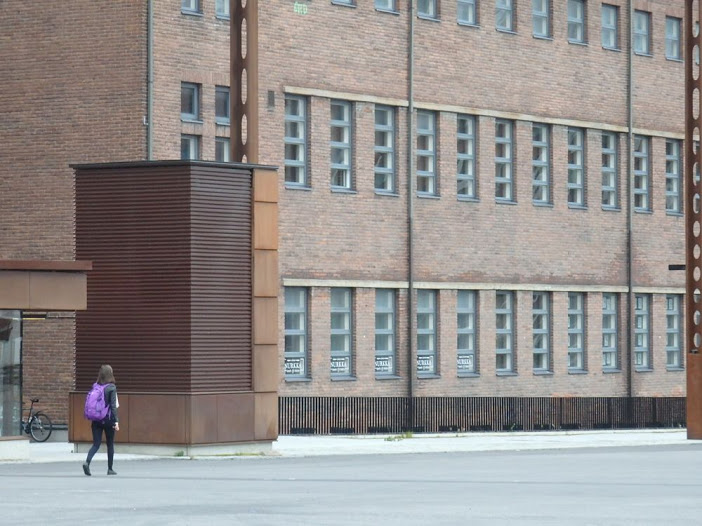
Translation and photos by Living in FIN
The past two days, I was in Jyväskylä, where I spotted this excellent example of funkis covered with ivy in the downtown.
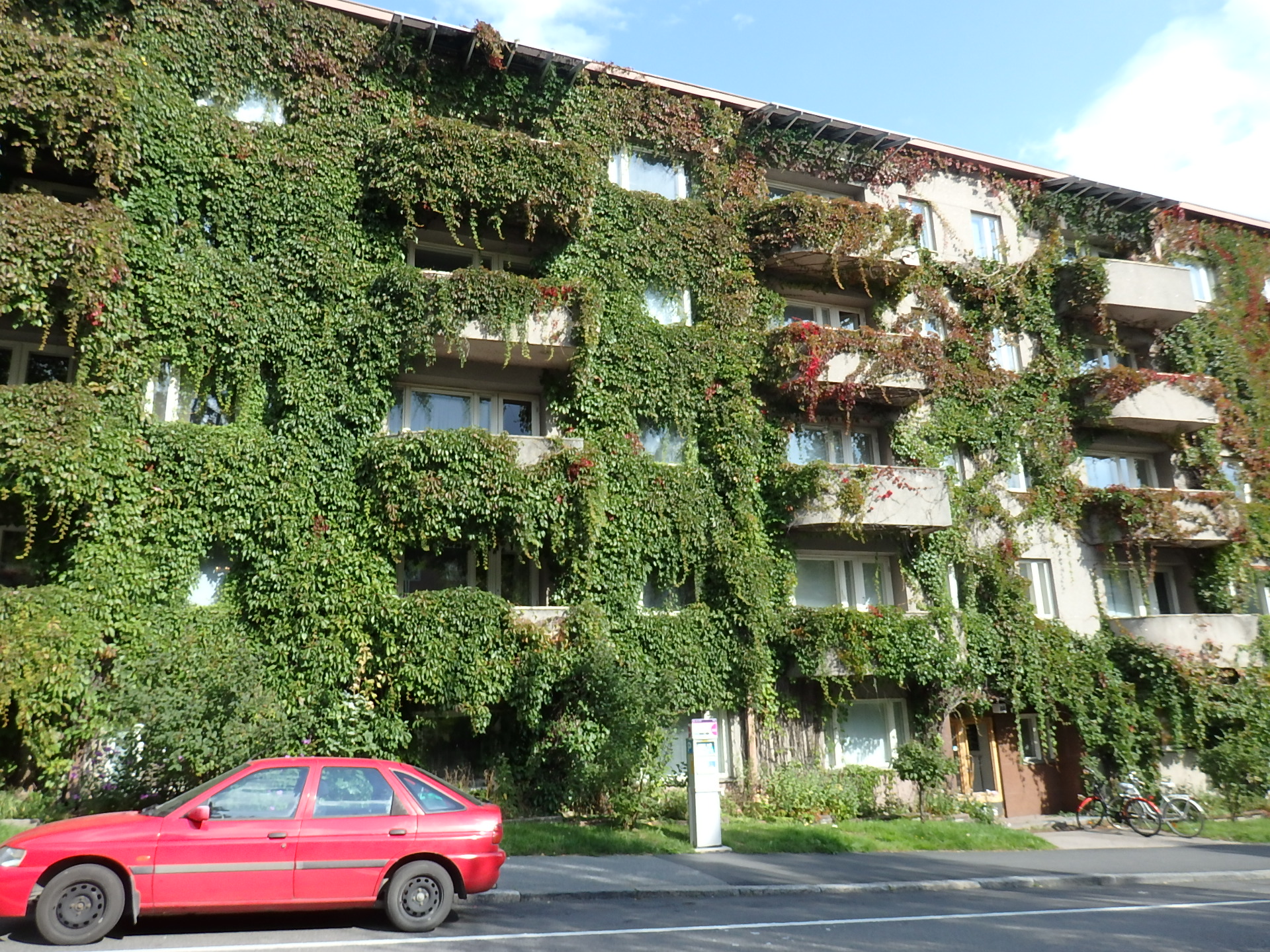
It reminded me, for some reason, about the old song in which “little lambs” are said, unaccountably, to “eat ivy.”
You know the song.
Maybe jvyäskyläisiä don’t know the song, but they probably don’t need to, seeing as how they live in a town so rich in manmade and natural beauty, and can keep themselves busy with that.
I will be posting more about what I saw there in the coming days.
Kuolevat syöttävät lintuja.
Siksi sanotaan että linnut tietävät kuolemaa.
Eläimet ymmärretään aina väärin.
Ajat ovat sellaiset että olisi sanottava joka hetki
jotain lopullista.
Olla niin lähellä maata
että kuulee mitä se sanoo,
tulla osaksi sen ääntä,
olla sen tahtoa ja tajuntaa,
palata siihen mitä on aina tiennyt.
Se on itsestään selvää
mutta ei yksinkertaista.
Moninaisuuden voi tajuta vain
koko olemuksellaan
eikä sen tajuamisesta enää halua pois.
The dying feed the birds.
So it is said birds presage death.
Animals are always misunderstood.
The times are such one should say something final
every instant.
Be so close to the earth
one hears what it says,
become a part of its voice,
be its will and consciousness,
go back to what has always been known.
That is self-evident
but not simple.
The manifold can be grasped only
by its entire essence
not by wanting to avoid grasping it anymore.
—Eeva Kilpi, Animalia (WSOY, 1987)
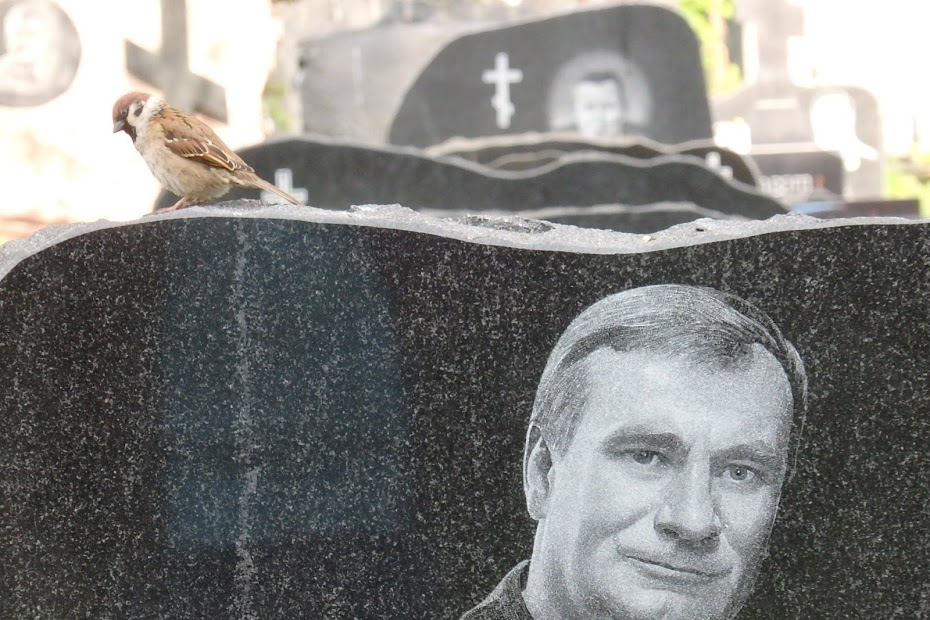
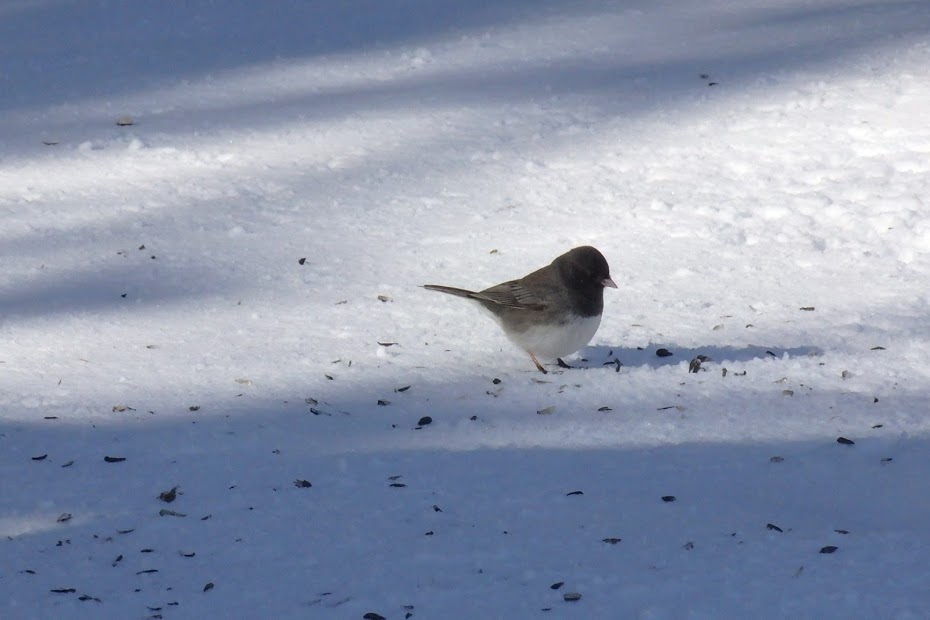
Translation and photos by Living in FIN
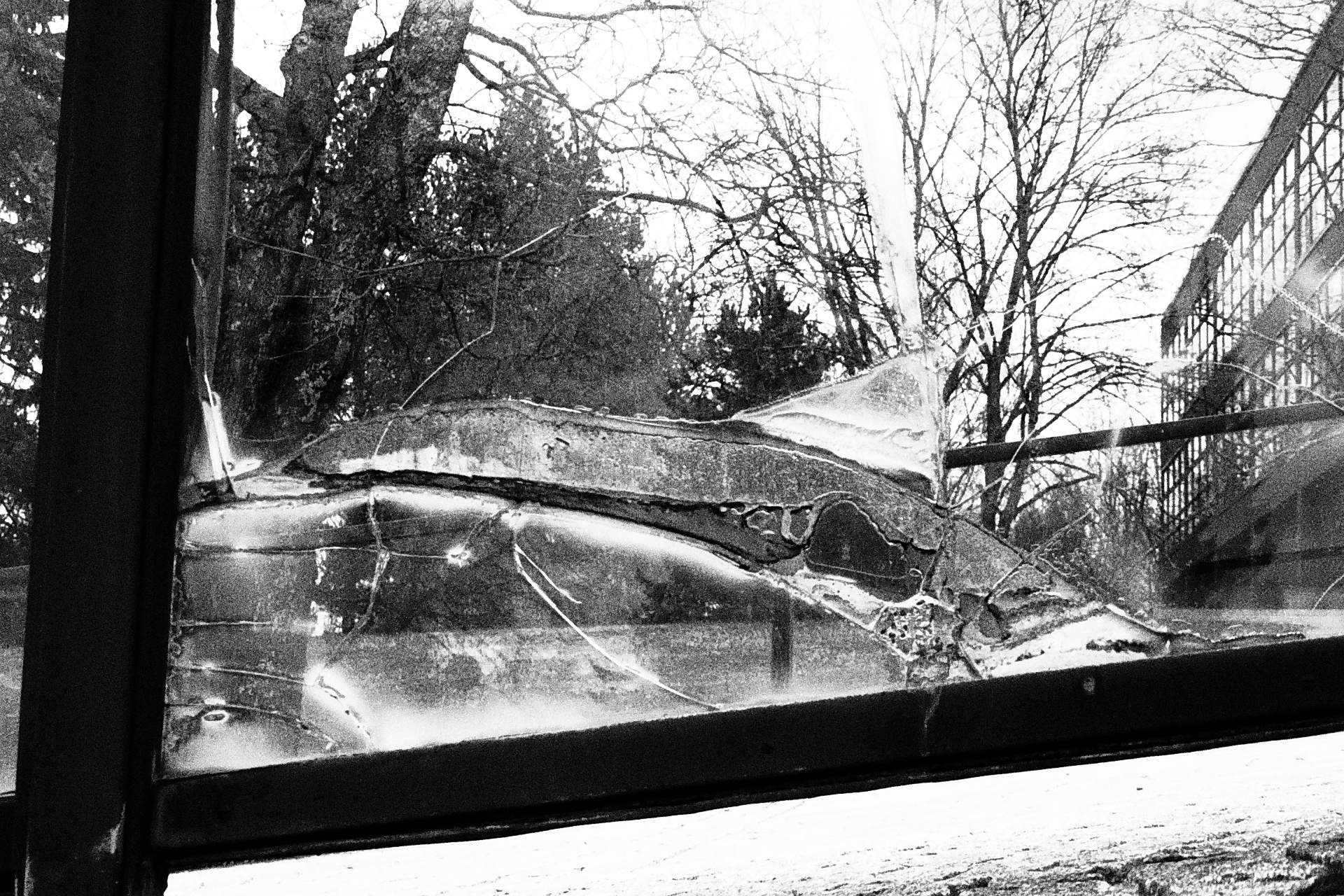
Onko säälittävämpää näkyä
kuin kahdella sormella koneella kirjoittava aikuinen mies.
On kuin näkisi itsensä kadulla kävelemässä
takaapäin toisen kerroksen ikkunasta,
paljaan päälakensa, kyyryt hartiansa,
nöyryytyksensä taakan.
Is there a sight more pathetic
than a grown man writing with two fingers on a typewriter.
It’s like seeing oneself walking down the street
from behind out a second-floor window,
the pate of one’s bare head, one’s stooped shoulders,
the burden of one’s humiliation.
—Hannu Salakka, Yöllä näin kaiken vapaan maan (Otava, 1990)

Translation and photos by Living in FIN

Our dead speak to us through our senses
as the marsh respires
reeks and squelches
bubbles and blooms
proffers its berries
and carries the bear.
Like the wind passing over the marsh
Lulling the cottonsedge as far as the eye can see
So our dead are present
underwater
in our soul’s
depths
drowned plants are swaying.
Our dead are rooted in us
they rest in us
our soul is heavy with drowned snags
and perhaps fruitful
perhaps in its cavities something forms a chain
and something invisible to us
surreptitiously proffers its purpose
which
(what relief)
is none of our business.
—Eeva Kilpi, Recent Poems, 1996–2000

Translation and photos by Living in FIN
During the Stone Age, Finnish contemporary art looked something like this.
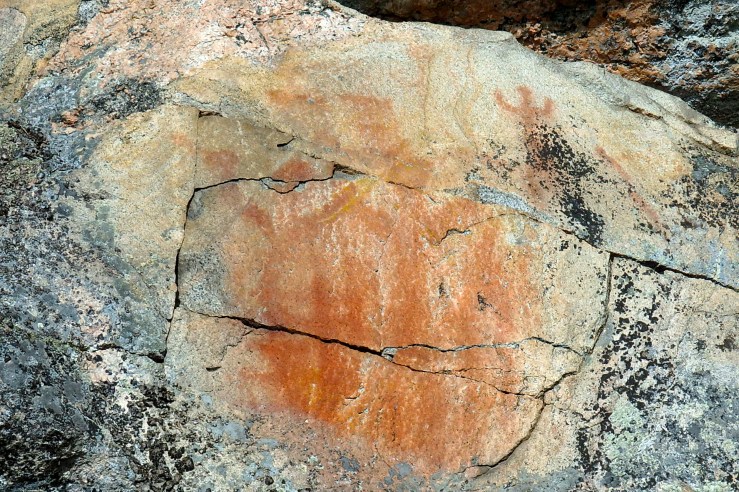
And it was exhibited in site-specific installations such as this.


Since the Stone Age, Finnish contemporary art has gone downhill. Like everything else in Finland. And like everywhere else.
The Kolmiköytisienvuori rock painting is located in Ruokolahti commune in the eastern part of the southern Lake Saimaa region. The painting consists of a single densely painted area on a rock outcropping that is visible far out into the lake. The painting has been dated to the early New Stone Age. The site is signposted before the turn on the road from Savilahti to Sapola on Äitsaari Island.
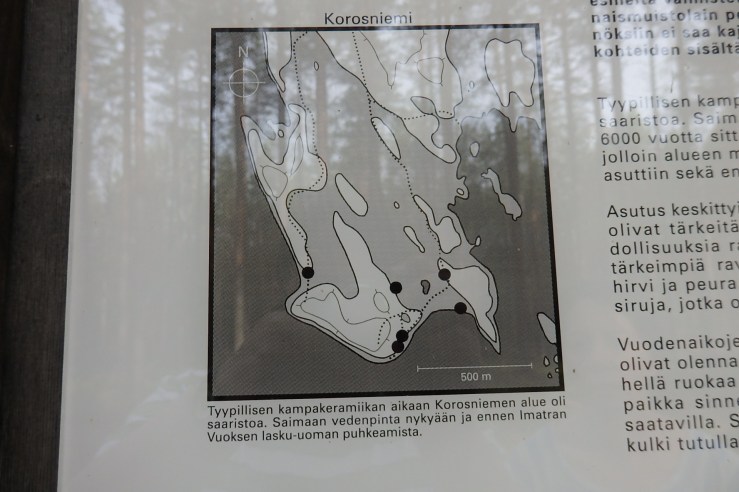
The painting was discovered in 1977 by Timo Miettinen, who is also listed as the painting’s inventory curator. Miettinen inventoried the painting in 1994, and Minna Kähtävä-Marttinen, in 1996. About two kilometers to the west of Kolmiköytyisienvuori, a typical Comb Ware period dwelling site has been found on Korosniemi Cape. Based on its location and height, the rock painting has been dated to around 3,000 BCE.
Source: fi.wikipedia.org
 Living in FIN