Eeva Kilpi, “The Moon Shines Brightly”

DSCN2206

Kuu paistaa heleästi
kuollut ajaa keveästi,
elävää naitattaa.

Parempi on naida kuin palaa.
Parasti on naida salaa.

Sais yöllä syyä,
päivällä naia
ja aamulla nukkua.

The moon beams brightly,
pursuing the dead lightly,
making the living horny.

It’s better to fuck than fry.
It’s best to fuck on the sly.

You should nosh at night,
shag in the afternoon,
and snooze in the morning.

Source: Eeva Kilpi, Terveisin (WSOY, 1976), p 41. Translation and photo by Living in FIN

Eeva Kilpi, “Last Summer”

800px-Valtra_lumber_tractor_JyväskyläValtra tractor with lumber trailer in Jyväskylä, Finland, May 5, 2011. Photo by Antti Leppänen

Viime kesänä jolloin en kirjoittanut
Jumala lähetti minulle miehiä.
Tänä vuonna kirjoitan metsässä myöhään syksyyn
ja eikös Hän toimita minulle polttopuita:
rojauttaa yhtiön metsätraktorista
kasan pölkkyjä vanhan saunani viereen.
Hän antaa hartioihini voiman raahata
ne liiteriin.
Kuka tietää, vaikka Hän itse ilmestyisi
ne jonakin päivänä sahamaan.
Tarpeeni kaikki tietää.

Pirukin kiertää paikkaa,
kauppaa tontteja, viittilöi mökkiäni,
loitsii turhaan rajoja.

Ei pysty paha noita-akkaan
jok’ on liitossa Jumalan kanssa,
kainalossa Kaikkivallan.

Linnut lähtevät,
ruoho kuolee,
minä jään.

Luoja lempii salaa.

Last summer, when I wasn’t writing,
God sent me men.
This year I’m writing in the woods until late autumn,
and perhaps He shall fetch me firewood,
dragging a pile of logs
from the association’s lumber tractor over to my old sauna.
He shall give my shoulders the strength to schlep
them into the shed.
Who knows? Maybe He Himself would appear
one day to saw them.
He knows all my needs.

The Devil sidesteps the place.
Selling lots, he waves towards my cottage,
hexing the borders to no avail.

Evil can do no harm to the witch lady
what is in league with God,
in the Almighty’s armpit.

The birds leave,
the grass dies,
I am staying.

The Creator makes love on the sly.

Source: Eeva Kilpi, Terveisin (WSOY, 1976), pp. 37–38. Translation by Thomas Campbell. Photo courtesy of Wikimedia Commons


Eeva Kilpi, “The Thistle, Autumn’s Late Bloomer”

1024px-Aglais_urticae_LC0310

Ohdake, syksyn viimeinen kukkija.
Hillitty, vaalea sinipuna.
Vankka varsi, ei kaadu sateessa,
ei taitu tuulessa.
Piikkinen: selektiivisyyttä.

Latvassa nokkosperhonen.
Iso, uusi, vastakuoriutunut,
tuorein värein,
elämänsä viimeisessä vaiheessa:
perhosena, parhaimmillaan.

Ja tämä kaikki kerrottuna paljolla:
sankka, utuinen vyöhyke
lujuutta ja lepatusta — ennen kuolemaansa
kesä synnytti tällaisen ilmiön
hvyästelläkseen luomakuntaa.

Pikkulepinkäiset, myöhäänmuuttajat,
nököttävät katon reunalla
ja popsivat perhosia
joita ohdakemaa ruokkii.

Raskasta seurata sivusta
tätä luonnon tasapainoa ja harmoniaa.

Mutta mikä olisi oikea vaakakuppi?
Ryhtyä linnunpelätiksi.
Kitkeä ohdakkeet.
Perustaa kaalimaa?

Syksypä tietää:
lepinkäiset lähtevät,
perhosten aika jatkuu,
ohdake tuoksuu,
sulous rellestää.
On kaunista kuolla.

The thistle, autumn’s last bloomer.
A subdued pale violet.
A sturdy stem that neither falls in the rain
Nor breaks in the wind.
Prickly, selective.

A small tortoiseshell butterfly on the crown.
Big, new, freshly hatched,
its colors fresh,
in its life’s final phase:
a butterfly in its prime.

All of this multiplied many times:
a dense, nebulous zone
of fortitude and flutter before death.
Summer gave birth to this phenomenon
in order to take leave of creation.

Red-backed shrikes, late migrators,
sit still on the roof’s edge,
munching the butterflies
the thistle patch nourishes.

It’s painful to watch from the wings
as nature balances and harmonizes thus.

But what would strike the right balance?
Becoming a scarecrow?
Weeding the thistles?
Planting a cabbage patch?

Autumn knows, though.
The shrikes depart.
The time of the butterflies goes on.
The thistle is fragrant.
Grace revels.
Dying is beautiful.

Source: Eeva Kilpi, Terveisin (WSOY, 1976), pp. 33–34. Translated by Living in FIN. Photo of a small tortoiseshell butterfly by Jörg Hempel. Courtesy of Wikipedia. The translation is dedicated to my mother on her birthday.

Eeva Kilpi, “It Suddenly Dawned on Me in the Night”

P6280019

Yöllä minulle äkkiä valkeni:
se mies joka auttoi autoni käyntiin,
se oli sorsastaja.
Jokin sanoi minulle sen.
Metsässä tietää.

Nyt ymmärrän hänen pelästyneen katseensa
kun menin puhuttelemaan häntä.

Säikähti omaatuntoaan.

Ja minä: kehuin ja kiitin.

It suddenly dawned on me in the night.
The man who had helped get my car going
was a duck hunter.
Something had told me that.
One knows in the forest.

I now understood his frightened gaze
when I went to talk to him.

It had startled his conscience.

And me, I had praised and thanked him.

Source: Eeva Kilpi, Terveisin (WSOY, 1976), p. 30. Photo and translation by Living in FIN

Eeva Kilpi, “Common Plantain Cures”

Piharatamo_1000x1000px

Rautalehti varpaitten välissä
parantaa jalkasienen,
jalkapohjasta se poistaa känsän,
nokkosenpolttamaan se erittää vasta-ainetta.
Sitä voi syödä.

Kuinka meillä on varaa
unohtaa tällainen tieto,
josta kaiken lisäksi
ainakin puolet on totta.

Common plantain cures
athlete’s foot between the toes,
removes calluses from soles,
secretes an antidote to nettle burns.
It is edible.

How can we afford
to forget such knowledge?
Everything else aside,
at least half of it is true.

Source: Eeva Kilpi, Terveisin (WSOY, 1976), p. 25. Translated by Thomas Campbell. Photo courtesy of Frantsila.com

Eeva Kilpi, “The Broker Wades in the Hay”

P6240087 (2)

Välittäjä kahlaa heinässä
kiertää taloa mustat lasit silmillä
maha pullottaen,
levittää käsiään: “Tästä menee raja.”
“Tuo metsä tuolla.” “Tämä ranta tässä.”
Ostajat nyökkäilevät. Nostavat korkealle jalkojaan.

Näin istuu pöllö puun kolossa,
odottaa vavisten
että luonnonystävät lähtisivät.

The broker wades in the hay,
rounds the house, black glasses over his eyes,
belly bulging,
and spreads his hands. “That’s the boundary.”
“That forest there.” “This beach here.”
The buyers nod. They lift their feet high.

An owl sits in the hollow of a tree,
trembling as it waits
for the nature lovers to leave.

Source: Eeva Kilpi, Terveisin (WSOY, 1976), p. 22. Photo and translation by Living in FIN

Eeva Kilpi, “The Forest Is Joy”

IMG_3072

Metsä on iloa.
Siksi jätän teille kallioita, poikani,
ja metsää niiden ympärillä.
Kallioilta näkee Karjalaan
ja sinne, kuusenlatvojen taakse
voi kuvitella äidin lapsuuden
ja mummin ja vaarin lapsuuden
sinne voi kuvitella
myös teidän lastenlastenne lapsuuden,
se on luvallista
se on sallittua
se on mahdollista
“ei silmä ossaa ota”
ja vaikka ottaisikin
se olisi oikein.
Siellä ovät teidän vaarinne metsät
äitinne rannat
ja rantapolut
laitumet joilla hän paimensi lehmiä,
lähde jonne nappuri upotti mehupullot
ja ne säilyivät siellä yli talvisodan,
yli välirauhan ja uuden sodan.
Ja kun hän kolme vuotta myöhemmin
kesällä neljäkymmentäkaksi
palasi ja upotti kätensä lähteeseen
ne tervehtivät häntä ehjinä, sileinä, raikkaina
kuin kärsivällisesti odottaneet
piilotetut lapset.
Ja mehu oli hyvää.

The forest is joy.
I shall thus leave you the rocks and crags, my boys,
and the forest in their midst.
Karelia can be seen from the cliffs
and there, beyond the tops of the firs,
you can picture Mother’s childhood
and Grandma and Grandpa’s childhood.
You can picture
your grandchildren’s childhood as well.
It is legal,
it is permissible,
it is possible.
“It’s not the eye that takes part.”
Even if it did take,
it would be right.
Your grandpa’s forests are there,
your mother’s beaches,
the shoreline paths
where she herded cows to pasture,
and the spring where the neighbor submerged juice bottles.
They were preserved there over the Winter War,
over the truce and the new war.
When, three years later,
in the summer of forty-three,
he returned and plunged his hand into the spring,
they greeted him intact, smooth, and fresh,
like hidden children who had been waiting patiently.
The juice was good.

Source: Eeva Kilpi, Perhonen ylittää tien (WSOY, 2000), p. 451. Photo and translation by Living in FIN

Arto Lappi: Three Tanka and Two Haiku

peacock butterfly (neitoperhonen)

Tiedän tulleeni
kotiin – näen sammakon
portinpielessä:
se vain pullistelee kun
pidän veräjää auki.

I know when I come
home I’ll catch sight of a frog
on the gate’s jamb stone.
Its bubble bulges only
when I hold open the gate.

Linnun vappaus:
nälän lennättämänä
leijana kantaa
poikasilleen matoja,
kirvoja, kärpäsiä.

A bird’s freedom is
delivering to its chicks
worms, aphids, and bugs.
Flown through the air like a kite,
it is driven by hunger.

Kesäinen päivä:
neitoperhonen istahti
rinnuksilleni,
levitteli siipiään
ja paistatteli päivää.

A summery day.
A peacock butterfly sits
on my chest for a moment.
It unfurls and spreads its wings,
bathing in the daytime sun.

Levähdyspaikan
toivossa perhoset
ylittävät meren.

In hopes of finding
a place to rest, butterflies
are crossing the sea.

Vaikka kivi on
pohjassa, me seuraamme
yhä renkaita.

Even though the stone
is resting on the bottom,
we still track the rings.

Source: Arto Lappi, Kukko puusa (Turku: Sammakko, 2002), pp. 14–17, 45. Thanks to Mischa Gabowitsch for inducing me to look at page forty-five. Translated by Living in FIN. Photo of peacock butterfly courtesy of LuontoPortti

Arto Lappi: Five Tanka

DSCN2816

Varpunen kävi
koputtamassa lasiin
ja minun oli
juostava ulos heittämään
muutama kuperkeikka.

A sparrow strutted
while tap-tapping on a glass,
and I was supposed
to run out, launching myself
into several somersaults.

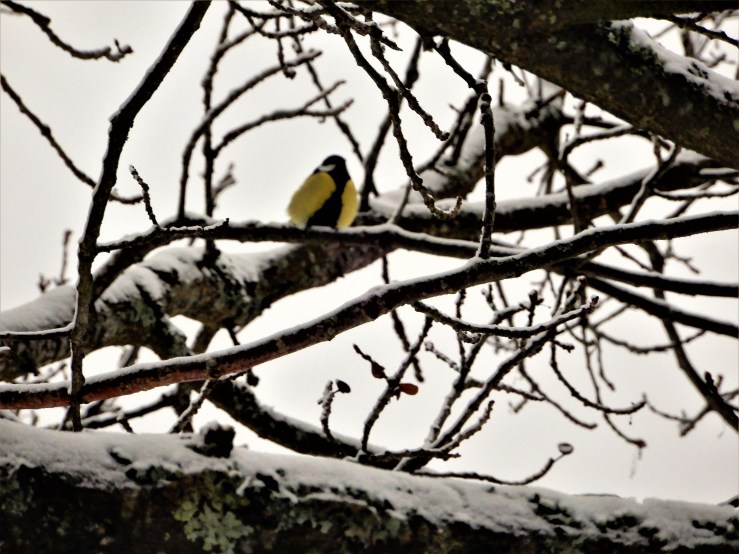
Talitiainen
aloitta kosintansa
ja sirkuttaa kuin
järkensä menettänyt:
Sammakko loikkaa lampeen.

A great tit commences
its mating and marriage dance.
It chirps and twitters
as if it has lost its wits.
A frog leaps into a pond.

Isketään hanskat
kottikärryjen sarviin,
kottarainen on
ehtinyt jo rakentaa
betoninmyllyyn pesän.

Work gloves are slapped down
on a wheelbarrow’s antlers.
A starling has found
the time to build a nest in
the concrete cement mixer.

Kuka jännittää
jousen, josta pääskyset
noin mutkaisesti
singahtelevat aina
kuitenkin maaliin osuen.

Who bends back the bow,
sending the swallows hurtling
in such crooks and curves,
nonetheless always hitting
the target straight on the mark?

Turha miettiä,
matka on jo alkanut:
parasta pitää
hatusta kiini, kyllä
tuuli aukaisee takin.

It’s pointless to think:
the trip’s already begun.
It’s best to hang on
to your hat, since all the same
the wind will open your coat.

Source: Arto Lappi, Kukko puusa (Turku: Sammakko, 2002), pp. 9–11, 13, 29

Translation and photograph by Living in FIN