
Genre Scene: Summer

Tapahduttava on, onnettomuutta ei voi siirtää.
Olen ollut keskellä kauan, syntymästä asti, ja nyt
kivien muodostamaan piiriin ilmestyy tyhjä kohta,
tila mahtua. Ranta murtuu kun käännyn selin.
Äkkiä vaihtoehtoja ei ole, ympyrää enää.
Ensimmäinen askel: heitän hyväilyt, käärin hihat.
Avaan arvet. Toinen askel: järven kalvo repeää.
Menen läpi. Kolmas: syvyys syö sinisen silmän,
kaksi veden väriä, tai taivaan oikeastaan.
Näin lämmintä, ihan sopivaa. Aalto sopii jalkaan,
Tuhkimon kenkä, pirstoutuu rikki. Aika kirkas, kun katso
läpi, kuvaa ei ole, ei heijastusta. Maisema tykyttää
verisuonissa, menetetty. On hetki, jolloin onni päättyy,
palaset putovat, käsistäni kaikki.
* * * * *
It must happen: an accident cannot be moved.
I have been in the middle for a long while, since birth, and now
an empty spot appears in a circle fashioned from stones,
room to fit. The beach crumbles when I turn my back.
Suddenly, there are no alternatives, no more circle.
First step: I throw caresses, I roll up my sleeves.
I open the scars. Second step: the lake’s membrane ruptures.
I’m going through. Third: the depth consumes the blue eye,
the two colors of water. Or the sky’s, actually.
So warm, quite suitable. The wave fits the foot,
Cinderella’s slipper, smashed to smithereens. Time is bright when you look
through it: there is no image, no reflection. The landscape throbs
in the blood vessels, lost. There is a moment when happiness ends,
the pieces all fall from my hands.
— Vilja-Tuulia Huotarinen, Sakset kädessä ei saa juosta (WSOY, 2004), p. 60
Photo and translation by Living in FIN

Meidän kullanruskeat päämme ovat kumartuneet
toisiaan vasten, kynä rapisee hiiren jälkiä, suu avautuu
välillä leijonan kokoiseen haukotukseen, mutta sieraimet
värähtävät valppaasti. Nyt tehdään salaisuuksia. Avaudutaan.
Liittoudutaan. Kuuntelen ekassa pulpetissa Eleanor Rigbya
joka laulaa ikkunalaudalla, jalat eivät mahdu enää
pulpetin alle, katson lasin läpi mustia haavoja
koivujen kyljissä, hiiltyneitä arpia tiukan valon syleilyssä.
Kun tunti loppuu ja sujautamme paperit reppuun,
näen hänen reunamerkintänsä: tähtiä marginaaleissa,
kirkkaita kovia terässiipisiä ikuisia.
:::::::::::::::::::::::::::::::::::::::::::::::::::::::::::::::::
Our golden-brown heads are stooped
towards each other, pencils scratch mouse tracks, mouths open
occasionally into lion-sized yawns, but nostrils
vibrate vigilantly. Secrets are made. They are revealed.
Alliances are formed. At the first desk I listen to Eleanor Rigby
singing in the windowsill. Legs no longer fit
under the desk. I look through glass at black wounds
on the birch sides, charred scars in the taut light’s embraces.
When the lesson ends and we slip our papers into rucksacks,
I see his edge markings: stars in the margins,
bright hard steel-winged everlasting.
— Vilja-Tuulia Huotarinen, Sakset kädessä ei saa juosta (WSOY, 2004), p. 42.
Photo of former Savikanta School (Imatra, South Karelia) and translation by Living in FIN

People will wander where they will.
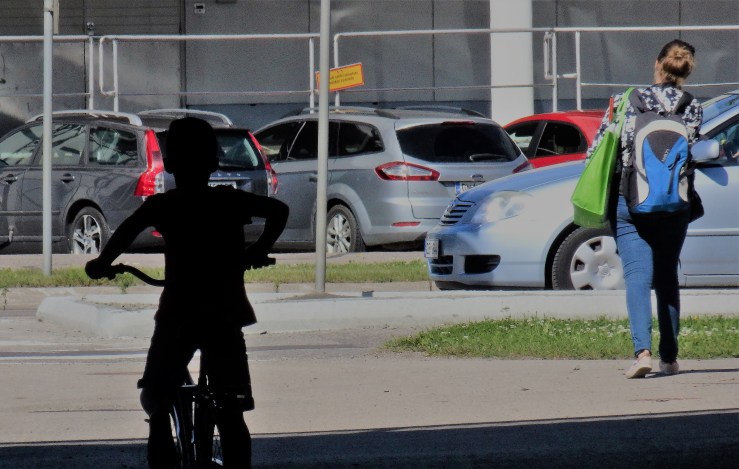
This is a snapshot of what bicyclists, pedestrians, and, sometimes, mopedists, do almost every livelong day to the flimsy piece of twine, draped with tiny flags, hung by the members of our co-op’s management board to prevent them from making this shortcut.
Why are the cyclists, peds, and mopeds so hellbent on taking this shortcut?
Because, a few years ago, the city government of Imatra, South Karelia, perhaps the wisest municipal government on Planet Earth, royally messed with the perfectly serviceable and intuitively natural network of footpaths and bike trails in our neighborhood to accommodate a new neighbor, a giant Prisma hypermarket, built exclusively for Russian shopping tourists, who at one point some years ago were surging through Suomi’s southern borders in droves, but since Putin decided to rule the world and tank his country’s economy in the process, have been reduced to a trickle.
In the wake of the hypermarket’s nearly sacred advent in our lives, we residents of Linnala, the Imatra micro-district that had this alien happiness shoved down its throat without much say-so, got all our streets, sidewalks, intersections, parking lots, footpaths, and bike trails “improved.”
In practice, this means they were turned into an impossible pile of spaghetti, in which you continually have to cross streets, car lanes, parking lots, and roundabouts (all of them newly installed at taxpayer’s expense), usually in a counterintuitive zigzag pattern, to go where you used to go much faster and without all the hassle.
This is the level of urban planning in South Karelia. If you don’t believe me, take a trip to the region’s unofficial capital, Lappeenranta, where they have also been rolling out a wave of mutilation to satisfy the itches and urges of Finnish architectural design and construction companies with names like Lemminkäinen, who have also long been in the business of transforming Russia’s second capital, Petersburg, with impossibly large and ugly residential blocks.
Because that is the bottom line: making a fast buck whatever it does to lives that people were perfectly happy with without ever saying so. When you mess with their lives in this way, blazing their old daily trails back onto the mostly invisible maps of their neighborhoods is their way of saying they were happy with the way things were. LIF
Photo by Living in FIN
1
Kuinka puhuttiin —
sadat, tuhannet sanat
ettei yksikään
mieleen jäänyt: hymysi
kaikkien niiden läpi.
:::::::::::::::::::::::::::::::::::::::::::::::::::::::::::::::::
However much we said—
one hundred, one thousand words—
not a single one
sticks in my mind, because your smile
shines through every one of them.
2
Vaikka pöydän ympärillä oli neljä tuolia
mummo antoi istua vain sillä, joka
varoitti narahtaen. Ja samassa pöytä oli täynnä
mehua, keksejä. Ja kilo voita leivän päällä.
:::::::::::::::::::::::::::::::::::::::::::::::::::::::::::::::::
Although around the table four chairs had been arranged
Grandma would let me sit only in the one chair
That forewarned her by creaking. The table was chockablock
with juice, biscuits, and a kilo of butter heaped on top of the bread.
3
Juosta varjoaan
kiinni, vihdoin tajuta —
makuulta sen saa
napattua: samalla
saa hiukan aurinkoa.
:::::::::::::::::::::::::::::::::::::::::::::::::::::::::::::::::
Running after your shadow,
trying to catch it, finally realizing:
when you are lying down, it can be
snatched. At the same time,
you get some sun.
4
Jaksan katsella
metsäreunaa, mitään ei
tapahdu. Mittaan
sitten kesän lopulla
vatsanympäryksen.
:::::::::::::::::::::::::::::::::::::::::::::::::::::::::::::::::
I manage to go have a look
at the forest’s edge: nothing is
happening. Then I measure
my stomach’s circumference
at summer’s end.
5
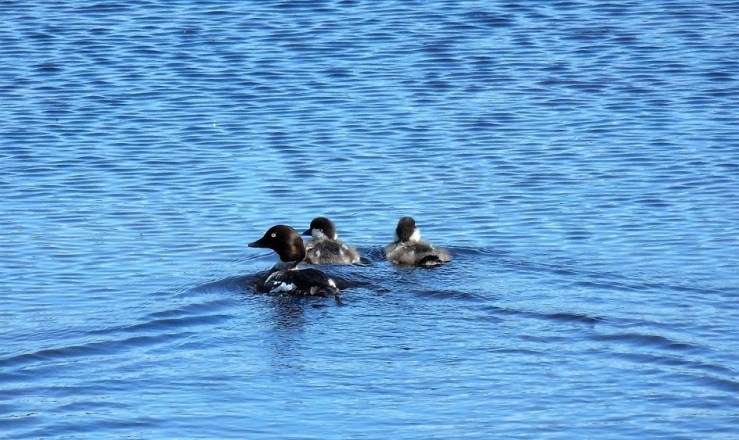
Sorsanpoikaset —
emon perässä uivat
hauenkin kitaan.
:::::::::::::::::::::::::::::::::::::::::::::::::::::::::::::::::
Ducklings,
swimming behind their mother,
right into a pike’s maw.
— Arto Lappi, Harakan paja: mitallisia runoja (Turku: Sammakko, 2007), pp. 8, 21, 39, 124, 91. The poems were chosen using the True Random Number Generator at random.org.
Photo and translations by Living in FIN

1
Seinällä kääntyy kellastunut lehti
toukokuusta kesäkuuhun.
Ilmassa on juuri lakanneen musiikin tuntu,
sävelten, jotka ovat jo vaienneet
tai syntyneet saamatta ääntä.
:::::::::::::::::::::::::::::::::::::::::::::::::::::::::::::::::
The yellowed page on the wall turns
from May to June.
There’s a feeling in the air of music stopping,
of tunes going silent
or starting up again without making a sound.
2
Kolea ilta, vanhaa musiikkia.
Värit menevät valon myötä,
vain sävyt jäävät, hämärä,
jossa vihreää melkein mustasta melkein valkoiseen;
maailma vedenalainen,
rajapinta kuultavan taivasta vasten.
:::::::::::::::::::::::::::::::::::::::::::::::::::::::::::::::::
A chilly evening, old music.
The colors fade in the light,
leaving only overtones, dusk,
in which green has gone from almost black to nearly white.
The world is submerged,
the interface translucent against the sky.
3
Yö on vain varjo,
unet ovat toisesta maailmasta
joka meillä vain yksin on.
Näyt syntyvät
painuakseen jälleen unohduksiin niinkuin ne,
jotka elivät täällä ennen.
:::::::::::::::::::::::::::::::::::::::::::::::::::::::::::::::::
Night is a mere shadow,
dreams are from the other world,
which is the only one in our parts.
Visions are born, as it were,
so those who lived here before
descend once more into oblivion.
— Hannu Salakka, Kesä kesältä syvemmin (Otava, 1977), pp. 7–9
Interior view of the Lauritsala Church (Lappeenranta, South Karelia) and translations by Living in FIN
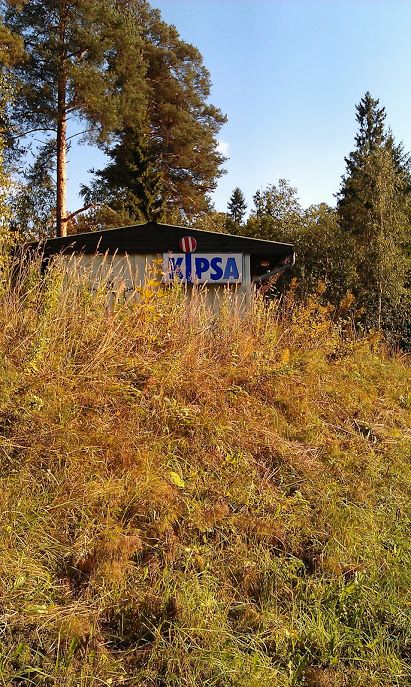
Pitkän tien päässä on kioskin kyltti
pimeässä sitä ei näe
eikä kioskia enää ole
mutta sen voi kuvitella ja muistaa
Tuon kuvan minä näin ennen nukahtamista
ja kirjoitan nyt ylös
talvisena aamuna
niin kuin siinä olisi jotakin tärkeää
ehkä olikin, kun yön hämärissä mietin
ja vielä muistan
ehkä se on pimeä tie, ehkä se on kyltti
tai vain se että muistaa
* * * * *
At the end of a long road is a kiosk sign
you cannot see it in the darkness
and the kiosk is no more
but it can be imagined and remembered
I saw this picture before falling asleep
and now I am writing it down
on a winter’s morning
as if it were something important
maybe it was that I thought about it in night’s darkness
and still remember it
maybe it’s the dark road, maybe it’s the sign
or only that it is remembered
— Kari Levola, Kaikki kartat ajan tasalla (Helsinki: Tammi, 2006)
Photo and translation by Living in FIN

Suomalainen
Suomalainen on sellainen joka vastaa kun ei kysytä,
kysyy kun ei vastata, ei vastaa kun kysytään,
sellainen joka eksyy tieltä, huutaa rannalla
ja vastarannalla huutaa toinen samanlainen:
metsä raikuu, kaikuu, hongat humajavat.
Tuolta tulee suomalainen ja ähkyy, on tässä ja ähkyy,
Tuonne menee ja ähkyy, on kuin löylyssä ja ähkyy
Kun toinen heittää kiukalle vettä.
Sellaisella suomalaisella on aina kaveri,
Koskaan se ei ole yksin ja se kaveri on suomalainen.
Eikä suomalaista erota suomalaisesta mikään,
ei mikään paitsi kuolema ja poliisi
—Jorma Etto, Ajastaikaa (WSOY, 1964)
A Finn
A Finn is the kind of person who answers when she isn’t asked,
asks when he isn’t answered, and doesn’t answer when asked.
The kind of person who loses her way, hollers on the shore,
and another like him hollers from the opposite shore.
The forest resounds, echoes, the big pines drone.
The Finn comes from over there, groaning, and here she is, groaning.
He goes over there, groaning, and groans as if she is in the sauna
When another person tosses water on the stove.
A Finn like this always has a pal.
She is never alone, and that pal is a Finn.
Nothing separates Finn from Finn,
Nothing except death and the police.
* * * * * *
Jorma Etto’s poem “A Finn” rose to national prominence when President Urhu Kekkonen quoted it during a New Year’s speech in the 1970s. When asked by journalist Maarit Tyrrkö what a Finn was, during a tape-recorded interview in 1976, Kekkonen also quoted the poem, albeit omitting lines six through eight accidentally or intentionally.
I have taken perhaps unwanted license with the sex of the collective singular Finn sketched in the poem, because the Finnish language has complete gender neutrality and, thus, utter ambiguity, when it comes to grammar, if not always (or, hardly ever) in real life. If you would like a more conventional albeit decidedly masculine rendering of Etto’s classic poem, see Keith Bosley’s excellent translation.
Photo and translation by Living in FIN. Video courtesy of Apu magazine.
Koirat
Nuuskimme jälkiä, haistoimme jätteitä,
nuolimme kivien raot,
vainusimme varjot jotka kerran olivat.
Viimein löysimme unohtuneen
mirhamintuoksuisen liinan
kaukaa Jordanin takaa.
* * * * *
The Dogs
We sniffed tracks, we smelled trash,
we licked cracks in rocks,
we scented the shadows that once had been.
Finally, we found a forgotten
cloth that smelled of myrrh
far beyond the Jordan.
—Jorma Etto, Ajastaikaa (WSOY, 1964)
Translation and snapshot by Living in FIN

This van has been parked in the “guest” (overflow) parking lot of our co-operative residential building for the last week or so. I assumed someone had bought it used at a severe discount because of the embarrassing logo, emblazoned on both sides of the vehicle.
How wrong I was. A quick check of Radio Nova’s website revealed that the station’s “Retroperjantai” (“Retro Fridays”) program and the unpatriotically dubbed Go 90’s festival are planning to make life in Imatra’s Mansikkala district unbearable on June 30 and July 1.
These bastards (there is no other word for it) are once again going to rip up the lovely green meadow in the park along the Vuoksi River between the city hall-central library-cultural center campus and the swimming pool so the sagging waistlines crowd can listen to and gaze at the unmissed Raptori for something like 40 euros for a single ticket.
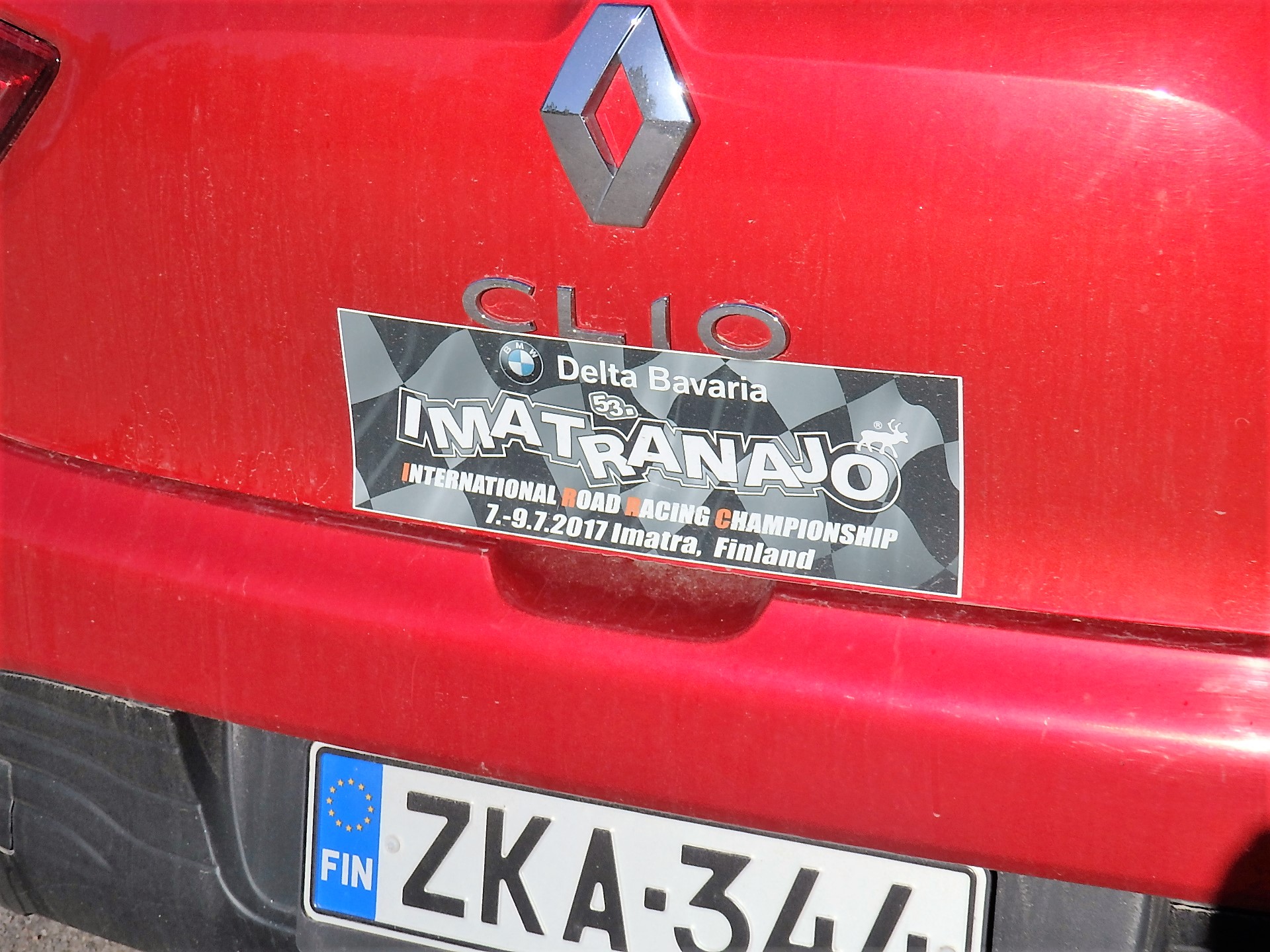
The cultural powers that be ripped up and fenced off the same meadow at least once or twice last summer for commercial music events, including concerts held in connection with the retrograde celebration of noise and air pollution known as the Imatranajo International Road Racing Championship.
This motorcycle race had also quietly disappeared into the semi-distant past, but now it has been revived on a permanent basis by the city council and cycling enthusiasts.
The renaissance coincided more or less with the extinction of the much more environmentally friendly and once-mighty Imatra Big Band Festival and the altogether environmentally friendly and utterly prestigious International Summer School for Semiotic and Structural Studies.
The big band festival had real financial problems, apparently, but the city council, dominated by so-called Social Democrats and members of the now officially fascist Finns Party, chose not to save the world-renowned festival, so it sank and drowned altogether, while the International Semiotics Institute, housed in modest digs at the city library and funded by a tiny subsidy from the city, was banished from the city budget altogether (due its utter obscurity to the “proletariat,” one has to imagine, although it had existed happily in Imatra since 1988), forcing it to decamp to Budapest, if I’m not mistaken.
Eager to ensure that no one could enjoy the non-music on offer for free, the organizers of last year’s concerts in the park fenced off the bike and pedestrian path on the shore of the Vuoksi. I was lucky enough, if you can all it that, to get a snapshot of two worthy local oldsters who were literally baffled by this fence as they tried to cruise down the path along the river, probably the most beloved place in the city for riding bikes, jogging, and strolling. The old people were ultimately forced to turn around and either bypass the entire area or go back home.

In the event, however, the music was loud as hell and echoed off and among the tower blocks situated right across the most heavily populated neighborhood in Imatra, Linnala/Mansikkala.
The funny thing is that back in the wild days before the city fathers and mothers came to their senses and turned this stretch of the Vuoksi into a mecca for decorous recreation, wise urban administration, and the quiet pursuit of knowledge and culture, the so-called Virranpuisto (“Current Park”: I’ve never heard this toponym before or seen it on any map) was the city’s official camping grounds.
The wild days in question were the sixties and seventies. I’ve seen photos of what the Tainionkoski camping grounds looked like back then, and I’m truly glad I had a whole ocean between me and that silly trash- and car-infested mess, dotted with tents, in its heyday.
So it would seem that, on the strength of the false urban planning and administration theory that every largish plot of urban greenery that isn’t generating income either for local councils or local developers (or both), has to be bludgeoned into cashcowdom, however badly that impacts the quality of life of the folks who actually live in the neighborhood, we are returning not only to the nineties but also to the seventies, when the meadow was a swamp of human congestion and consumption every summer.
More or less kittywampus from the newly minted funfair known to boosters (but not to actual people) as Virranpuisto is the scandalously underused Imatrakosken Urheilukenttä (“Imatrankoski Athletic Field”), where, I’ve noticed, traveling circuses set up camp and perform for a few days every summer.
The athletic field has the facilities and space for such entertainments, and it is located in a much less populous neighborhood. Why not relive the nineties there?
UPDATE. My best friend, whose memory is much better than mine, points out it was the Finnish federales who axed the ISI’s extremely tiny budget, not the lowly Imatra city council. I seem to remember the ISI then appealed to the city council for funding, but was turned down. My best friend remembers no such thing.
Photos and rant by Living in FIN
 Living in FIN